Apatang seeks CNMI share in seabed mining, Guam wants lease sale halted
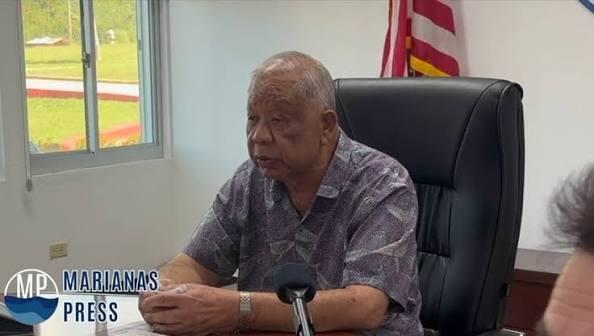
Gov. David M. Apatang is demanding economic benefits, revenue sharing, and environmental safeguards for the CNMI before the federal government proceeds with its proposed offshore seabed mining lease sale.
In an 11-page letter dated Oct. 16 to U.S. Interior Secretary Doug Burgum and Marine Minerals Administration acting director Mike Olson, Apatang outlined 16 conditions and recommendations for the proposed Pacific Minerals Lease Sale 2, or PACM-2.
Apatang acknowledged the importance of securing critical minerals for the United States but said the CNMI should not be left bearing the environmental and economic risks without receiving corresponding benefits.
"But achieving dominance and greatness in the critical mineral supply chain should not be the sole focus for all Americans, including people living in the territories like the CNMI, who are also proud Americans," he wrote.
Apatang called for a clear revenue-sharing arrangement, priority employment for CNMI residents, opportunities for local contractors, and investments in the seaports of Saipan, Tinian, and Rota.
He also sought clarification on how much the Commonwealth would receive from lease sales, royalties, rents, and other revenues generated by offshore mineral extraction.
"The CNMI expects no less than economic benefits converted from aspirational commitments into measurable, transparent, and enforceable obligations," Apatang said.
Other recommendations included environmental monitoring, protection of fisheries, compensation for affected fishermen, safeguards for military operations, and an emergency response fund financed by mining companies.
Apatang also urged the federal government to consider postponing the lease sale until outstanding concerns raised by the CNMI and Guam have been addressed.
He cited 65,585 public comments submitted on the proposed leasing process, saying these should be carefully reviewed before the federal government proceeds.
Apatang said the CNMI remains willing to work with federal agencies but must be protected from potential environmental damage and financial liability.
Meanwhile, Guam Gov. Lou Leon Guerrero formally opposed the proposed lease sale, citing threats to marine ecosystems, fisheries, tourism, and CHamoru cultural resources.
In a six-page letter dated Oct. 20 to Olson, Leon Guerrero objected to mining activities that could occur as close as 46 miles offshore Guam.
"As Governor of Guam, I object to the Marine Minerals Administration's plans to lease the Outer Continental Shelf (OCS) offshore Guam for seabed mining," she wrote.
Leon Guerrero accused the federal agency of failing to adequately consult Guam and CHamoru communities despite the potential environmental and economic consequences.
She said the proposed leasing area had expanded from approximately 35.5 million acres to 69.1 million acres without prior notice to or concurrence from Guam.
The Guam governor also cited potential damage to coral reefs, fisheries, marine habitats, and underwater telecommunications cables.
She called for additional environmental studies and a joint federal task force involving Guam and the CNMI before any leases are approved.
Leon Guerrero noted that the Guam Legislature had unanimously supported a moratorium on seabed mining and that Guam had enacted legislation prohibiting seabed mining and denying its ports to extraction fleets.
"Guam stands with the people of the Northern Mariana Islands. Our two governments draw a line on a map, but the ocean does not recognize it," she wrote.
She concluded her letter by calling on the Marine Minerals Administration to halt PACM-2.
The two governors' comments come as the federal government moves forward with its first offshore mineral lease sale near American Samoa.
On Oct. 19, the Marine Minerals Administration announced the final leasing notice for PACM-1, with an auction scheduled for Nov. 19.
The auction will offer two offshore areas covering approximately 31.5 million acres. The notice outlines lease terms, rental and royalty rates, and requirements for prospective bidders.
Securing a lease does not automatically authorize commercial mining. Companies would still need additional federal approvals before proceeding with exploration, testing, or mineral extraction.
The American Samoa auction is part of the Trump administration's efforts to secure domestic supplies of critical minerals used in advanced technology, manufacturing, and national defense.
For the CNMI, the federal government has proposed holding PACM-2 on Dec. 16.
Both Apatang and Leon Guerrero submitted their comments as the federal government considers the proposed leasing arrangements, although their positions differ on whether offshore seabed mining should proceed.
Share this article: