Attao vows to fight CW-1 touchback, keep Filipino families together
Independent gubernatorial candidate Blas Jonathan “BJ” Attao pledged to push for the removal of the CW-1 touchback requirement if elected governor, saying the federal immigration rule has hurt CNMI businesses and separated Filipino families.
Speaking during the Attao-Villagomez CNMI Filipino Community Gathering last Oct. 11 at the Filipino Community pavilion at the Civic Center in Susupe, Attao said he and running mate House Speaker Edmund S. Villagomez would work with independent delegate candidate Galvin Deleon Guerrero to seek changes to federal immigration laws.
“This touchback program, it's been hampering a lot of businesses here in the CNMI. But more importantly, it's been separating a lot of families from each other,” Attao said.
Under the CW-1 program, certain foreign workers must leave the United States for at least 30 consecutive days after three consecutive petition renewals before their employers can petition for them again. Some long-term workers are exempt from the requirement.
Attao acknowledged that changing the requirement would need congressional action but said his administration would work with Deleon Guerrero in Washington, D.C., if both are elected in the Nov. 3 general elections.
“We need to make sure that our workers remain here, our businesses stay alive and they thrive,” he said.
Attao also recognized generations of Filipino workers who helped build the Commonwealth's schools, hotels, homes, and other infrastructure.
“You guys are not CW workers in our eyes, you guys are family,” he said.
He said the Filipino community has played an important role in the CNMI's development and deserves recognition for its contributions over the decades.
The gathering was part of the Attao-Villagomez campaign's outreach to the Filipino community ahead of the Nov. 3 elections.
Other independent candidates aligned with the Attao-Villagomez campaign who attended included Carlos Santos, Reps. John Paul Sablan, Ralph Yumul, and Marissa Flores, along with Joel Camacho, Diego Camacho, Daniel Aquino, and delegate candidate Galvin Deleon Guerrero.
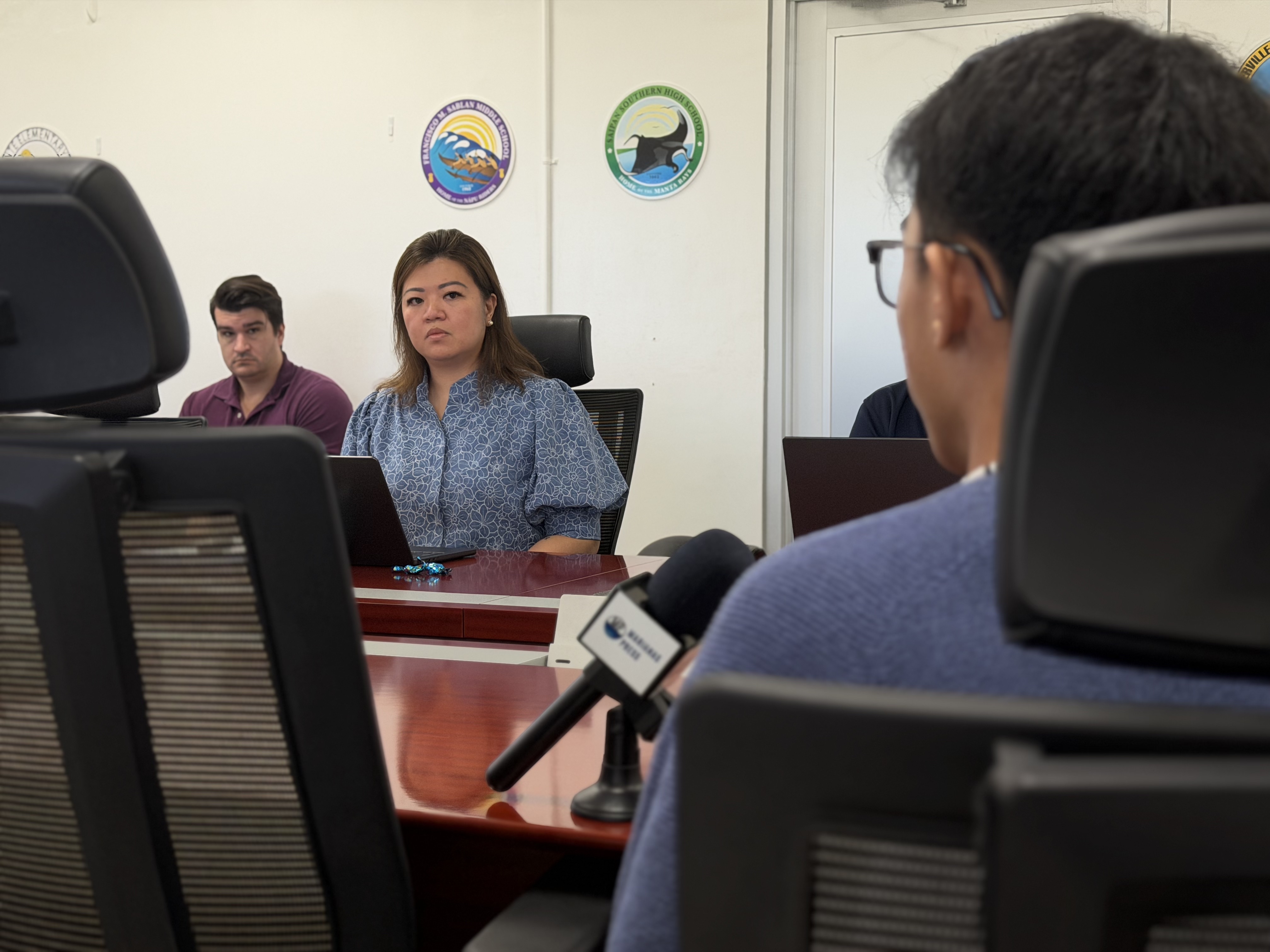
Rudy Pua, a member of the Committee-to-Elect Attao and Villagomez, said the gathering was intended to give Filipino residents an opportunity to speak directly with candidates about issues affecting their families and businesses.
“Today is not a day for you to sit down and listen to these guys speak. Today is the day that these guys up here will come up to each table and listen to you,” Pua said.
He said the candidates would visit individual tables to hear concerns rather than limit the gathering to campaign speeches.
Pua also stressed the importance of cooperation among elected officials as the Commonwealth continues to face economic and other challenges.
“Considering our situation here in the CNMI, we need them to work together as one,” he said.
He said such cooperation should extend from the Legislature to the governor's office and the CNMI's representative in Congress.
Meanwhile, United Filipino Organization president Carlito Jimenez Marquez said he attended the gathering in his personal capacity and not as an official representative of the organization.
Marquez, who will step down as president in January 2027, said political gatherings give Filipino residents an opportunity to understand the candidates' positions on issues affecting their community.
He said many Filipinos have established roots in the Commonwealth, which may explain why candidates are reaching out to them.
Marquez, who has lived in the CNMI for 30 years, identified touchback as one of the most pressing concerns for Filipino workers and their families.
“If these candidates can do something about it, to scrap the touchback provisions, because there's a lot of family separations, we experience hardship,” he said.
Marquez said Filipinos must also recognize that whoever wins the elections will be making decisions affecting the community.
“We have to cooperate with all those candidates,” he said.
Another attendee, Josie Camacho, welcomed the Attao-Villagomez campaign's position on immigration and said the CW-1 program needs more permanent reforms.
“For me, on my own opinion and on my own belief, their visions about immigration [are] very clear and very beautiful. It will be beneficial to the CNMI and to the workers as well,” Camacho said.
She suggested that immigration issues be addressed through Section 902 consultations between the CNMI and federal governments rather than relying solely on repeated extensions of the CW-1 program.
Section 902 of the Covenant provides a framework for consultations between the two governments. Any changes to federal immigration laws would still require action by the appropriate federal authorities.
Camacho also raised concerns about lengthy CW-1 processing times, saying delays and touchback requirements can separate workers from their families for months.
She said the uncertainty can be especially difficult for parents whose children attend school in the Commonwealth.
“So what will happen to your children who are at school? They cannot stop going to school. They cannot stop eating just because your permit expired,” she said.
Camacho also said many U.S.-citizen children of Filipino workers have reached voting age, making the Filipino community an increasingly important constituency for candidates seeking public office.
Attao and Villagomez are running as independents in the Nov. 3 general elections.
Share this article: