Blue Ocean Law explains legal challenge to deep-sea mining push
Blue Ocean Law is preparing to challenge in court the federal government’s push to open waters near Guam and the Northern Mariana Islands to deep-sea mining, arguing federal agencies may lack the legal authority to issue such mineral leases.
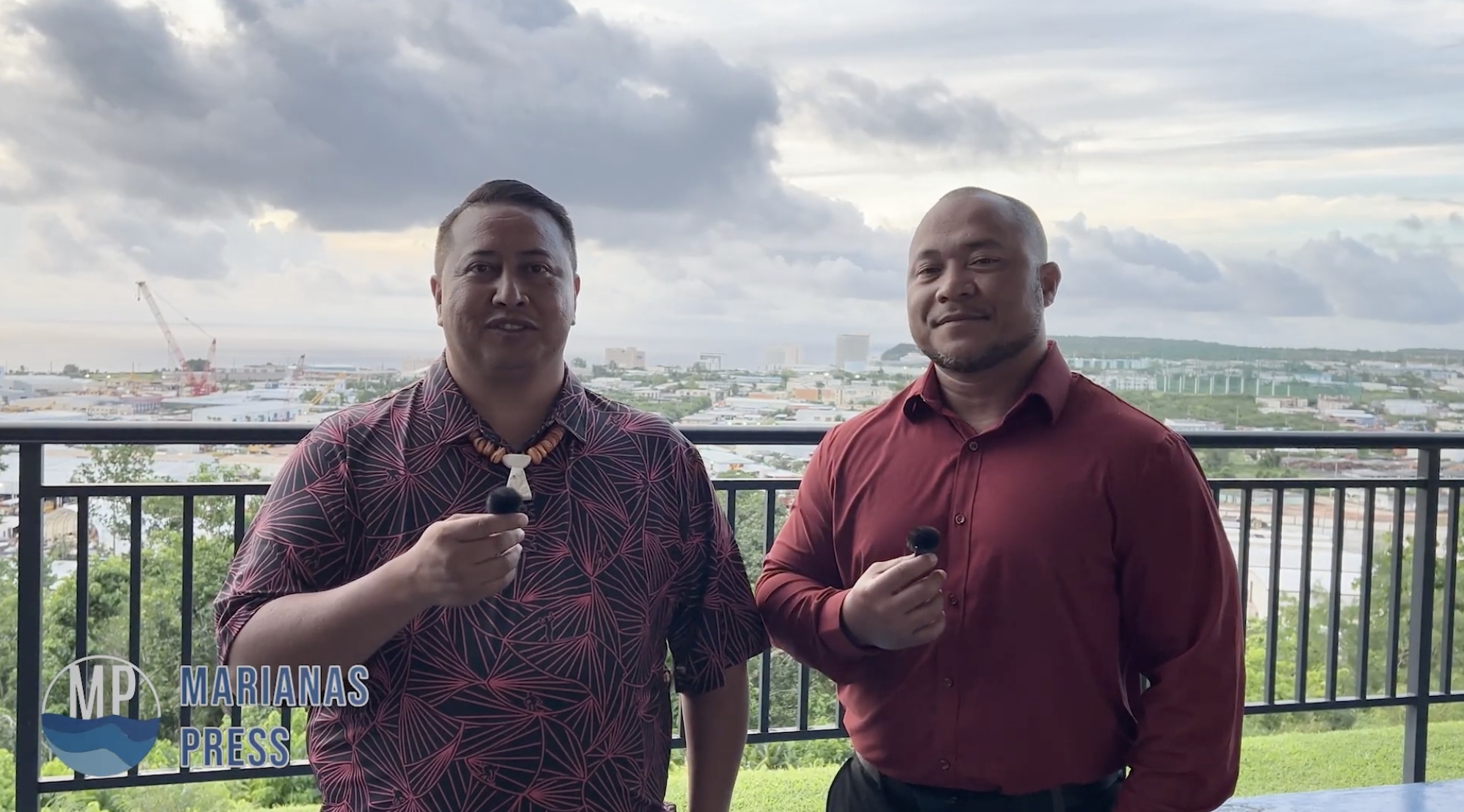
Blue Ocean Law founder Julian Aguon disclosed the planned legal action during a Climate Week panel held Sept. 22 in New York that brought together voices from across the Mariana Islands to discuss climate change and its impacts on Pacific communities.
“The Trump administration is expediting a process, sort of like, I would say, questionably interpreting the relevant federal environmental statute,” Aguon said.
He said the administration is using the Outer Continental Shelf Lands Act to claim authority to work with companies and allow leases covering large areas of ocean near Guam, the CNMI, and American Samoa.
Aguon described deep-sea mining as “catastrophically dangerous,” saying Blue Ocean Law has followed the issue since 2010 and has raised concerns about potential ecological damage to the deep-sea marine environment.
He cited potential impacts ranging from noise pollution to large sediment plumes that could harm marine life.
“We have been part of many other groups like Earth Justice and others that have been filing comments with the relevant federal agency trying to slow down and or stop this process,” Aguon said.
At the heart of Blue Ocean Law’s potential legal challenge is whether the federal government can use the Outer Continental Shelf Lands Act to authorize mineral leases beyond oil and gas.
“Historically, the federal environmental law in question has only ever been used or interpreted as authorizing oil and gas leases,” Aguon said. “It’s never been interpreted to apply to this other whole body of sort of minerals, right?”
Aguon said there is a “viable, colorable argument” that the federal agency is acting outside the authority granted to it by law.
“And so, we are going to try to stop that,” he said.
He said challenging the federal government’s authority to issue the leases could go further than litigation under the National Environmental Policy Act, which he said can delay projects but is largely procedural.
“But if they lack the authority to do this at all, we should make that legal argument and we plan to make it in court very soon,” Aguon said.
The potential court challenge comes as opposition to seabed mining has also grown in the CNMI.
Saipan Mayor Ramon “RB” Jose Blas Camacho, Tinian and Aguiguan Mayor Edwin P. Aldan, Rota Mayor Aubry M. Hocog, and Northern Islands Mayor Valentino Taisacan, in a joint Sept. 10 letter to the Bureau of Ocean Energy Management, formally opposed proposed seabed mining in CNMI waters.
The mayors cited unanswered questions about its potential environmental, economic, and social impacts and said local governments, community leaders, and residents have not been adequately consulted.
“Until complete environmental studies, economic analyses, and meaningful community consultations are conducted and made public, we strongly oppose any approval or advancement of seabed mining within CNMI waters,” the mayors said.
Meanwhile, CNMI Delegate Kimberlyn King-Hinds on Sept. 10 announced the Pacific Minerals Economic Security Act, or PACMESA, which would direct 50% of revenues from covered offshore mineral leases to eligible Pacific territories located within 200 nautical miles of a lease tract. The remaining 50% would go to the U.S. Treasury.
King-Hinds has said she neither supports nor opposes seabed mining, but described PACMESA as an “insurance policy” for Pacific territories if mining proceeds. The bill would also strengthen environmental bonding requirements and expand federal notification and consultation with the CNMI, Guam, and American Samoa.
Share this article: