CCAC future sparks debate in House
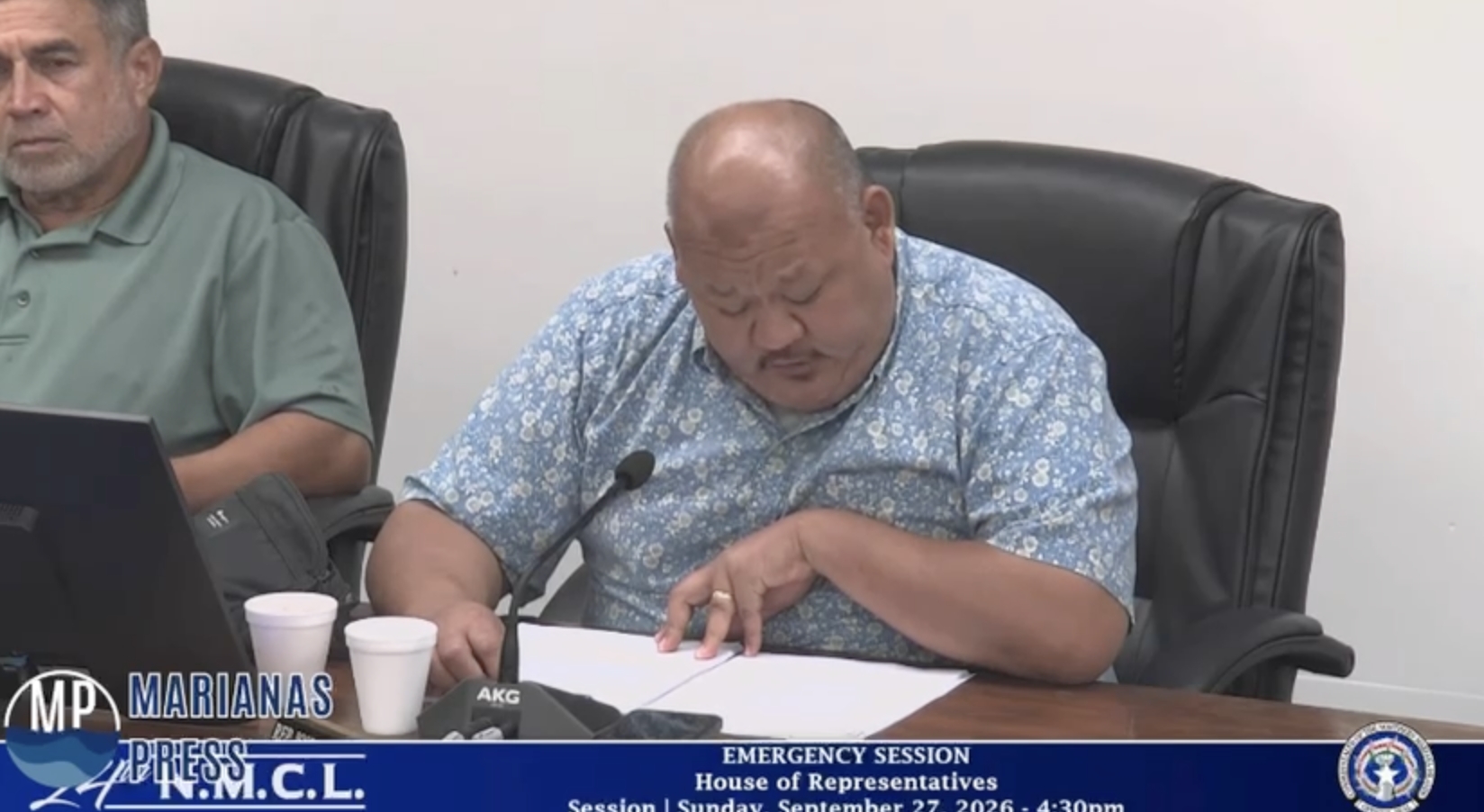
The future of the Commonwealth Council for Arts and Culture sparked a lengthy debate at the House of Representatives, with Saipan Mayor Ramon “RB” Camacho and members of the arts community weighing in before lawmakers themselves clashed over whether the council should remain independent or move under the Marianas Visitors Authority.
The debate unfolded during the House session last Sept. 25 on Capitol Hill and centered on House Bill 24-110, the Marianas Cultural Tourism Integration Act of 2026, introduced by Reps. Julie Ogo and Marissa Flores. The measure would preserve CCAC's independence as the Commonwealth's state arts agency while requiring coordination with MVA on cultural tourism and establishing governance, accountability, and artist-payment standards.
During public comments, Camacho came out against transferring the Arts Council, saying problems within the agency should instead be addressed.
“If there's a problem at the Arts Council, let's fix the problem,” Camacho said. He later added, “I totally oppose to transfer that arts council.”
Emma Perez, who previously served twice on the CCAC board and was elected chairwoman during her second stint, acknowledged that the council has serious problems but questioned whether moving it under MVA could affect its relationship with the National Endowment for the Arts.
“There is some question to the validity of moving CCAC, excuse me, under MVA because of the National Endowment for the Arts’ requirement that funds be overseen by a state's arts organization,” Perez said. “Has the NEA been brought into the discussion? If not, it should be, and as soon as possible.”
Perez said the existing CCAC structure could work if properly implemented.
“I believe that the structure is there. I really do, and I believe that this House bill represents the community knowing that CCAC is broken, and we need to fix CCAC,” she said. “So in summary, I believe the structure is there, but that it needs to be fully implemented with the right people.”
Maggie Sablan likewise urged lawmakers not to move too quickly, particularly without examining CCAC's existing relationship with the NEA.
“Let's not be too hasty. We need to study,” Sablan said. “There's a partnership for the state agency that is in place with NEA. We need to study that. What is in that partnership? We need to know what is in there before we start moving things around.”
The public comments foreshadowed a spirited exchange on the House floor.
Rep. Daniel Aquino Jr. urged lawmakers to table HB 24-110 and send it through committee, arguing that CCAC had suffered years of administrative, reporting, and operational problems and that the Office of Grants Management had begun addressing overdue payments under Gov. David M. Apatang's executive order.
“I strongly urge this body to table this bill until we have full clarity and all operational facts before us,” Aquino said.
Aquino said the Office of Grants Management had processed more than $150,000 in overdue payments to vendors and local artists and questioned why lawmakers would undo a system that he said was beginning to work.
Flores pushed back, saying the Legislature had already conducted its due diligence and that the bill was intended to provide clearer statutory safeguards, including protection of federal arts funding.
“I think we've done our due diligence,” Flores said, noting that the House Tourism Committee had conducted an investigation into CCAC.
Flores also urged members to support the legislation, saying it would protect artists, federal funding, and CCAC's independence.
“A vote yes for governance structures that make CCAC the institution it is always supposed to be, independent, artist-led, and accountable to the people of this Commonwealth,” Flores said.
Ogo, meanwhile, said the legislation would strengthen cooperation between culture and tourism while preserving CCAC as the Commonwealth's state arts agency. She also highlighted longstanding complaints from artists over delayed payments.
“Our artists deserve more than recognition. They deserve respect for their work, accountability from the agencies entrusted to support them, and timely payment for what they have earned,” Ogo said.
Despite the heated discussion, the House did not take final action on HB 24-110.
Lawmakers voted 12-5 to suspend the rules and place the measure on the bill calendar. During the roll call, members were reminded that the vote was not for passage and that placing the bill on the calendar would give the House additional time to obtain information raised during the public comments and Aquino's floor remarks.
“This is not for action,” a lawmaker clarified during the vote. “This is just for a place on [the] calendar. We can't take action today.”
Share this article: