CEIA Board Adopts New Tax Incentive to Jump-Start CNMI Economic Recovery
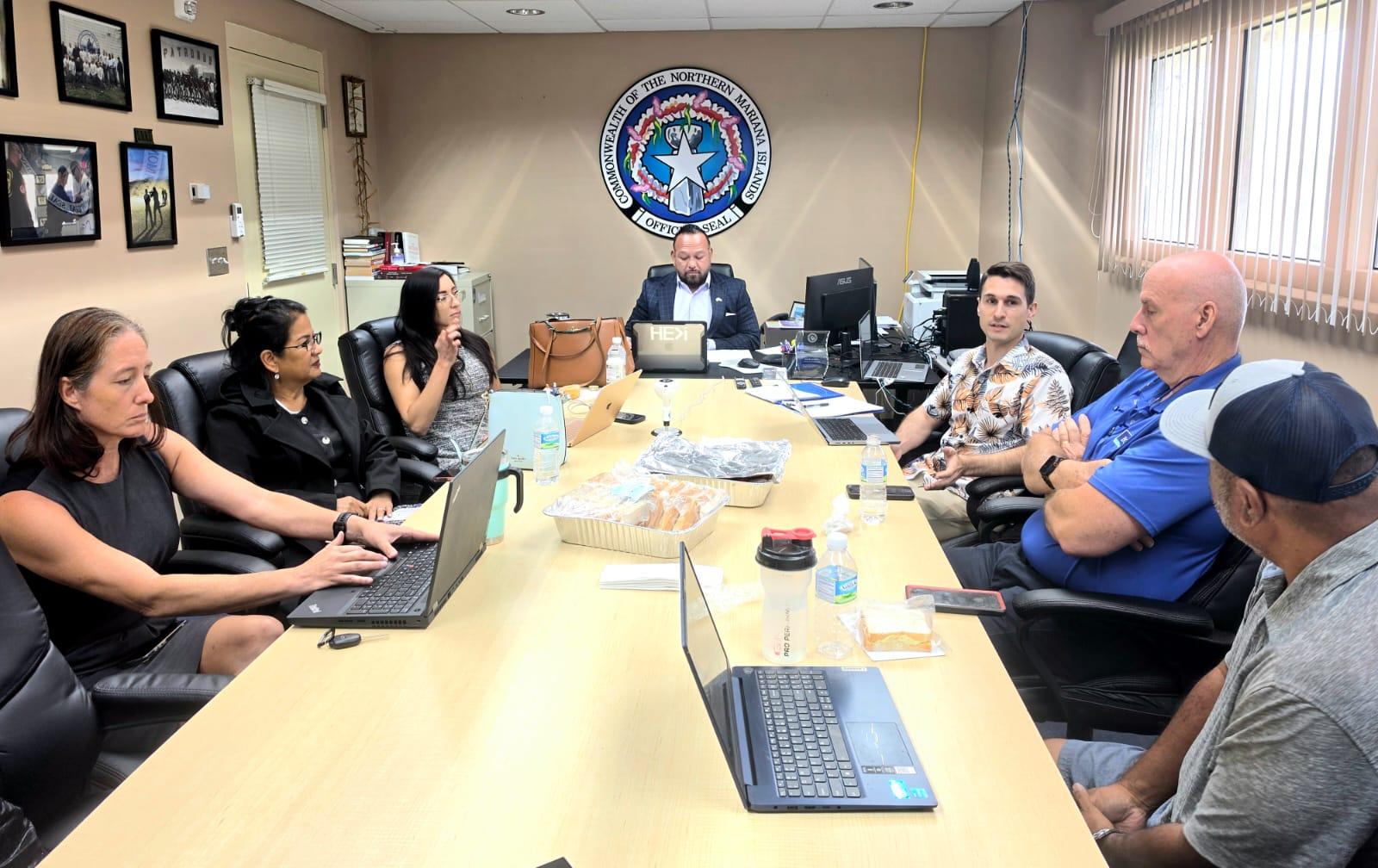
The Commonwealth Economic Incentive Authority Board of Directors voted unanimously on Tuesday, September 1, to adopt its proposed program regulations, marking a decisive step toward activating a long-dormant tax incentive framework intended to drive economic recovery across the Northern Mariana Islands.
Meeting at the CNMI Department of Corrections Conference Room, the six board of directors approved the draft rules under Chapter 195-20 for submission and publication in the Commonwealth Register. The action triggers a 30-day public comment period starting September 15, targeting an effective rollout date of October 25, 2026, when the authority will officially open application intake.
CEIA Chair Anthony Torres, who also serves as Commissioner of Corrections, delivered an earnest opening statement to the board, addressing the severe economic strains facing the islands in the aftermath of Super Typhoon Sinlaku and Typhoon Bavi. Torres pressed the urgency of taking immediate action rather than remaining stalled in bureaucracy.
“This is from the heart. We all know why we're sitting here—the Commonwealth is in trouble. Not challenging times, trouble,” Torres stated. “Visitors aren't coming like they used to, the hotels are hurting, and the government is short. After Sinlaku and Bavi, a lot of families and businesses are still trying to stand back up. People are leaving because they don't see a future, and that should bother every one of us in here.”
Torres reminded members that the statute establishing the authority had languished without implementation for two decades, stressing that economic revitalization must demand accountability from incoming corporations while benefiting the entire archipelago.
“CEIA sat on the books for 20 years. We don't get to do that again. This board was stood up to move and make things happen, not to keep sending the same draft around the building,” Torres said. “Local businesses are skeptical and I don't blame them—they've heard big plans before. So we have to be straight: this is not a handout shop. If a company wants years of tax relief, they need to bring jobs, investment, and something that lasts. If they can't show that, then say no. If they can, we don't bury them in process. And it just can't be Saipan—Tinian and Rota have to see themselves in this.”
Following the vote, CEIA Vice Chair Tina Azarvand in an interview expanded on the board’s regulatory roadmap, outlining how the approved criteria depart from traditional models like the Commonwealth Economic Development Authority that rely heavily on fixed capital thresholds.
“We did motion to adopt the regulations and that motion was passed,” Azarvand said. “When you go to CEDA, they say you have a certain minimum capital investment. We decided we're not going to have anything like that. We're going to be more focused on workforce development, rebuilding the infrastructure of the CNMI, and reversing the brain drain. There’s even food security in there and consideration of Tinian and Rota. We don’t want it to be where people are just considering Saipan—with these tax incentives, we want to make sure the economies on all of the islands are being developed.”
Under the adopted scoring rubric, applications are evaluated across ten distinct criteria totaling 100 points, qualifying compliant enterprises for tiered tax relief capped at a maximum of 85 percent. Azarvand emphasized that establishing rigorous standards protects local residents from the unintended consequences observed in other jurisdictions.
“Progress really needs to be made, and I'm really excited because the criteria is very clear,” Azarvand noted. “We wanted to make it crystal clear what this agency is looking for. Are you thinking of the community, not just the tax break? You have to be willing to give something to get something. I went to Puerto Rico long ago, before Act 60—formerly Act 20 and 22—gentrified Puerto Rico, and I really wanted to make sure that doesn't happen here where people get displaced. I'm really happy with the board because we put a lot of time and consideration into making sure we don't repeat the mistakes of Puerto Rico with their tax breaks.”
The meeting also included public comment from local businessman Paul Zach, who urged the authority to keep regulations simple, predictable, and commercially appealing to prospective investors. Board members noted that a fixed, transparent rubric provides clear rules of engagement across all business sizes while protecting the Commonwealth legally. Additionally, the board noted early commercial traction, reporting that a major off-island company has already signaled intent to apply as soon as the rules become effective.
The draft notice and regulations will now proceed through required translations and legal reviews with the Office of the Attorney General and the Governor's Administration before being published in the mid-September register for public review.
Share this article: