CHC cardiologist urges return to ancestral foods
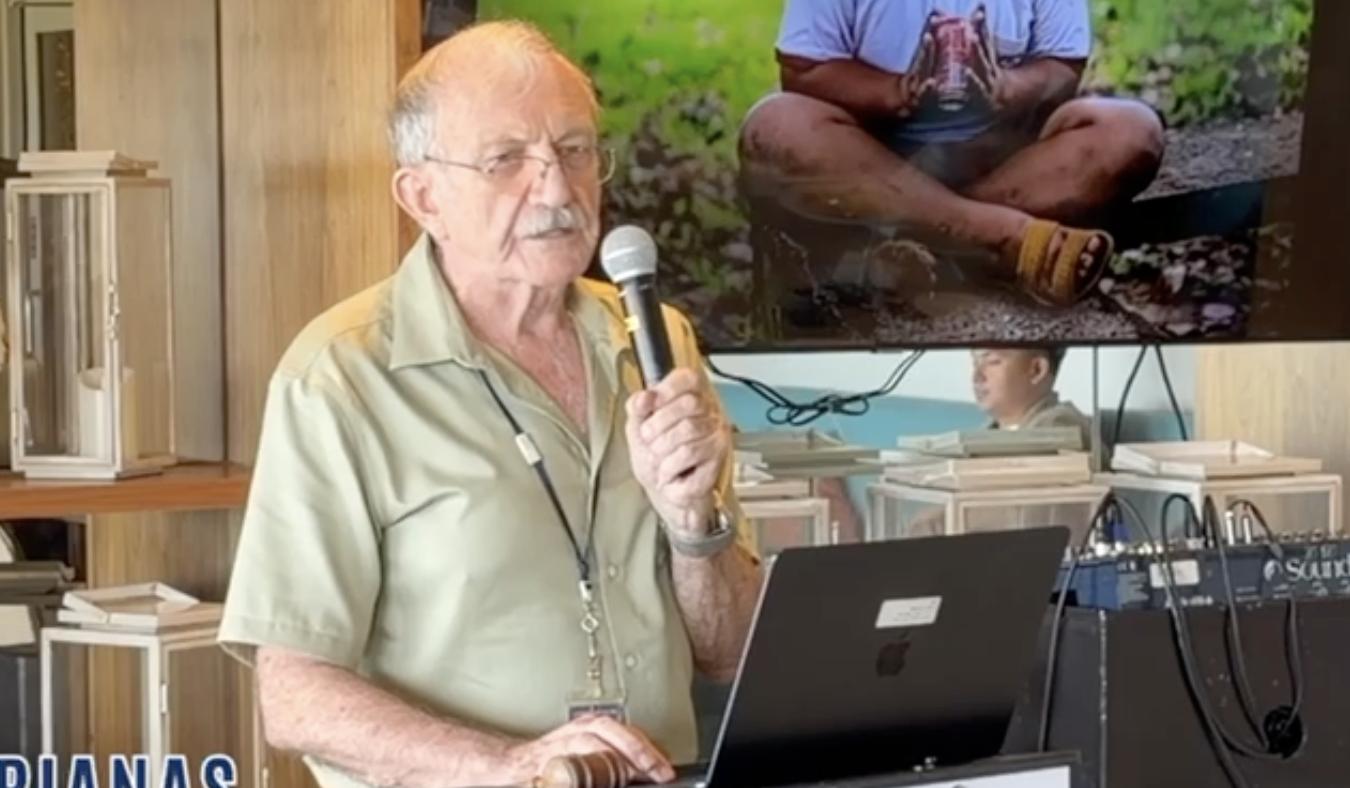
Returning CNMI residents to the traditional foods of their ancestors could help combat rising rates of obesity and diabetes, according to Commonwealth Health Center cardiologist Dr. Peter Gregor, who proposed an educational initiative encouraging students to reconnect with traditional diets.
Speaking during the Rotary Club of Saipan meeting last Tuesday, July 28, at Crowne Plaza Resort Saipan in observance of Maternal and Child Health Month, Gregor said schools could play a key role in helping families rediscover the foods that sustained earlier generations.
“What we'd really like to do is to return all the people on the planet, starting here, to good, healthy food on which their ancestors thrived,” Gregor said.
He proposed elementary, middle school, and high school competitions in which students would interview grandparents about traditional diets, learn how to read nutrition labels, and research ways ancestral foods may help address metabolic diseases.
Gregor argued that sugar has become the principal driver of today's global childhood obesity crisis.
“And now it is truly an evil molecule for what it does to humanity,” he said. “For 50 years, we have been aiming at cholesterol and fat. As I told you a year or two ago, this was a diversion, very carefully initiated by the sugar industry.”
According to Gregor, Pacific island populations once enjoyed excellent health while relying primarily on locally available foods before imported processed products became widespread.
“There is nothing wrong with that food. In fact, your ancestors adapted to that food very well,” he said, referring to traditional diets that included pork, chicken, eggs, and other locally available foods.
Gregor contended that the transition toward processed foods and sugary beverages has contributed to worsening health outcomes in many Pacific communities.
“Having been the healthiest people on the planet as recently as 60 years ago... the Northern Mariana Islands, Palau, are world champions in obesity and diabetes in children,” he said.
Gregor also criticized the widespread use of high-fructose corn syrup, saying it became more prevalent after major beverage manufacturers changed their sweeteners in the 1980s.
“In 1984... Coca-Cola and Pepsi-Cola changed the content of the sugar and replaced white sugar with fructose derived from corn,” he said. “I can assure you that it's mainly the beverages, whether it's sodas or fruit-based beverages that have been stripped of the fiber in the fruit. So these fruit-based beverages are almost as bad as the sodas.”
He argued that consuming fructose in processed foods and drinks differs significantly from eating whole fruit because fruit contains fiber and other nutrients that help regulate consumption.
Gregor encouraged families to revive traditional eating habits centered on root crops, legumes, fish, vegetables, and other local staples instead of heavily processed foods.
“Every culture has its first fruits, whatever it may be. And they have thrived for 100,000 years,” he said. “The common denominator, no added sugars.”
He also pointed to what he described as growing local interest in breads made from traditional ingredients.
“We'll be trying to return to ancestral diets by promoting taro bread and gobi bread,” Gregor said. “People are asking for the ancestral bread.”
Gregor said schools offer an ideal starting point for promoting healthier eating habits by reconnecting students with traditional foods and family knowledge.
“We have a parent handout to make them understand where we're going with this. It encouraged good food. So, what did my family eat before [baby food] pouches, soda, and snack bars? Ask grandpa. Ask grandma. What did babies eat before pouches? Ancestral food can be brought back.”
Share this article: