CHCC Child Psychiatrist Decodes ADHD in Virtual Workshop
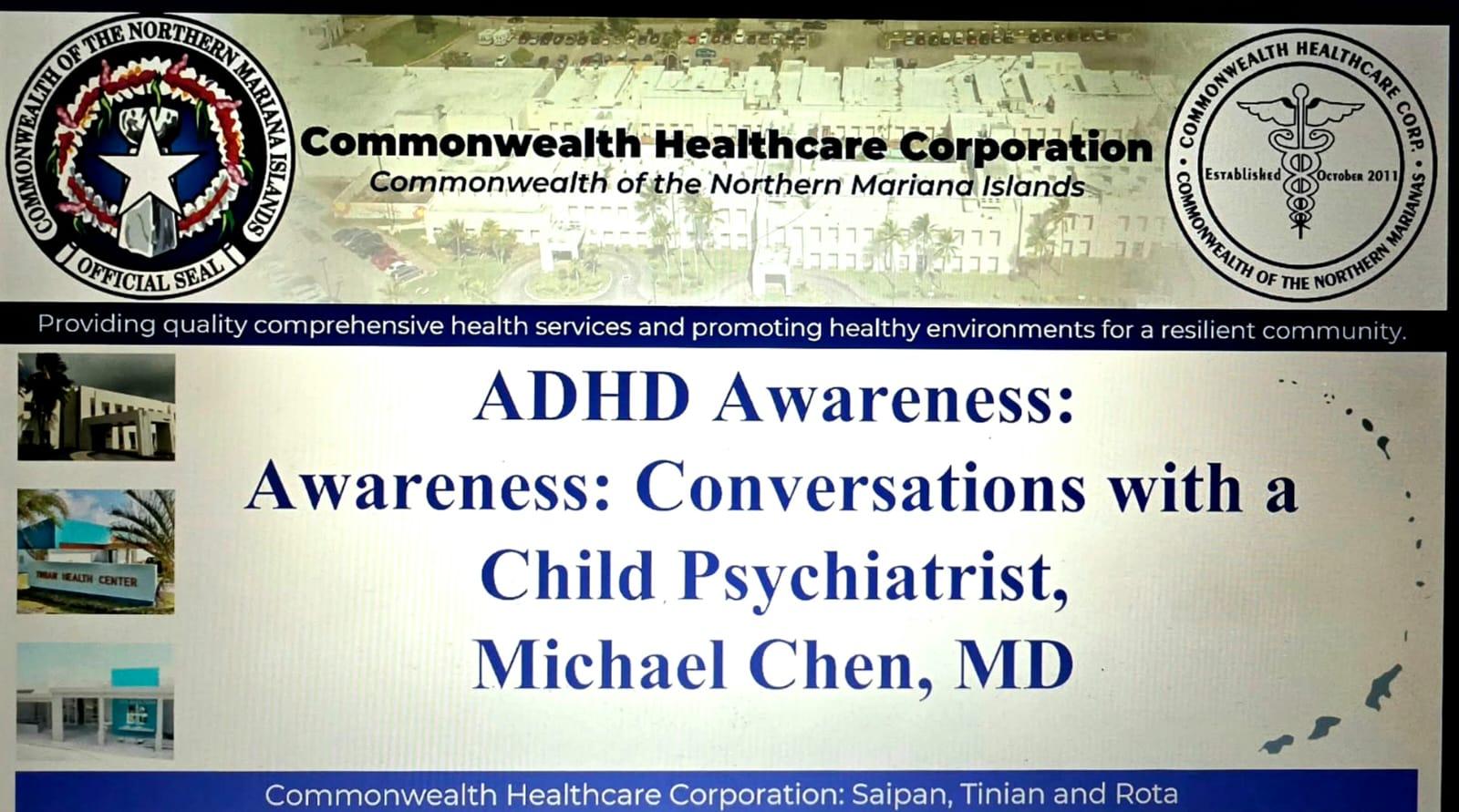
For many, ADHD is viewed as a temporary childhood phase characterized by endless energy and classroom disruptions. But according to CHCC Child Psychiatrist Dr. Michael Chen, the reality is a complex, genetic, and highly fluctuating lifelong journey. Speaking to 37 online participants via Zoom on November 12, Dr. Chen broke down the science, the stigmas, and the practical management strategies for ADHD—reminding the community that with the right support, the condition can be a gateway to incredible creativity.
Dr. Chen, who has worked with children for a decade—including the last seven years on Saipan—noted that November is often a tipping point for families. “This is the time where it gets a little bit more tough,” he explained, noting that the honeymoon phase of the new school year has faded, the material gets harder, and finals begin to approach.
To set the foundation, Dr. Chen clarified exactly what ADHD is according to the DSM-5, the standard diagnostic manual. He emphasized that for a formal diagnosis, symptoms of inattention or hyperactivity/impulsivity must be present for at least six months, be inconsistent with a child’s developmental age, and actively impair their functioning in multiple spheres—such as at home, in the classroom, or in social settings.
He also highlighted the strong genetic component of the condition. According to clinical research and twin studies, if a parent has ADHD, there is a 70% to 80% chance of passing those traits on to their children.
However, Dr. Chen was quick to pivot away from viewing the disorder purely as a deficit.
“There are some scientific symptoms of ADHD that are really a gift,” Dr. Chen noted. Individuals with ADHD are often highly creative, spontaneous, conversational, and possess an energetic sense of humor. He pointed to highly successful public figures who have openly shared their ADHD diagnoses, including Olympic swimmer Michael Phelps, musician Justin Timberlake, and actress Emma Watson.
A major focus of the session was determining when and how to intervene. Dr. Chen explained that treatment plans are highly dependent on the child's age and the severity of their impairment across different environments.
For children under the age of six, the first line of treatment is typically Parent Management Training (PMT) and behavioral therapy. Medication is generally not the immediate answer for very young children unless behaviors are exceptionally severe.
By age nine, however, medication becomes a more common and effective tool. Dr. Chen shared that early medication for highly symptomatic children has been shown to have protective brain-development benefits. Some studies suggest that managing ADHD effectively with medication by age 12 can actually help the brain mature more typically and may result in lower rates of substance abuse and depression later in life.
Moving beyond the clinical data, Dr. Chen provided the audience with actionable behavioral management techniques in the home and classroom. He emphasized the importance of proactively catching children doing the right thing and immediately offering praise. While token economies like sticker charts and point systems are effective, he warned that children with ADHD lose interest quickly. To maintain engagement, parents must keep rewards fresh and rotate them frequently.
When it comes to giving directions, Dr. Chen suggested making gentle physical contact and establishing eye contact first. Instead of offering a laundry list of chores or focusing on what not to do, caregivers should give single, specific tasks. He also urged adults to accept slight movement, noting that absolute stillness is impossible for many children with ADHD. Allowing them to shift or use sensory fidget tools can help them process information and stay focused. Finally, if consequences are necessary, such as time-outs, they must be immediate, consistent, calm, and brief rather than harsh or excessively long.
Perhaps the most surprising takeaway for the 37 virtual attendees was the fluctuating nature of the condition. Dr. Chen dispelled the myth that children simply "outgrow" ADHD. While symptoms can remit for some, studies track a fluctuating course for most patients. Symptoms may improve dramatically during early adolescence, only to resurface when environmental demands increase.
This is especially true for children with predominantly inattentive ADHD—often girls—or highly intelligent students who are not outwardly disruptive.
“Sometimes it’s missed,” Dr. Chen explained. "Kids that are not disruptive... if they don't cause problems in their environments, it goes unnoticed." For these individuals, the condition might not be identified until college or the professional workplace, when the structural demands finally exceed their natural coping mechanisms.
Ultimately, the session served as a powerful reminder that ADHD is a complex neurodevelopmental journey. With proper awareness, timely intervention, and supportive environments, parents, and educators in the CNMI can help channel their children's boundless energy and creativity into lifelong success.
Share this article: