CNMI faces WICHE funding conundrum, as nearly 100 students could pay out-of-state tuition
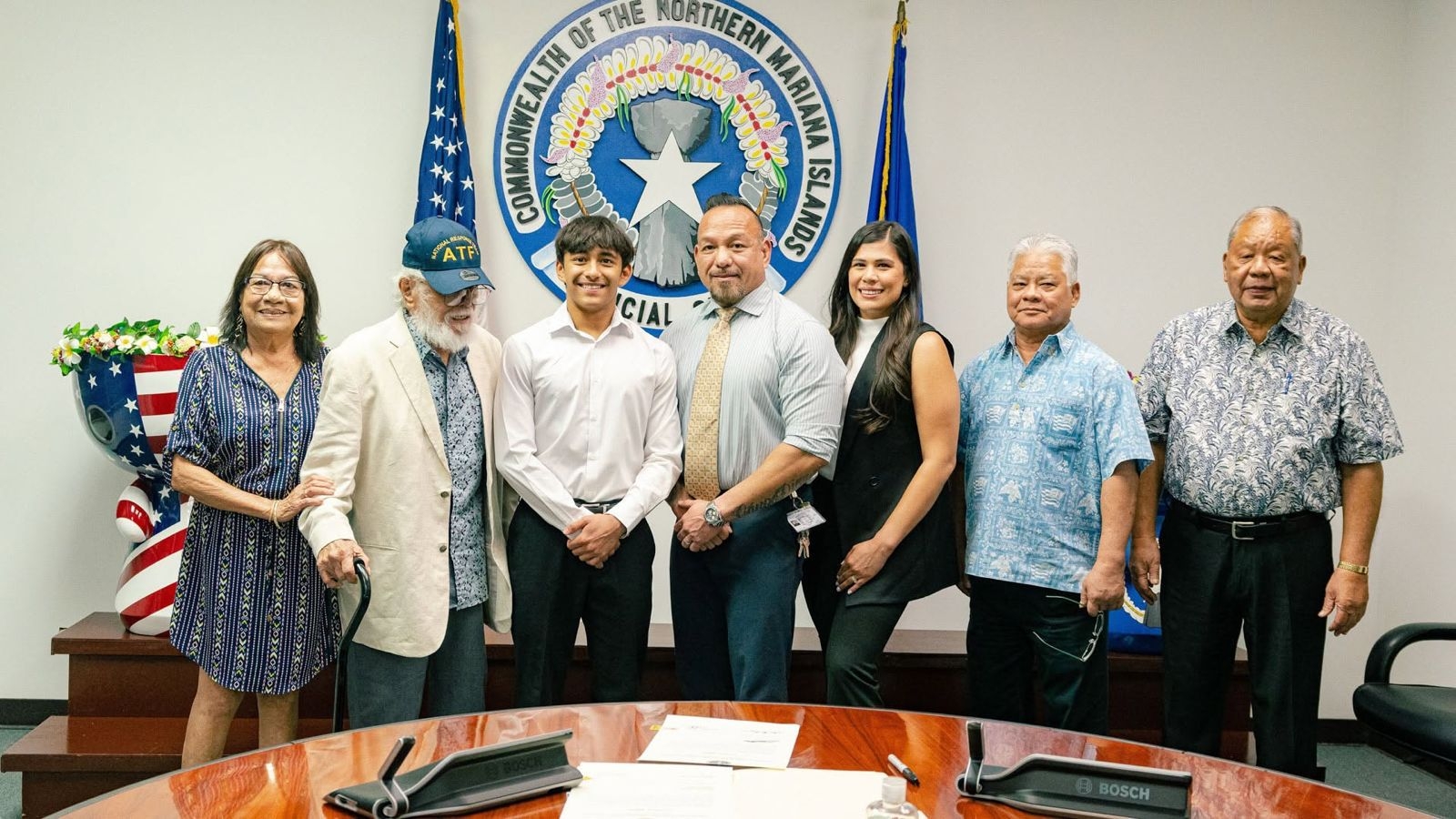
CNMI Scholarship and Financial Assistance Office chair Donna Flores said the Commonwealth is working to resolve a funding gap for its Western Interstate Commission for Higher Education membership, after federal grant support that previously covered the CNMI’s share was not renewed.
“So, with WICHE, we have annual membership dues, and here in the CNMI, we’ve partnered with the other territories in the region, and we’ve equally split the dues,” Flores said following the board’s Jan. 22 meeting on Capitol Hill.
For the 2024-2025 school year, approximately 100 students are paying reduced tuition fees due to the CNMI’s membership in WICHE, resulting in over $1.5 million in savings.
Flores said the CNMI had long relied on funding from the U.S. Department of the Interior’s Office of Insular Affairs through the Technical Assistance Program grant, but that support did not materialize this year.
“Previously, through the Office of Insular Affairs, the TAP grant, we were able to submit our request, and over the years, it was selected,” she said. “This year, we separated from the CNMI’s TAP grant submission, and we had submitted a separate one, and unfortunately, it was not selected this year.”
As a result, Flores said the CNMI must now identify local funding to cover its portion of the regional WICHE dues.
“So, we are left to find the funds to cover it for this round,” she said.
In a letter to Gov. David M. Apatang and senior policy advisor Clyde Norita, CNMI WICHE commissioner Frankie Eliptico detailed the fiscal year 2026 cost structure, stating that total Pacific regional dues amount to $174,500 for the period from July 1, 2025, through June 30, 2026.
According to Eliptico, the amount is shared equally among six Pacific jurisdictions—Guam, the CNMI, the Republic of the Marshall Islands, the Republic of Palau, the Federated States of Micronesia, and American Samoa—placing each jurisdiction’s base share at approximately $29,083. An additional $15,000 behavioral health component increases each jurisdiction’s total obligation to about $31,583.
Flores said failure to pay the dues would result in CNMI students losing in-state tuition benefits at WICHE-partnered colleges and universities.
“Should we not have it, should we not be a WICHE-partnered this year, those students will be adversely affected and will have to pay out-of-state tuition,” she said.
Flores said Apatang has expressed strong support for maintaining WICHE membership and has committed to helping identify funding to protect CNMI students.
“We did meet with the Gov. Apatang, and our WICHE commissioner, Frankie Eliptico,” Flores said. “He did assure us that he will help us come up with our share of the due, the total cost, so that we can protect our students.”
She also thanked Sen. Jude U. Hofschneider for being instrumental in the implementation and recognition of the WICHE program in the CNMI, adding that he’s also working with Eliptico to find funding for the CNMI’s WICHE membership.
Flores added that the administration is also encouraging coordination among Pacific partners to ensure all jurisdictions meet their respective obligations.
“What was recommended to the governor was if he could write a letter, maybe partner with the governor of Guam, to our brothers and sister islands,” Flores said, “just to send them out a reminder, letting them know the situation.”
While acknowledging the urgency of the issue, Flores said she remains optimistic.
“I don’t want to alarm anyone, but this is an issue that we need to resolve as soon as possible,” she said. “We are very thankful to have the support of Governor Apatang and we are hopeful for a promising [resolution].”
Share this article: