CNMI Firms Urged to Tap Air Force’s Mentor-Protégé Program
Companies in the CNMI should seize the opportunity to become part of the U.S. Air Force’s Mentor-Protégé Program if they want a bigger role in the military buildup.
That was the strong message during the NIPOA-GRS Air Force Mentor-Protégé Program Workshop held last Aug. 27 at the Crowne Plaza Resort & Spa’s Hibiscus Hall, where more than 60 business owners and representatives gathered to learn how to compete for federal contracts.
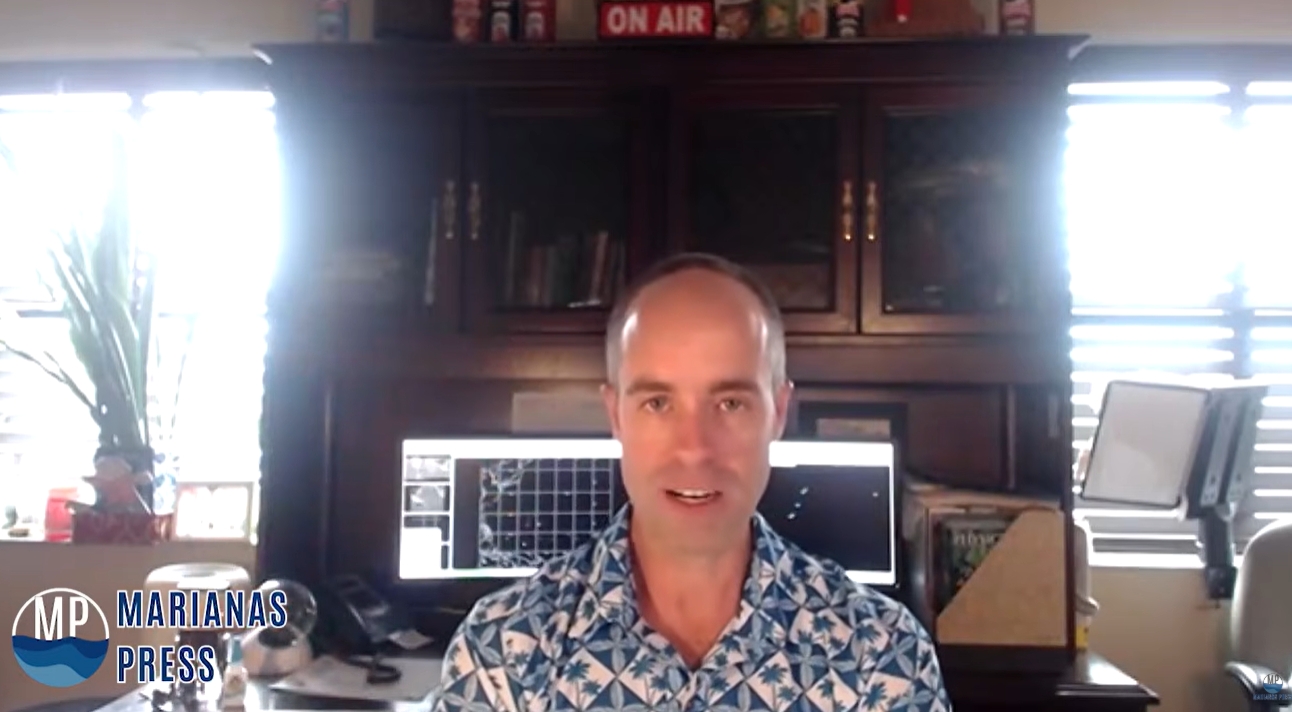
Shehan Goonewardene, director for the Mentor-Protégé Program at Global Resource Solutions, underscored how the initiative has been helping small businesses nationwide since 1991.
“There's no reason why large companies from the mainland are coming and winning contracts here when local businesses can do it. Unfortunately, the issue is that they need certifications, certain standards that are needed. So, Mentor-Protege will help them get those certifications and standards so that when they approach a contracting officer and say, ‘I can do that work,’ and the contracting officer says, ‘well, you need this certification, you need this training, you need these documents,’” he said in an interview with Marianas Press.
The program, he explained, matches small businesses with established defense contractors who provide training, infrastructure assistance, and mentorship. The ultimate goal is to turn subcontractors into prime contractors.
Goonewardene stressed that CNMI businesses should not wait until contracts are advertised before making preparations. Instead, firms need to register on SAM.gov, identify potential mentor partners, and build their qualifications over the next two years so they can compete as major military projects ramp up.
“There is no company from the CNMI that is a protégé company, and we'd love to have the first protégé company in the Mentor-Protégé program. Since 1991, there has never been a Hawaiian company. We have the first Hawaiian protégé company, and that's Nipoa Standard. It's the first time in the history of the program that a Hawaiian company came, so you can imagine how long that's taken.”
He added that while federal contracting can be frustrating and time-consuming, the payoff is worth the patience.
“Frustration is part of federal government contracting, but the benefits are long-term. Saipan is a beautiful island. There are amazing people here, food, and culture. You have time. Unfortunately, if you're looking to get into government contracting today, register on SAM.gov and hope that you get a contract tomorrow. That, unfortunately, will not be the case,” said Goonewardene.
For Glenna Sakisat Palacios, owner of Marianas Integration, the workshop was a breakthrough moment.
“The Mentor-Protégé Program is something that I became aware of, and I'm really very pleased and very happy, and I'm really grateful to the Pacific Air Force. They were actually the ones behind the scenes that actually pushed for GRS and the Small Business Administration to bring this program out, recognizing the need to continue their effort to expand the industrial base here in the CNMI community,” she told Marianas Press.
Palacios also acknowledged frustration in the community about lucrative contracts slipping away to off-island firms, most notably the $248,000 catering contract awarded to a Texas notary public earlier this summer. While she emphasized that the Mentor-Protégé Program was not tied to that case, she said the initiative can help prevent similar controversies by preparing local firms to meet federal standards.
“As Mr. Shehan mentioned earlier, this is the reason why they're here, to make sure that they help level up the playing field for the CNMI business community to be able to uplift their capability and capacity to be more competitive and with the overall objective of having our local community actually having access to direct prime contractors.”
Edward C. Camacho, special assistant to the CNMI governor for military affairs, in his remarks, said he hopes there’s a trickle-down effect for the local community with the U.S. military buildup in the region.
“We just need to make sure that that investment also is shared with us here, because we live here, we work here, this is our home. We need to make sure that they're not just building military stuff, but they're building our community. And I compare Tinian, and I use Tinian a lot as an example, when they spend millions of dollars on two-thirds of the island, they should spend some of those millions down there on the remaining one-third,” he said.
PACAF Small Business Program director Ailie Sourille, meanwhile, emphasized the role of small businesses in strengthening the defense industrial base, diversifying supply chains, and increasing competition. She encouraged CNMI businesses to see the program as a pathway to growth and partnership with the military.
David Sikora, Department of the Air Force Mentor-Protégé Program manager, explained how the Mentor-Protégé Program works, including benefits for small businesses, eligibility requirements, and how mentorship can help firms gain certifications, technical skills, and competitiveness.
Infotech CEO Gautam Mehndiratta, for his part, discussed challenges small businesses face with government invoicing and accounting, and offered managed services as solutions.
For many attendees, the workshop provided both encouragement and a reality check. Kylie Hasegawa, owner of Marianas Oceanic Solutions, said she arrived at the event with little knowledge of the program but left optimistic.
“Honestly, it's been a little bit of a rollercoaster, even within the couple of hours of the workshop. I came in here knowing absolutely nothing and was really excited to get all this information, and then someone goes and says, ‘oh well, it took me several years to get my first contract,’ and then I'm sitting there like, ‘oh man, what am I doing here?’ And then someone else later goes and says, ‘well, we're here to help you. We want you to be bugging us and networking.’”
Other participants voiced concerns about whether federal dollars will truly benefit the local economy. Del Benson, who runs the marketing firm TrueBeep, said more protections should be in place to guarantee CNMI companies get a bigger slice of the pie.
“What we need is, and this was proposed to CNMI Delegate Kimberly King-Hinds, Washington, D.C. needs to, and our governors need to, when these contracts come out here, that we need 10% local contracts, not just a sub of a sub of a sub contract,” he said.
Still, Benson acknowledged that the workshop was useful in opening lines of communication with federal agencies.
“Well, we're talking about the biggest bureaucracy in the world, the federal government. And like they said, nothing is easy. And the hoops to jump, I mean, some people can get into it, and some, like myself, will be just totally lost because when you go step by step and then have to step back and redo it,” he said.
Palacios stressed that success will depend on local firms being proactive—seeking out mentors, promoting their businesses, and showing up at industry events.
“Like in any industry day or any event, it's really important that you sell your company. The only way for your company to be known is for you to go out there and make yourself and your company known.”
Goonewardene emphasized that while the workshop was a starting point, the larger goal is to establish long-term relationships between CNMI businesses and federal contractors. With billions of dollars in military projects moving forward in the Marianas—particularly on Tinian—opportunities are expected to grow.
Share this article: