CPA Freezes Airline Fee Hikes for 60 Days to Keep CNMI Connected
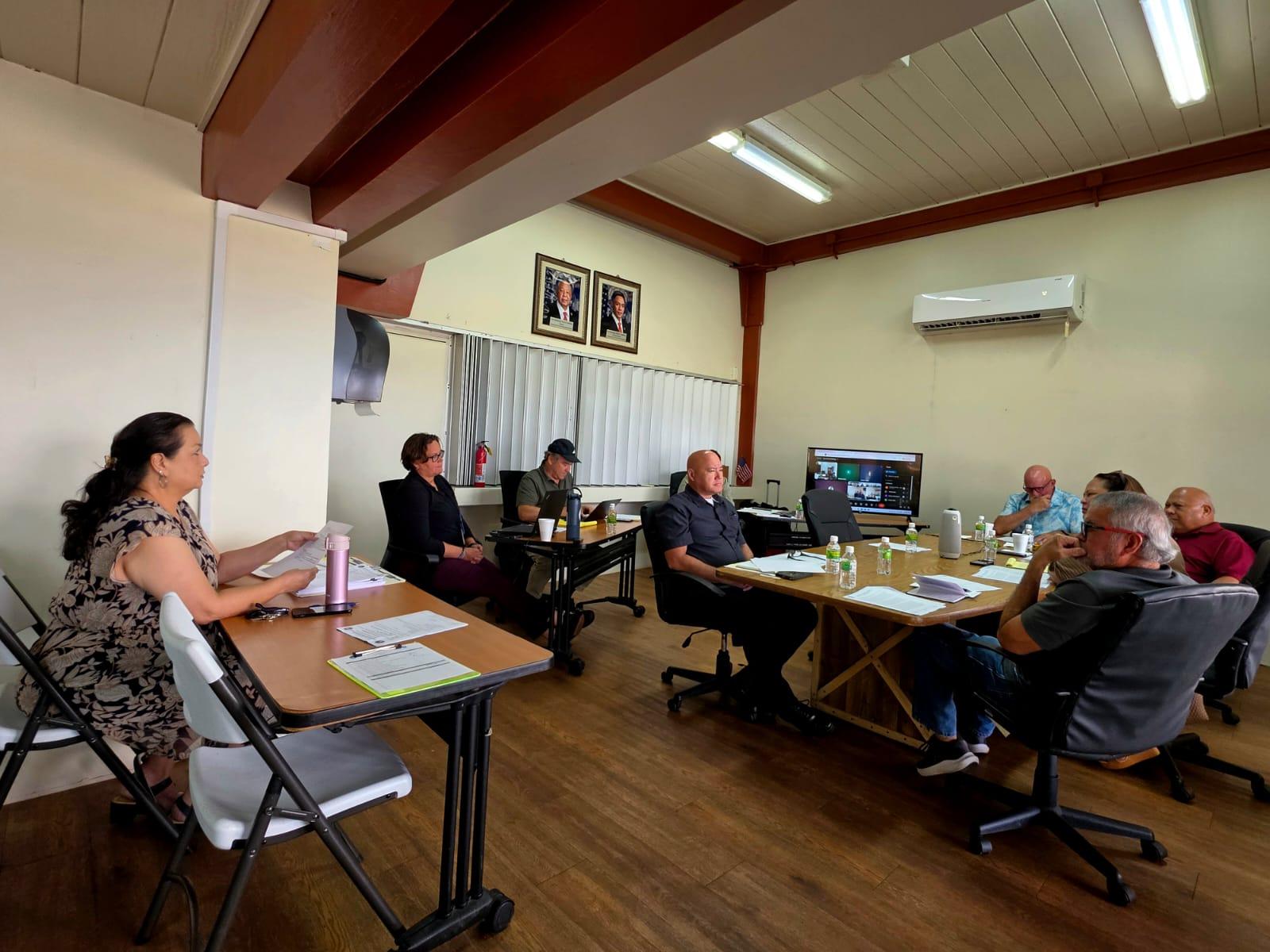
Faced with the immediate prospect of commercial airlines abandoning the Commonwealth of the Northern Mariana Islands, the Commonwealth Ports Authority Board of Directors voted during an emergency September 28 meeting to halt scheduled fee increases. The decision establishes a narrow sixty-day standstill by extending the existing airline rate reduction program through November 30, buying critical time while leadership navigates a multimillion-dollar deficit, organizational shifts, and a sudden vacancy on its governing panel
At the center of the emergency session was a sharp clash between standard airport cost-recovery formulas and the volatile economics of Pacific air transit. Soaring jet fuel prices—spiking from an anticipated $160 per unit to $189—collided with weak Asian currencies against a surging U.S. dollar, pushing commercial carriers toward a financial breaking point.
CPA Board Chairman Bartley Jackson reported that one key airline warned it could no longer absorb proposed landing fee hikes from roughly $19 to $22 or higher per unit. Jackson noted that while the carrier had committed to operating at a loss to maintain service to the CNMI, higher landing fees would force an immediate schedule cancellation. Vice Chairman Antonio B. Cabrera echoed this reality, noting that the carrier's warning was not an empty threat but a straightforward commercial necessity that the local economy could not afford to challenge. In addition to defending existing routes, the board sought to protect developing business, including ongoing discussions with Philippine Airlines to add weekly direct flights between Manila and Saipan.
To enact relief without throwing airport finances into legal uncertainty, the board executed a sequence of three formal actions. The panel first voted to suspend Board Resolution 2026-02, which had previously scheduled higher fees for the incoming fiscal year. It then extended the discounted fee schedule established under Resolution 2025-14 through November 30. Finally, the board adopted revised interim figures to keep airport facilities operational under the two-month fee freeze.
This sixty-day window will focus on re-evaluating the rate structure developed by aviation consultancy Ricondo & Associates. Management and the consultants will conduct an immediate audit of rentable versus non-rentable space across the upper terminal to recalculate allocation models. Simultaneously, legal counsel will consult the Federal Aviation Administration to determine whether federal grant assurances permit the ports authority to offer targeted, incentive-based discounts to specific carriers rather than enforcing uniform, across-the-board rate structures.
Freezing landing fees shields incoming flights but exposes the authority to a severe financial shortfall. Projected airport operating revenues stand at just $5.84 million. To prevent an operational shutdown, the board approved an extraordinary $5 million cross-subsidy transfer from the CPA Seaport division, lifting total available resources to $10.84 million.
Even with this multimillion-dollar maritime infusion, the airport faces a projected net operating loss of $3.455 million for the fiscal year. Jackson cautioned that raising fees in a depressed travel market is commercially self-defeating, comparing it to a hotel operator attempting to offset low occupancy by charging unattainable room rates. Furthermore, directors recognized that tapping the seaport carries legal limitations; while maritime revenue remains steady due to military logistics on Tinian, diverting additional funds risks breaching debt-service coverage ratios mandated by seaport bond covenants.
To curb ongoing cash burn, CPA personnel will remain on an austerity work schedule of 72 hours biweekly rather than the standard 80-hour pay period. The board also approved an adjusted staffing roster of 187 positions, consisting of 155 active staff, 27 funded vacancies, and five unfunded vacancies. This reflects an increase over the 172 positions approved in August, a change Comptroller Sheryl Sizemore attributed to reinstating 17 critical posts—such as the deputy executive director, business development manager, and staff engineer—that were mistakenly eliminated during earlier budget drafts but remain vital to executing the agency's deficit reduction program.
The meeting concluded with the board's mandatory annual officer elections, in which members unanimously re-elected Bartley Jackson as Chairman, Antonio Cabrera as Vice Chairman, and Carline Sablan as Secretary. Outgoing Treasurer Eusebio Manglona stepped down due to personal obligations, leading to the unanimous confirmation of Vincent Camacho as the new Treasurer. Just before adjournment, Board Member Juan Salas announced his immediate resignation effective September 30. Salas's departure leaves an empty seat on the panel as the clock runs down toward December 1, leaving the reorganized board two months to finalize terminal audits, clarify federal regulations, and resolve the structural deficit.
Share this article: