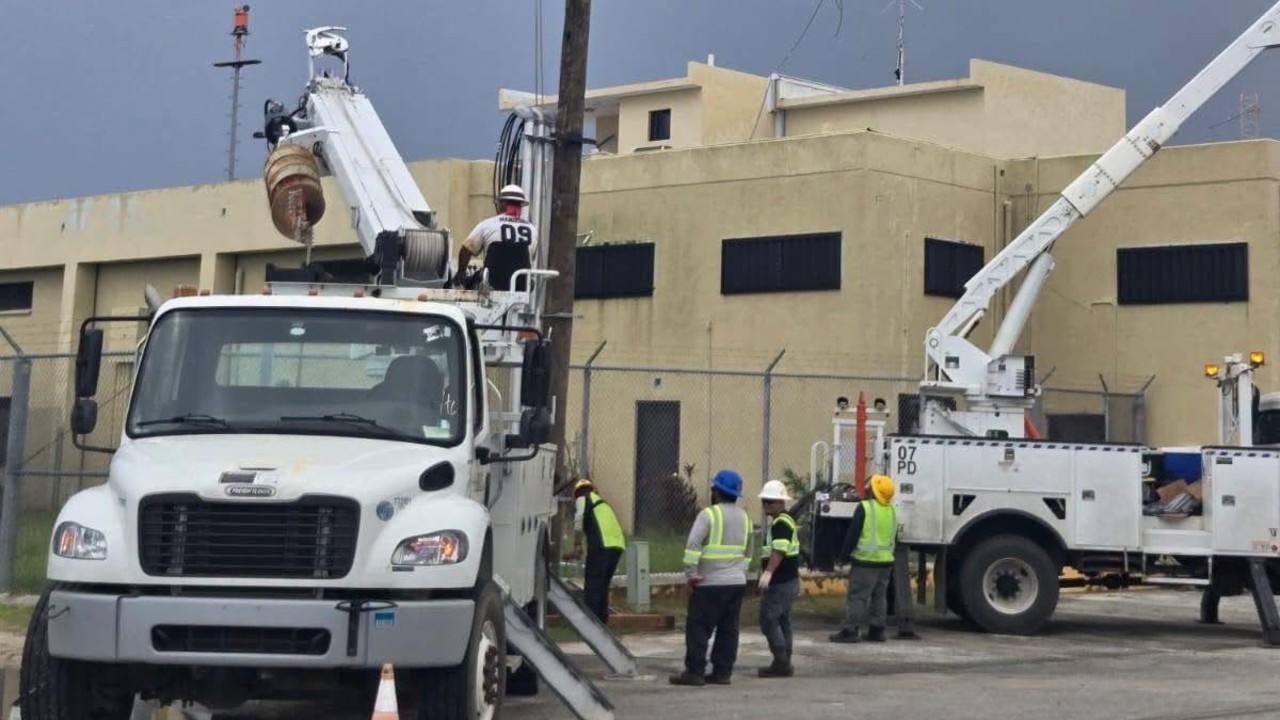
The Commonwealth Ports Authority’s proposed independent power producer solar project could generate enough electricity to power CPA’s facilities across Saipan, Tinian, and Rota—and potentially supply a significant portion of the CNMI’s overall power demand.
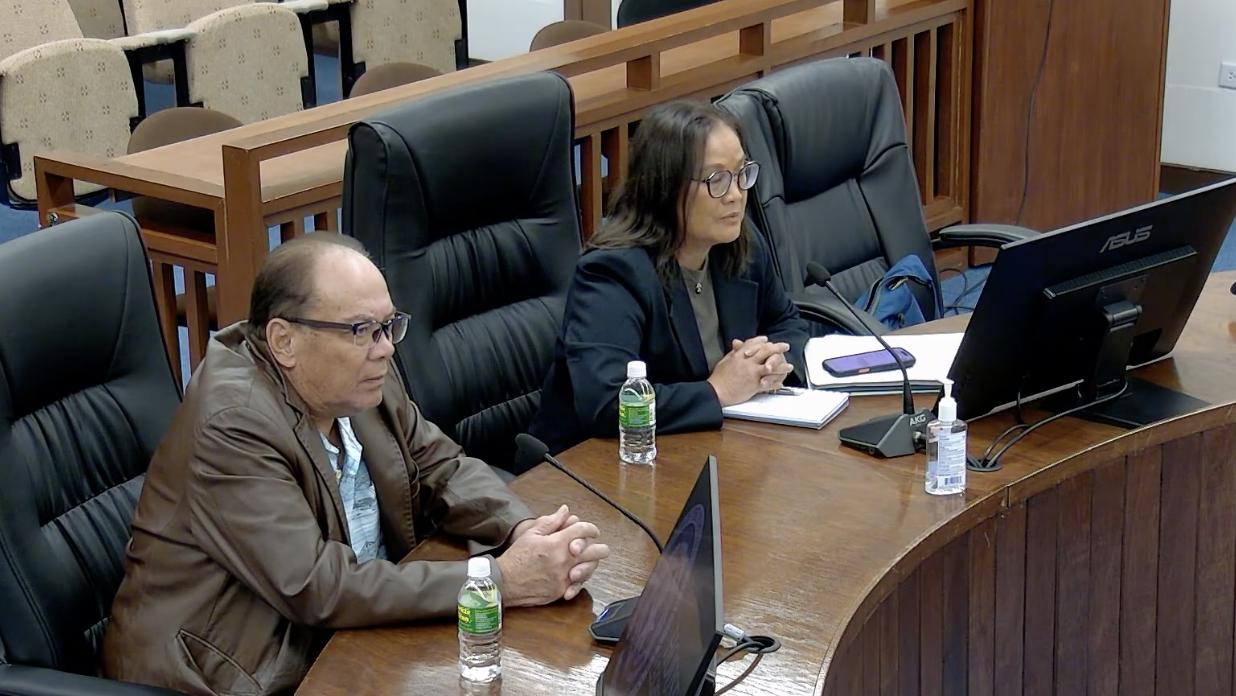
However, uncertainty over whether the Commonwealth Utilities Corp. would agree to buy excess power remains a major hurdle, lawmakers were told during a House of Representatives Transportation and Infrastructure Committee hearing last Jan. 22 on Capitol Hill.
CPA executive director Esther Ada said the request for proposals, issued in July 2025, drew five responses and resulted in a notice of intent to award to one proposer following evaluation and a technical review by the National Renewable Energy Laboratory.
The project is structured as a long-term power purchase agreement under which the private developer would design, build, own, operate and maintain the solar facilities on CPA land for up to 25 years, with CPA as a customer rather than the owner.
“What they had proposed was a very large number of megawatts, or the output, way more than what we needed. And we were a little bit concerned with that. We were concerned that we would not be able to sell it back to the Commonwealth Utilities Corp.,” she said.
CPA procurement officer Alex Tudela explained that the project is not a turnkey system that CPA would operate.
“They have to own it, operate it, maintain it, and then until such time that there's an arrangement for CPA to purchase. It's like an 18- to 25-year process,” he said.
House committee chair Rep. Vincent S. Aldan pressed CPA officials on the broader economic implications, arguing that the project’s value should extend beyond reducing CPA’s utility bills.
“If we are not able to sell power to CUC to eliminate that landing fee or to subsidize that landing fee, then it has no purpose at all other than CPA just reducing their utility costs,” he said.
Ada acknowledged the limitation. “Correct,” she said, noting that under the current structure, CPA’s direct benefit would be lower electricity expenses, estimated at roughly $3 million annually across all six ports. Any broader benefit to airlines, passengers or the wider community would depend on whether excess power could be monetized or savings passed through via lower airport rates
Aldan argued that CPA is uniquely positioned to play a larger role in the CNMI’s energy transition because of its prime land holdings and proximity to existing electrical infrastructure.
“You guys are sitting right there at that position where you guys can interconnect easily,” he said, contrasting CPA’s sites with more remote locations like the Calabera Cave and Naftan Point, which were proposed for other solar projects that would require costly transmission upgrades
He further suggested that large-scale solar generation on CPA land could reduce CUC’s reliance on diesel generators, lowering fuel consumption and maintenance costs and ultimately driving down islandwide power rates.
“If CPA alone has the property to provide more than 50% of power to the whole entire island, like you just said, right, it would reduce the cost of utility because therefore, you know, CUC doesn't have to run their generators as much, which means that the generators will be down, which would mean that they're not consuming fuel, which means that maintenance is lower.”
Despite that potential, Ada said there is no guarantee CUC would agree to purchase excess power. “What guarantee do we have that CUC will buy that power from us?” she asked, calling the lack of certainty a central concern in negotiations with the preferred proposer
Aldan responded that CUC is legally required to at least entertain such proposals. “By law, CUC has to entertain that,” he said, adding that CUC’s own renewable energy procurement has been delayed by disputes over its separate RFP, placing CPA “in a prime spot” to move ahead more quickly
Ada said CPA still needs to return to the proposer to “really take a look at the power purchase agreement” and resolve outstanding issues before formally engaging CUC. “Once we agree to that, we can meet with CUC and see if that power purchase agreement is something that they can approve of,” she said
Aldan urged CPA to accelerate the process, warning that delays could jeopardize access to federal renewable energy incentives.
He cautioned that “we cannot keep talking about it. We have to move, and we have to move fast,” adding that the CNMI has historically missed opportunities to modernize its energy infrastructure.
The committee indicated it would seek a future joint discussion with CUC to clarify its willingness to interconnect with and purchase power from the CPA-backed solar project, as legislators weigh whether the initiative can be leveraged not only to cut CPA costs, but to reduce utility rates, airline fees, and the overall cost of living across the CNMI.
Share this article: