DPW urges proper trash segregation as federal Sinlaku cleanup ramps up in Garapan
Department of Public Works Secretary Ray N. Yumul is urging residents and businesses to properly segregate Super Typhoon Sinlaku-related debris from ordinary household and commercial trash as federally funded cleanup operations continue across Saipan, warning that U.S. Army Corps of Engineers contractors are only authorized to collect storm-generated waste.
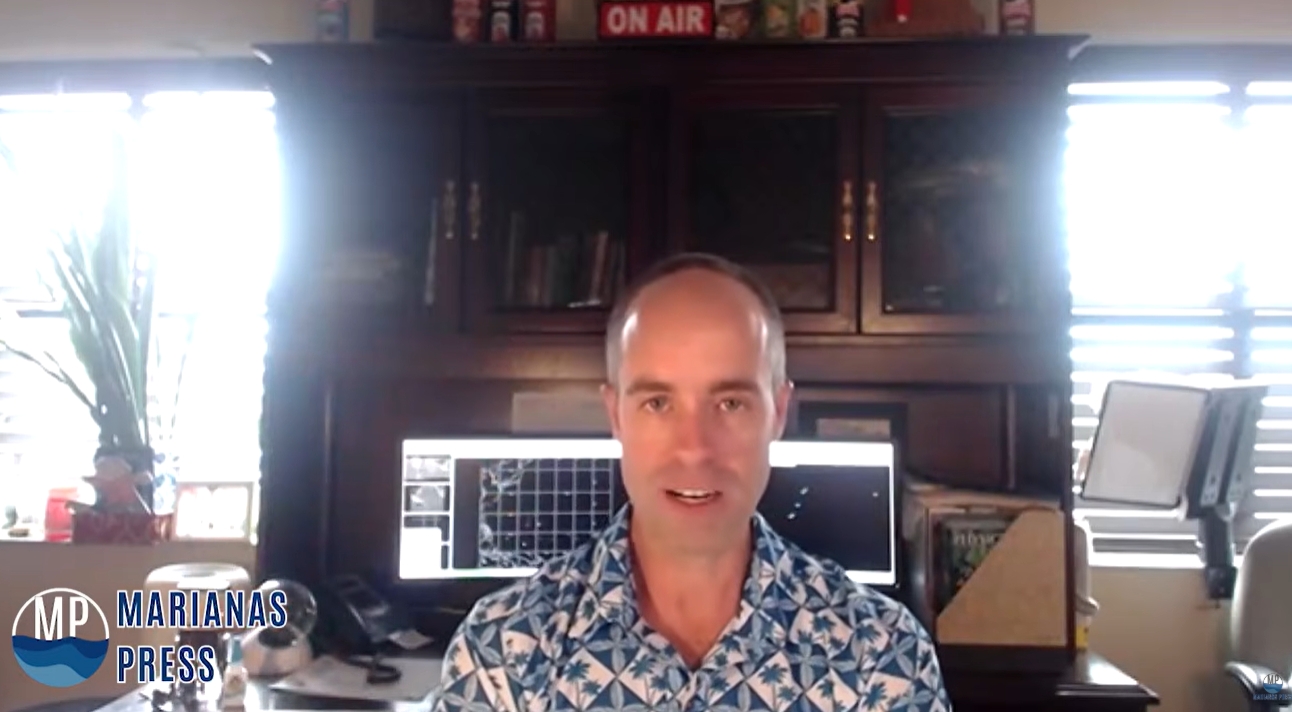
The interview, conducted last May 19 at the DPW office in Oleai, came after a social media post called on Yumul and DPW to address growing piles of typhoon debris left along Coral Tree Avenue in Garapan’s tourist district.
Yumul said the CNMI government, already grappling with fiscal constraints under Gov. David M. Apatang’s proposed budget reflecting a 40-hour pay period, does not have the manpower or financial capacity to absorb the removal of non-typhoon-related garbage mixed into roadside debris piles.
Speaking about complaints regarding debris fronting businesses and hotels in Garapan, Yumul said DPW crews initially focused on restoring access to roads immediately after the storm.
“So, right after the typhoon had passed, within the first couple weeks, all our crews that had been mustered went out and did debris clearing,” Yumul said. “We had to open all the primary roads and also the secondary roads, such as in the Garapan District, the tourist district, namely.”
According to Yumul, DPW crews were tasked primarily with cutting, piling, and moving debris to reopen roadways, while the actual removal process falls under the Federal Emergency Management Agency and the U.S. Army Corps of Engineers through federal contractors.
“There is a progression. There is a schedule set by Army Corps and FEMA on the areas to be cleared,” he said. “So, the Garapan South through Gualo Rai and Oleai is actually slated to begin starting ironically today, May 19th through June 2nd.”
Yumul said DPW has already coordinated with federal contractors to prioritize heavily impacted public areas, including schools, clinics, basketball courts, and tourist corridors where debris piles have become increasingly problematic.
“So, I will ask the contractor to focus on Garapan to get a crew to start picking up the typhoon-related debris,” Yumul said.
However, he stressed that contractors can only collect storm-generated debris and not ordinary household or commercial waste mixed into the piles.
“The mixed solid waste, the normal household waste, that’s going to be the challenge for us because we’re trying to bring in the equipment to pick those items up because I’m also concerned about exposing staff to the hazards of the contents,” Yumul said. “We don’t know what’s inside, and it could pose a hazard to the crews working.”
Yumul added that spoiled food from extended power outages following Sinlaku is now becoming a public health concern.
“I got to work with public health now to make sure that if there’s any putrefied food, basically rotting food from failed refrigerators because, you know, we had a power outage for so long and it still continues to be so for some areas,” he said. “It’s starting to become a health concern.”
The DPW secretary also appealed directly to businesses to avoid taking advantage of federally funded cleanup operations by dumping non-storm-related waste into debris piles.
“So, basically, I’m asking the business to be considerate,” Yumul said. “If they have the ability to bring those debris to the transfer station, to the landfill, or even up to the recyclers, please do so.”
He noted that DPW has observed commercial waste, including used cooking oil, being left in roadside piles within the tourist district.
“There’s a lot of that we’ve seen in the tourist districts,” Yumul said. “Those are not typhoon-related debris.”
Yumul warned that once FEMA and Army Corps contractors complete their mission, the CNMI government will be left to handle whatever remains.
“So, it’s going to be a financial challenge because someone’s going to have to pay for it, and it’s going to basically be the taxpayers.”
He said businesses, particularly restaurants, are already required to maintain regular trash pickup services under their operating permits and should continue using those channels for normal waste disposal.
“I don’t know of any business that does not have trash service, especially the restaurants,” Yumul said. “They’re required to have trash services in order to be in compliance with their licenses to operate as a restaurant.”
Yumul added that he is open to discussions with commercial trash haulers if additional coordination becomes necessary.
“At the end of the day, when FEMA, the U.S. Army Corps, and their contractor [are] done with the debris removal and processing, what remains is going to be our headache,” he said. “By businesses leaving it out on the curb or even for some residents that are taking advantage by putting out normal day-to-day household waste, eventually someone’s going to have to pay for it. It’s basically going to be us again, the taxpayers.”
Share this article: