JKPL Evolution and the Changing Fino’ Chamoru
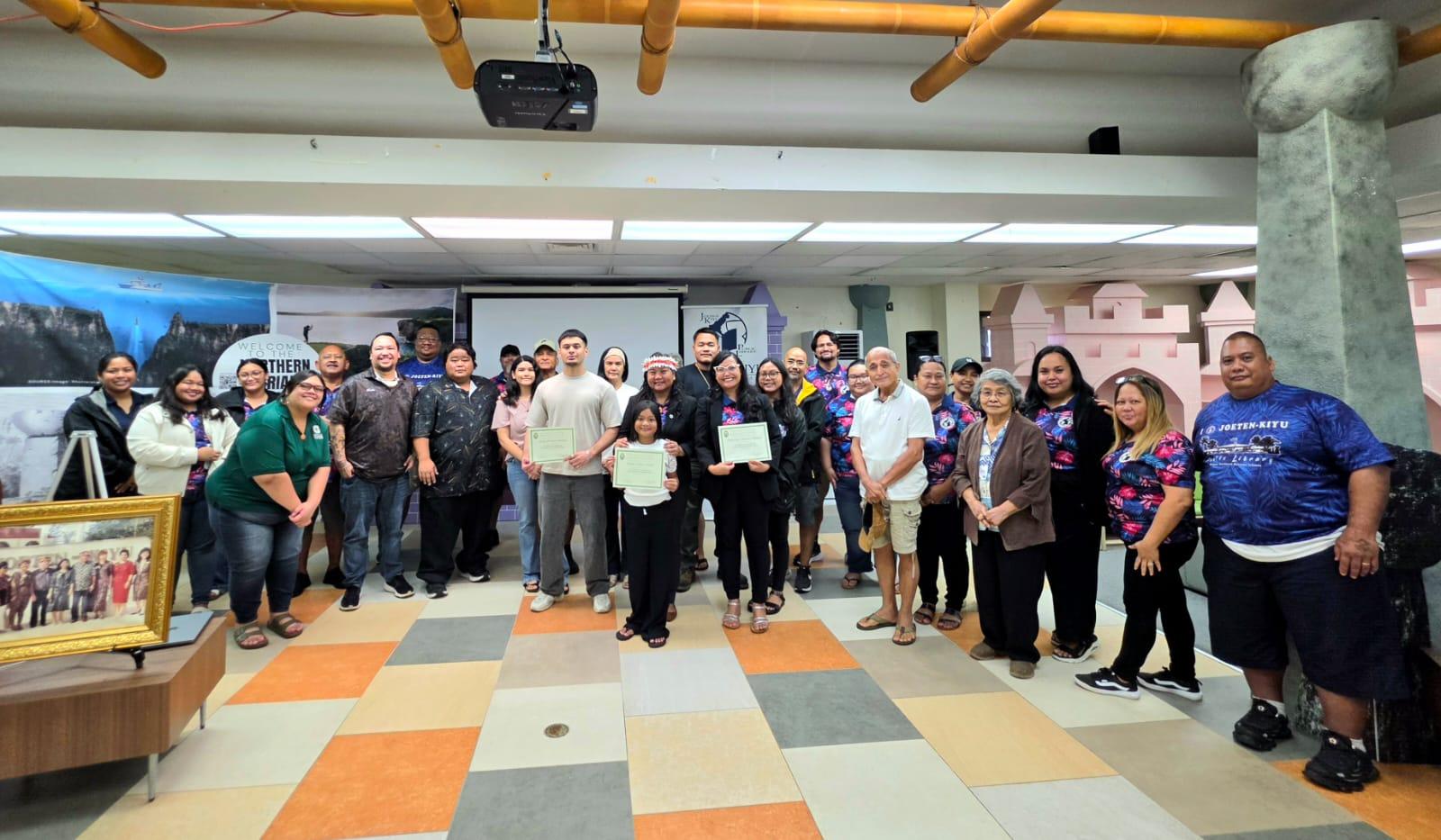
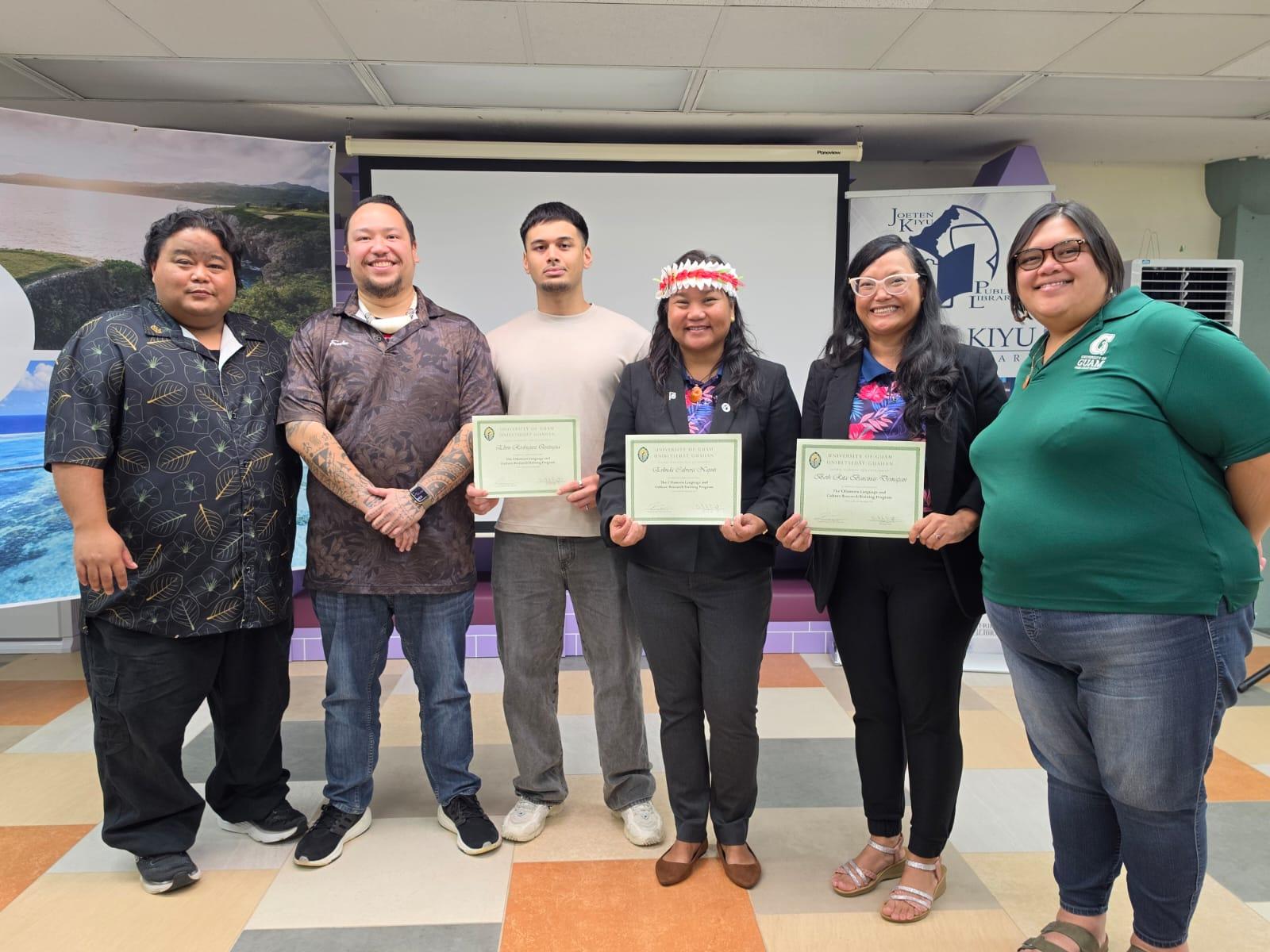
A community’s identity lives in its shared spaces and its spoken words. On August 5, the intersection of Saipan’s history and language took center stage at the Joeten-Kiyu Public Library (JKPL) in Susupe during the Fina'-i-che'cho' Fina'na'guen Inilao Fino' & Pengnga' Chamoru event.
Guided by Master of Ceremony Vincent P. Aldan and opened with remarks from the University of Guam's Dr. Kenneth Gofigan Kuper the event showcased a new oral history project. The gathering celebrated two distinct but deeply connected pillars of the Commonwealth of the Northern Mariana Islands (CNMI) cultural heritage: a new oral history project documenting the community effort to build the island's first public library, and groundbreaking research into the modern evolution of the Indigenous Fino' Chamoru language. Together, they highlight an island determined to honor its past while actively adapting to the 21st century.
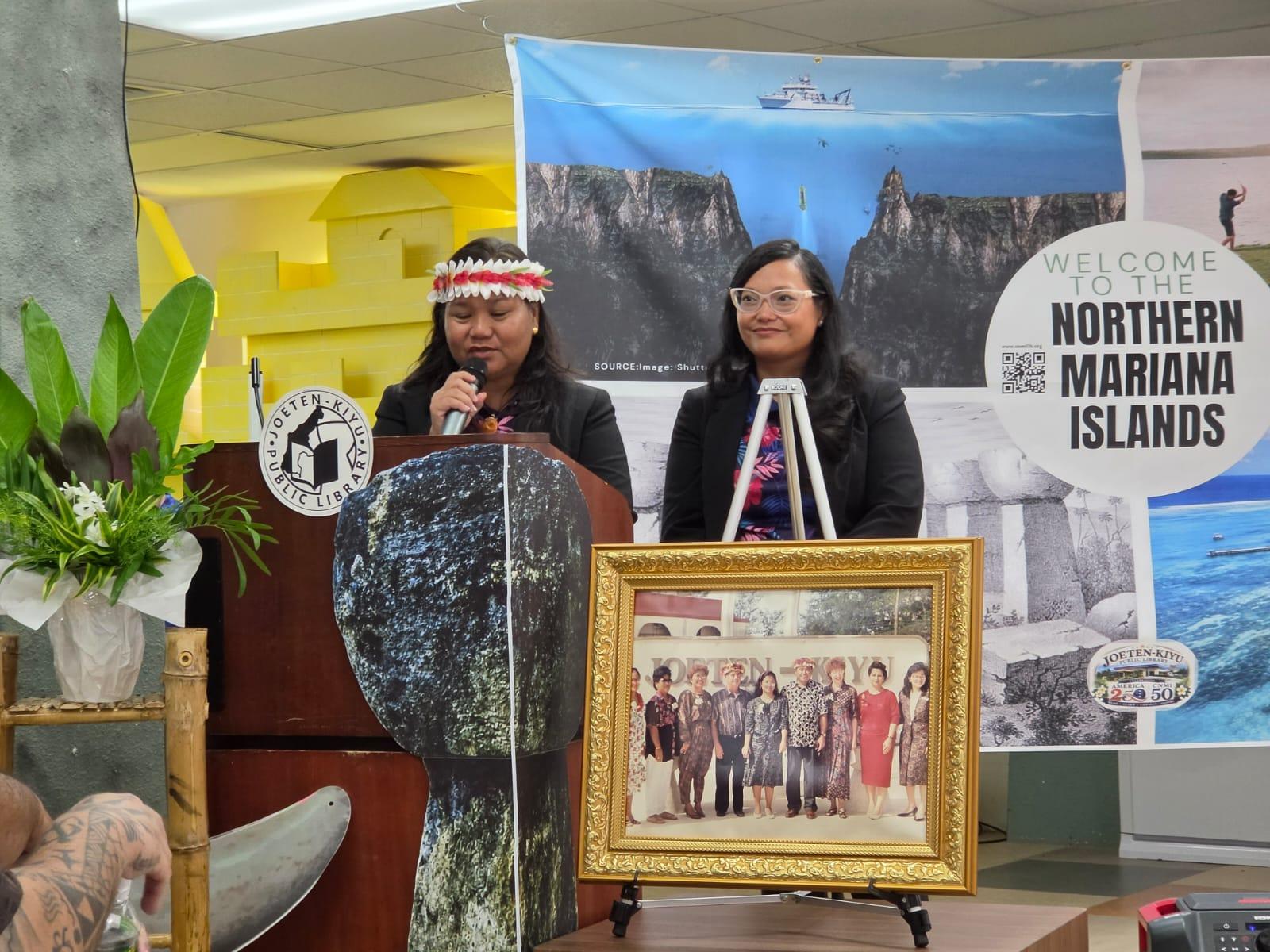
Spearheaded by local library staff through a University of Guam (UOG) distance learning program, a new oral history project is capturing the origins of the Joeten-Kiyu Public Library.
The library’s roots date back to 1989 or 1990, when former Commissioner of Education Dr. Elizabeth Rechebei first proposed the idea during a Rotary Club meeting. Transforming that vision into a fully furnished reality required massive community mobilization. The project highlights the staggering financial backing of indigenous businessmen Jose C. Tenorio (Joeten) and Manuel S. Villagomez (Kiyu), who stepped up to donate an estimated $600,000 each. The late former Governor Larry I. DeLeon Guerrero also provided the crucial political support needed to bring the project to the finish line.
Documenting this history came with unique challenges. Beyond the geographical hurdles of completing a UOG capstone online, researchers Erlinda Naputi, JKPL Director and Beth Demapan, Tech Services Librarian faced a cultural barrier.
"It's hard to convince our elders to be interviewed. They're very camera-shy, and they're very humble people; they don't like to take credit," Naputi explained. Fortunately, key figures eventually agreed to go on camera, permanently enriching the library's Pacific archives. With Phase 2 already in the planning stages to interview more contributors across different languages, the team views this archive as a lasting gift.
"This gathering of stories ensures our future generation knows how the library came about," Naputi noted. "We must not forget the important people who took part."
As researchers work to archive the voices of the elders who built the library, linguists are simultaneously studying how the voices of the next generation are shifting. Fino' Chamoru is going through a quiet but massive transformation, proving that languages don’t simply disappear—they adapt to survive.
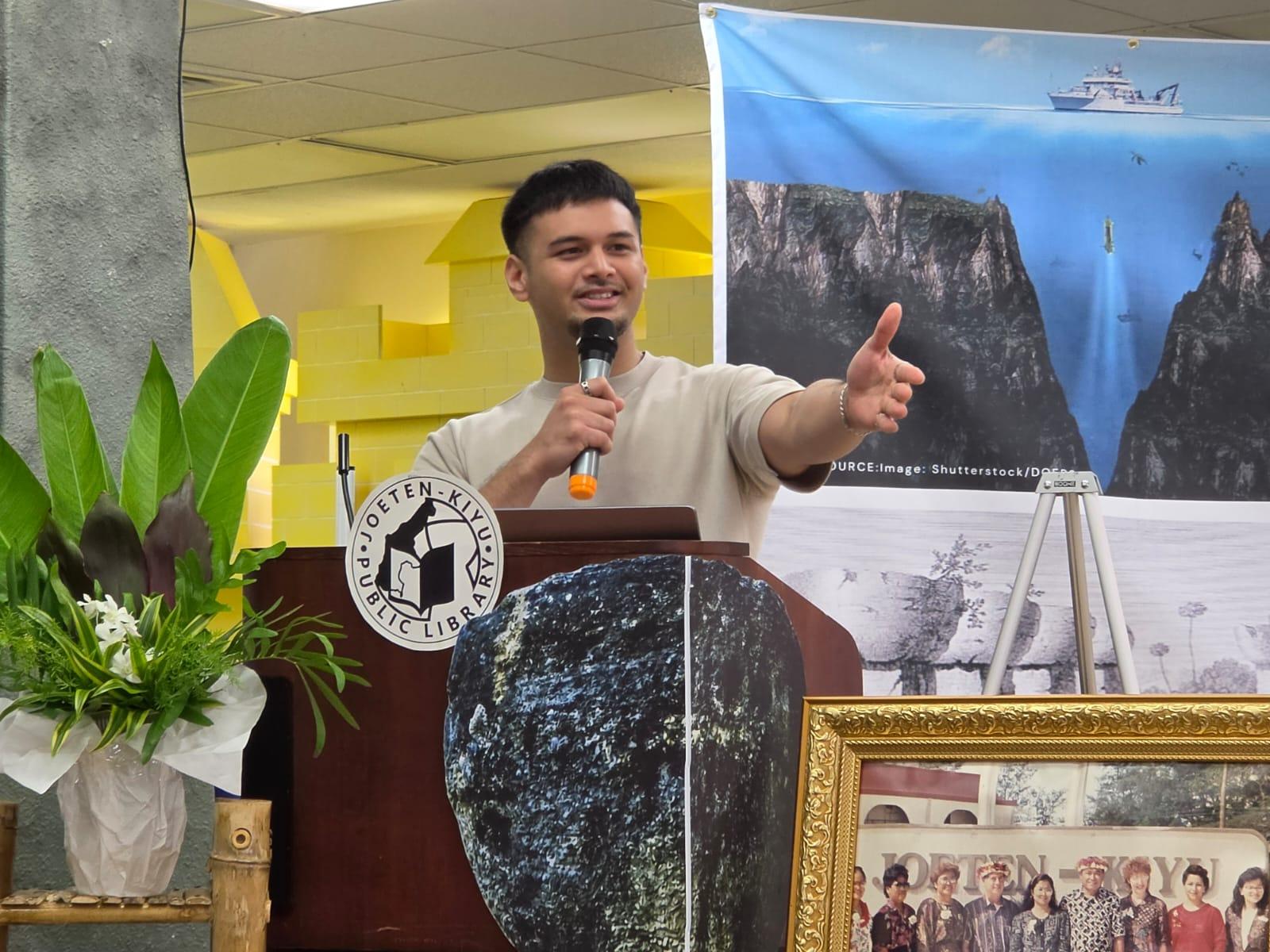
Following the presentation of the Naputi and Demapan, Elvin Quitugua of UOG shared an in-depth study examining the real-time shifts in Chamoru grammar, vocabulary, and pronunciation.
According to Quitugua, Fino' Chamoru carries the heavy weight of the Marianas' history: centuries of Spanish colonial influence, a 1917 U.S. Naval policy banning the language in schools, and the trauma of World War II, which led many parents to speak only English at home.
Today’s language is being pieced back together by three distinct groups of speakers: The Household Primary - Fluent elders (60+) who learned naturally at home and serve as the baseline for traditional speech; The School Primary- Younger generations (18–34) with moderate skills who learned the language mostly in classrooms, and The Self-Taught Reclaimers - Highly dedicated adults aggressively teaching themselves the language. Interestingly, these learners are actively reviving ancient, pre-Spanish Chamoru words from history books—vocabulary that even fluent elders haven't heard in decades.
Because of its complex history, modern Fino' Chamoru is a constant tug-of-war. Speakers frequently use Spanish loanwords for formal or social concepts (like familia for family), but naturally revert to ancient indigenous words when discussing nature, like the ocean or the stars.
However, the most surprising shifts are happening in the underlying structure of the language. Traditional Chamoru features complex rules, such as specific "classifier words" depending on the context of an object. Today, many modern learners struggle with these rules and instead rely on an "English template"—thinking of the sentence in English and directly translating the words into Chamoru.
This English influence has even changed the physical rhythm and melody of the language. "Both students and even instructors spoke in a very English-vowel-sounding manner in their stress timing and their intonation," observed Mr. Elvin during his local classroom visits.
Ultimately, neither the library's history nor the shifting Chamoru language are static relics of the past. The linguistic research proves that Fino' Chamoru is simply adapting to survive in an English-heavy world, sparking a call to action to change how the language is taught—moving away from strict grammar drills toward meaningful, community-based cultural practices.
Whether it is capturing the stories of the humble leaders who funded Saipan's first library or understanding how today's youth are reclaiming their mother tongue, the message is clear: to ensure our heritage survives tomorrow, we must embrace, record, and support it exactly where it is today.
Share this article: