King-Hinds defends EVS-TAP in letter to Sen. Lee
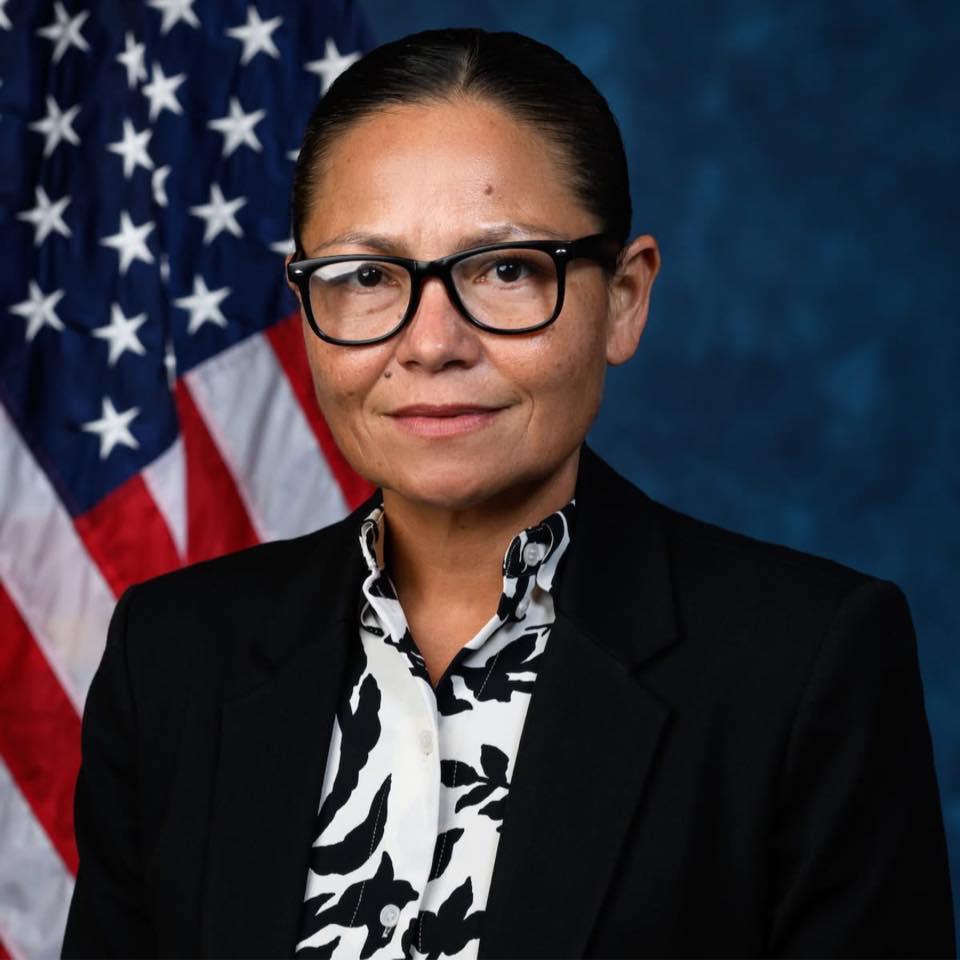
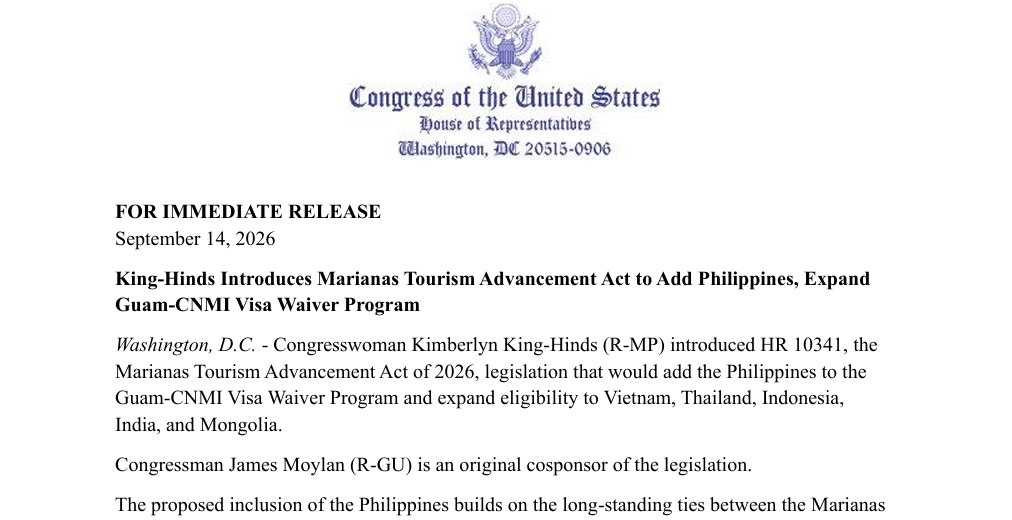
Delegate Kimberlyn King-Hinds has defended the Economic Vitality and Security Travel Authorization Program, arguing in a letter to U.S. Sen. Mike Lee that the program strengthens national security while protecting the Commonwealth's tourism-dependent economy.
In her June 24 letter to Lee, chairman of the Senate Committee on Energy and Natural Resources, King-Hinds responded to concerns he raised during a recent confirmation hearing, saying EVS-TAP was developed through years of consultation between the CNMI and multiple federal agencies and reflects the principle of local collaboration that Lee himself advocated.
"During your opening statement, you observed that 'the better path involves collaboration with the communities that know the places best.' I could not agree more. In fact, that principle is precisely how EVS-TAP came into existence."
King-Hinds explained that after President Donald Trump's 2017 executive order restricting the use of discretionary parole, the CNMI invoked Section 902 of the Covenant to seek a replacement that would preserve tourism while enhancing national security. She said the Trump administration directed the Department of the Interior to lead consultations involving the Departments of Homeland Security, Justice, State, Defense and Interior, along with the CNMI government, culminating in the recommendation to create EVS-TAP.
King-Hinds argued the program was designed to strengthen security rather than weaken it.
"EVS-TAP was not conceived as an expansion of immigration policy. It was designed as a more secure replacement for discretionary parole" through a locally informed and federally coordinated process.
She also disputed the notion that requiring Chinese visitors to obtain traditional B1/B2 visas would provide a better alternative, arguing that EVS-TAP already contains robust safeguards.
"EVS-TAP does not provide unrestricted access to the fifty states, Guam, or any other U.S. territory. Travelers must undergo advance electronic security screening before departure, are limited to a maximum stay of fourteen days, may not travel onward to Guam, Hawaii, or the continental United States, and remain subject to inspection and admissibility determinations by U.S. Customs and Border Protection upon arrival."
King-Hinds said replacing EVS-TAP with the traditional visa process would create significant barriers for the CNMI's tourism industry because prospective visitors would have to pay visa fees, travel to U.S. consulates for interviews and often wait weeks or months for approval. She argued those hurdles would make it difficult to sustain the group travel and charter markets that historically supported the Commonwealth's visitor economy.
"The CNMI is not asking for an exception to national security. We are asking for a policy that advances national security while recognizing the unique circumstances that Congress itself has long acknowledged in governing America's territories."
King-Hinds concluded by urging policymakers to evaluate EVS-TAP based on whether it best advances both national security objectives and the long-term economic stability of the CNMI.
EVS-TAP replaced the CNMI's discretionary parole system for eligible Chinese visitors following a Section 902 consultation process initiated after the Trump administration moved to restrict parole authority. The CNMI has argued the program preserves access to a key tourism market while incorporating advance electronic vetting, limiting stays to 14 days and restricting travel solely to the Northern Mariana Islands.
Share this article: