King-Hinds says CNMI needs study before seeking RECA inclusion
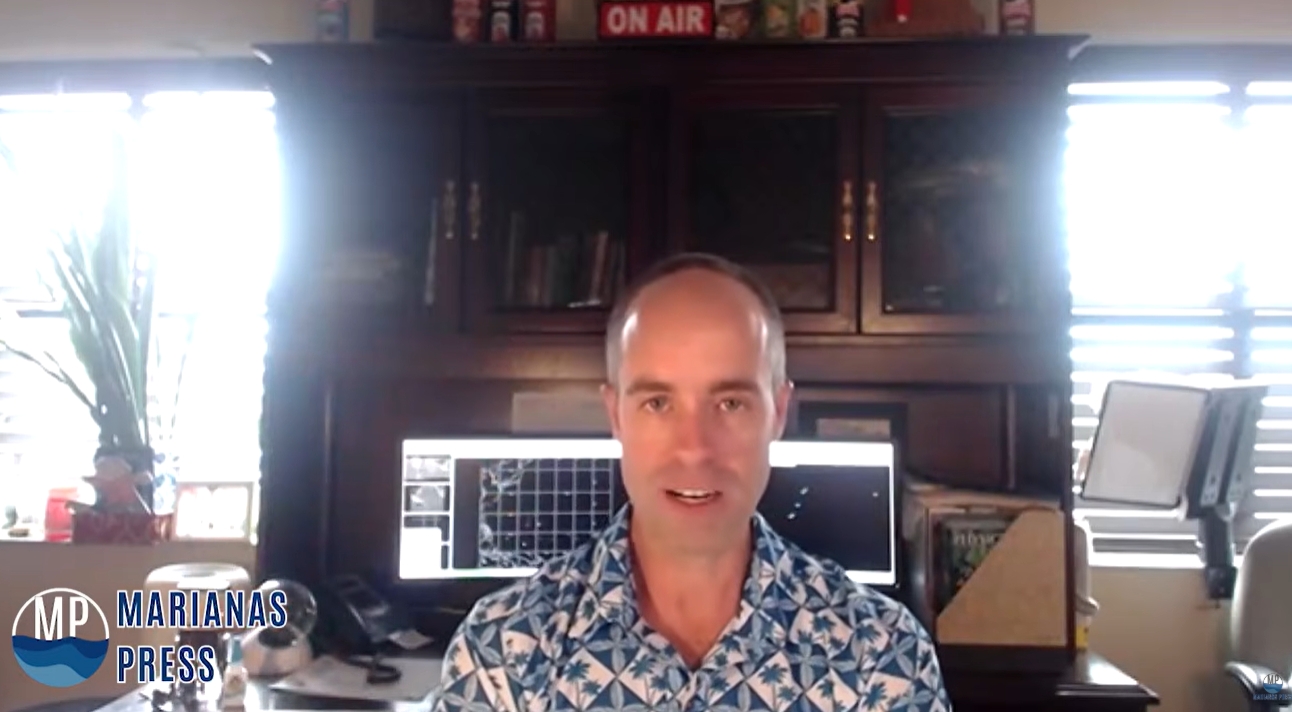
In a social media video responding to concerns raised by Matua Council for Native Chamorro Advancement president and CEO Liana M.S. Hofschneider, Delegate Kimberlyn King-Hinds said the CNMI first needs scientific study before it can seek inclusion in the federal Radiation Exposure Compensation Act, or RECA.
“Miss Liana Hofschneider recently reached out to ask why the CNMI was not included in an amendment related to the Radiation Exposure Compensation Act, otherwise known as RECA,” King-Hinds said. “And it's a great question, and it gives us the opportunity to talk about how these kinds of decisions are made here in Washington.”
Hofschneider raised the issue in a June 10 letter urging King-Hinds to support an amendment to H.R. 8800, the National Defense Authorization Act, being advanced by Guam Delegate James Moylan and to seek inclusion of the CNMI as Pacific “downwinders.”
In the letter, Hofschneider said cancer is the second-leading cause of death in the CNMI and argued that residents face significant healthcare and financial burdens associated with cancer treatment. She urged King-Hinds to submit a letter of support to Moylan's office and the House Armed Services Committee to ensure the CNMI is included in any RECA-related expansion efforts.
Hofschneider wrote that previous efforts by Guam's congressional delegation sought to include the CNMI in RECA legislation and said timely action is needed as Congress considers amendments to the NDAA.
King-Hinds used the video to explain the history of RECA and why Guam has been the focus of current congressional efforts.
“The program was originally created to help people who were directly affected by nuclear testing and related activities,” she said. “And over the years, Congress has debated whether additional groups should be included as eligible beneficiaries.”
She noted that Guam has long argued its residents may have been exposed to radioactive fallout from U.S. nuclear testing in the Pacific.
“Delegate Moylan is a huge advocate of this, and I think it's a worthy conversation to have,” King-Hinds said.
Addressing why the CNMI was not included, King-Hinds said Congress generally requires evidence showing a population was affected before expanding eligibility.
“So why wasn't the CNMI included? And that's a valid question,” she said. “The short answer is that before Congress expands eligibility, there typically needs to be evidence showing that a population has been impacted.”
According to King-Hinds, her office's review found no comparable federal studies involving the CNMI.
“That doesn't mean that the CNMI wasn't impacted,” she said. “It just means that there hasn't been a study to show that the CNMI was actually impacted.”
She added that scientific evidence is generally required before Congress can approve compensation.
“The way this works is that before Congress can make a decision about compensation, the process requires that there is a showing, a scientific basis for including a community in this program,” King-Hinds said.
As a result, she said her office plans to introduce legislation seeking a study of possible impacts from U.S. nuclear testing on the CNMI.
“I think that this issue is worthy of pursuing,” King-Hinds said. “And we are working on legislation to ask that a study be completed to see if there is actual impact to the CNMI as part of the U.S. nuclear testing in the Pacific.”
She added: “God only knows how high the cancer rates are. And I think that this is a worthy cause and issue to pursue.”
The discussion comes as Moylan's “Parity for Pacific Radiation Survivors Act” remains pending in Congress. The bill would amend RECA to include Guam among the areas eligible for compensation related to exposure from U.S. nuclear testing in the Pacific. The measure does not currently include the CNMI.
King-Hinds said legislation seeking a CNMI study will be introduced soon.
“We're on it,” she said. “Every issue and concern matters. This is no exception.”
Share this article: