MHS students grill gubernatorial bets on brain drain, education cuts
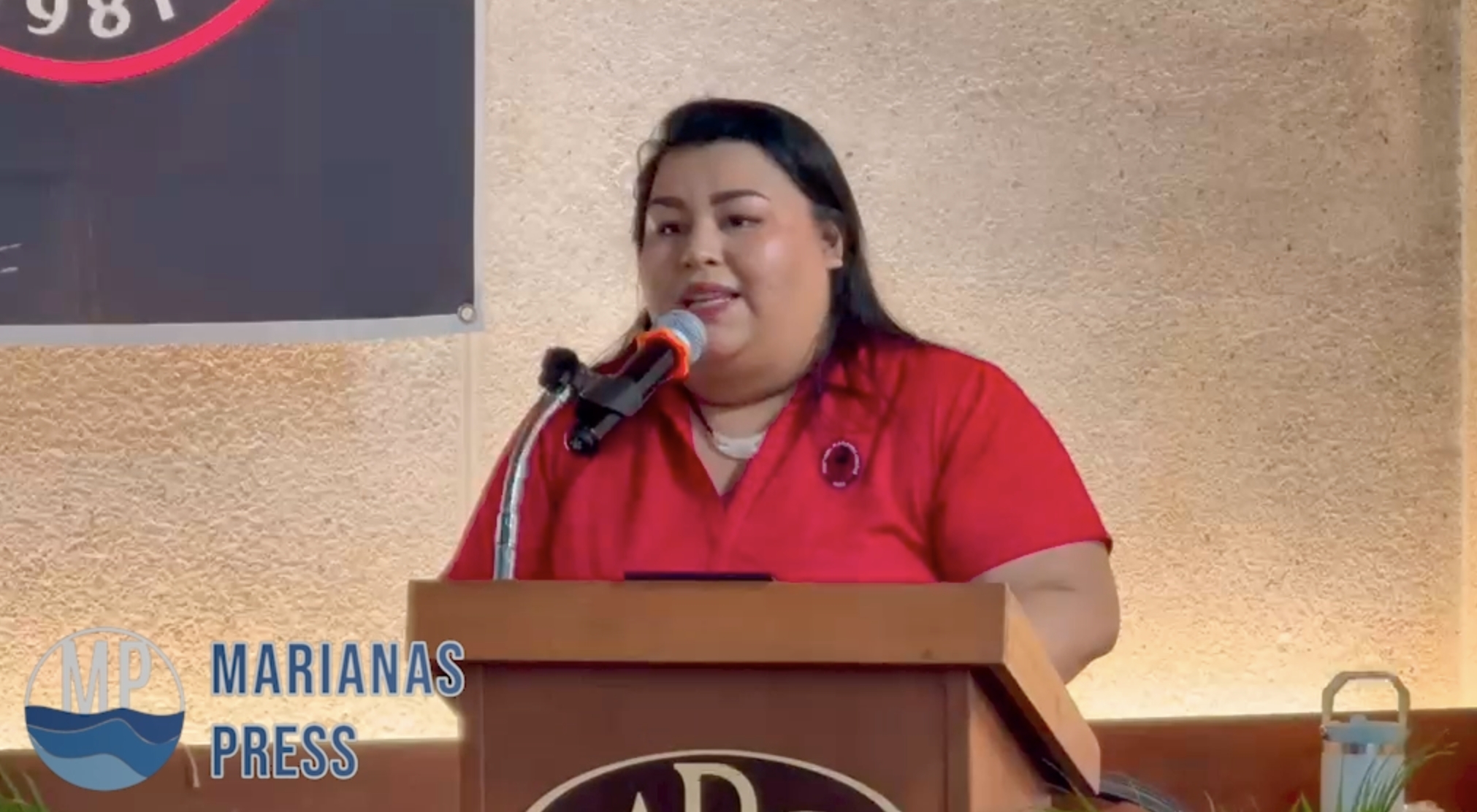
Marianas High School students put gubernatorial candidates on the spot last Oct. 29, questioning them on the exodus of young people from the CNMI, shrinking education budgets, soaring utility costs, and families still recovering from successive typhoons.
The student-led debate, originally scheduled for Oct. 16 but canceled because of Typhoon Champi, finally pushed through last Thursday, with Republican gubernatorial candidate Ralph DLG Torres and independent candidate Lawrence F. Camacho participating alongside their running mates, Benjamin Jones Jr. and Edith Deleon Guerrero, respectively.
Independent gubernatorial candidate Blas Jonathan “BJ” T. Attao was unable to attend because of a family emergency.
One of the more pointed questions came when students asked how the candidates would reverse the CNMI's brain drain, citing an estimated population loss of 1,000 people annually.
Camacho, a former Education commissioner, said the problem starts with preparing students for careers that can keep them in the Commonwealth.
“When it comes to workforce, we do not have a numbers problem. We have a pipeline problem,” he said.
Camacho cited PSS' Portrait of a Graduate initiative, which connects classroom learning with career pathways, technical skills, and college readiness.
Jones, who is principal of Kagman High School, said the bigger challenge is the lack of jobs awaiting students after graduation.
“Now, there are no opportunities, and that's why our biggest export in the CNMI are our people,” he said.
Jones proposed expanding internships and technical certification programs through PSS, Northern Marianas College, and the Northern Marianas Technical Institute so graduates would enter the workforce with marketable skills.
Students also pressed the candidates on the Commonwealth's budget problems, asking which programs they would protect if government revenues continue to decline.
Camacho pledged to prioritize education, essential public services, and economic recovery while cutting unnecessary travel, redundant contracts, and projects that fail to deliver results.
“When the CNMI faces a budget shortfall, education will not be the first thing we sacrifice,” he said.
Torres, meanwhile, said his administration would prioritize funding for PSS and retirees while rebuilding the economy to generate additional government revenues.
“We take PSS budget and we put it over here. We take the retirees' budget and we put it here. That's how you prioritize,” he said.
The former governor said restoring international air service remains central to his ticket's economic recovery plans. He claimed they have already reached out to airlines in Japan, South Korea, Australia, and Vietnam about restoring service to the CNMI.
The candidates were also asked how they would address rising electricity costs and develop affordable alternative energy sources.
Jones said their ticket would seek federal assistance for new generators and power plant improvements while supporting the Commonwealth Public Utilities Commission's solar power initiative and upgrades to the CUC power grid.
Deleon Guerrero said the CNMI should diversify its energy sources and expand residential solar power to reduce dependence on imported fossil fuel.
The students' final question focused on families still living in temporary shelters following recent storms.
Camacho proposed a recovery housing program to help eligible families repair or rebuild their homes with federal assistance while strengthening infrastructure against future disasters.
“We will not measure recovery by how much government spends. We will measure it by how many families safely return back to their homes,” he said.
Torres pointed to his administration's experience with Super Typhoon Yutu and the Community Development Block Grant Disaster Recovery program, saying a similar approach could help rebuild homes damaged by super typhoons Sinlaku and Bavi.
Share this article: