Online Gaming, MUSD stablecoin could revitalize Tinian’s economy
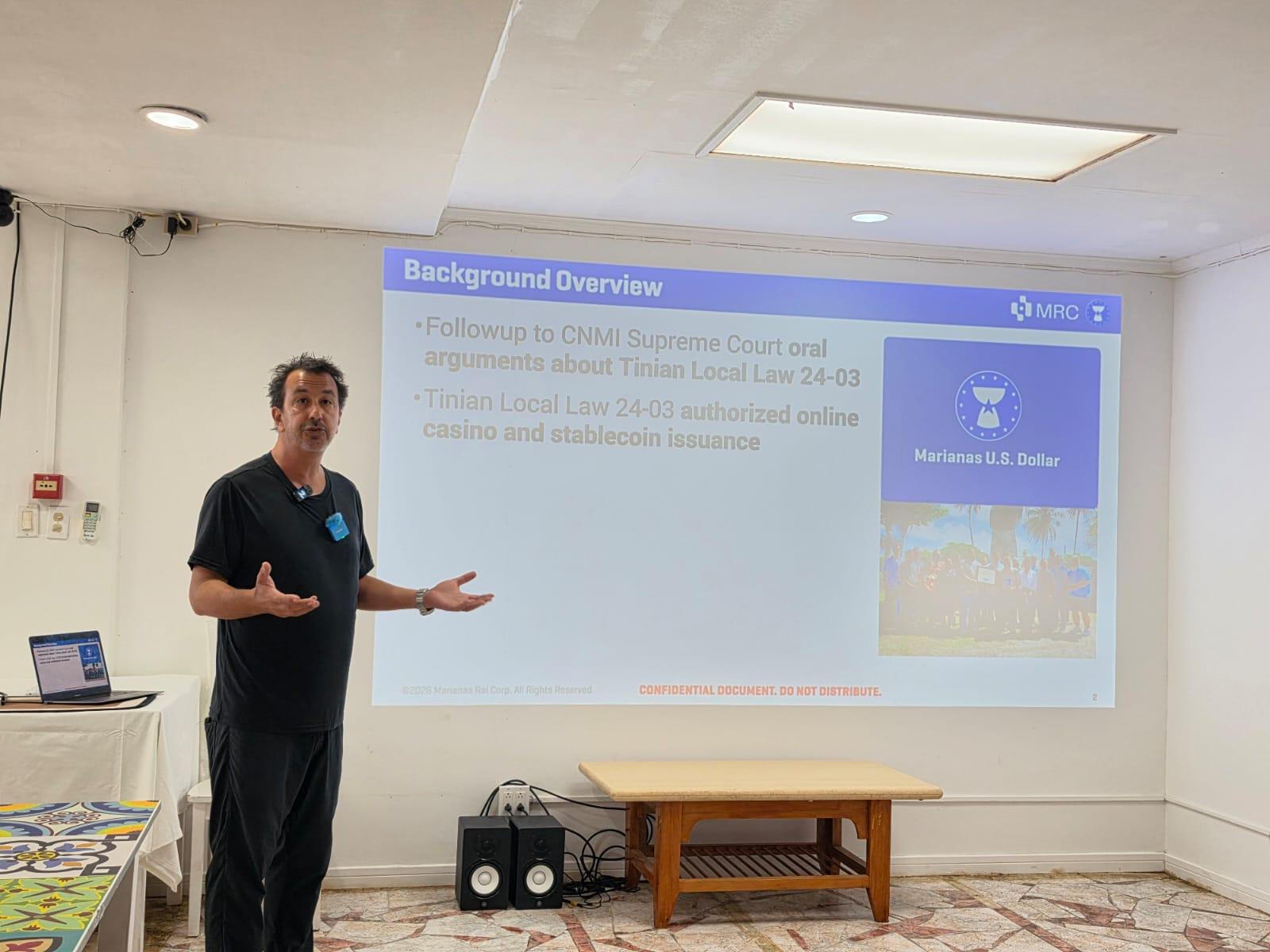
During the August 18 Marianas Rai Corporation (MRC) press conference at Casa Marianas following intense oral arguments at the CNMI Supreme Court regarding Tinian Local Law (TLL) 24-03, MRC Executives clarified the technical realities, security measures, and massive economic potential of legalizing online gaming and stablecoin issuance on Tinian.
With the CNMI's traditional tourism industry facing significant, ongoing hurdles—including visa restrictions, the loss of direct flights, and a shrinking foreign workforce—MRC executives positioned online gaming not just as an alternative, but as a vital necessity for immediate economic diversification.
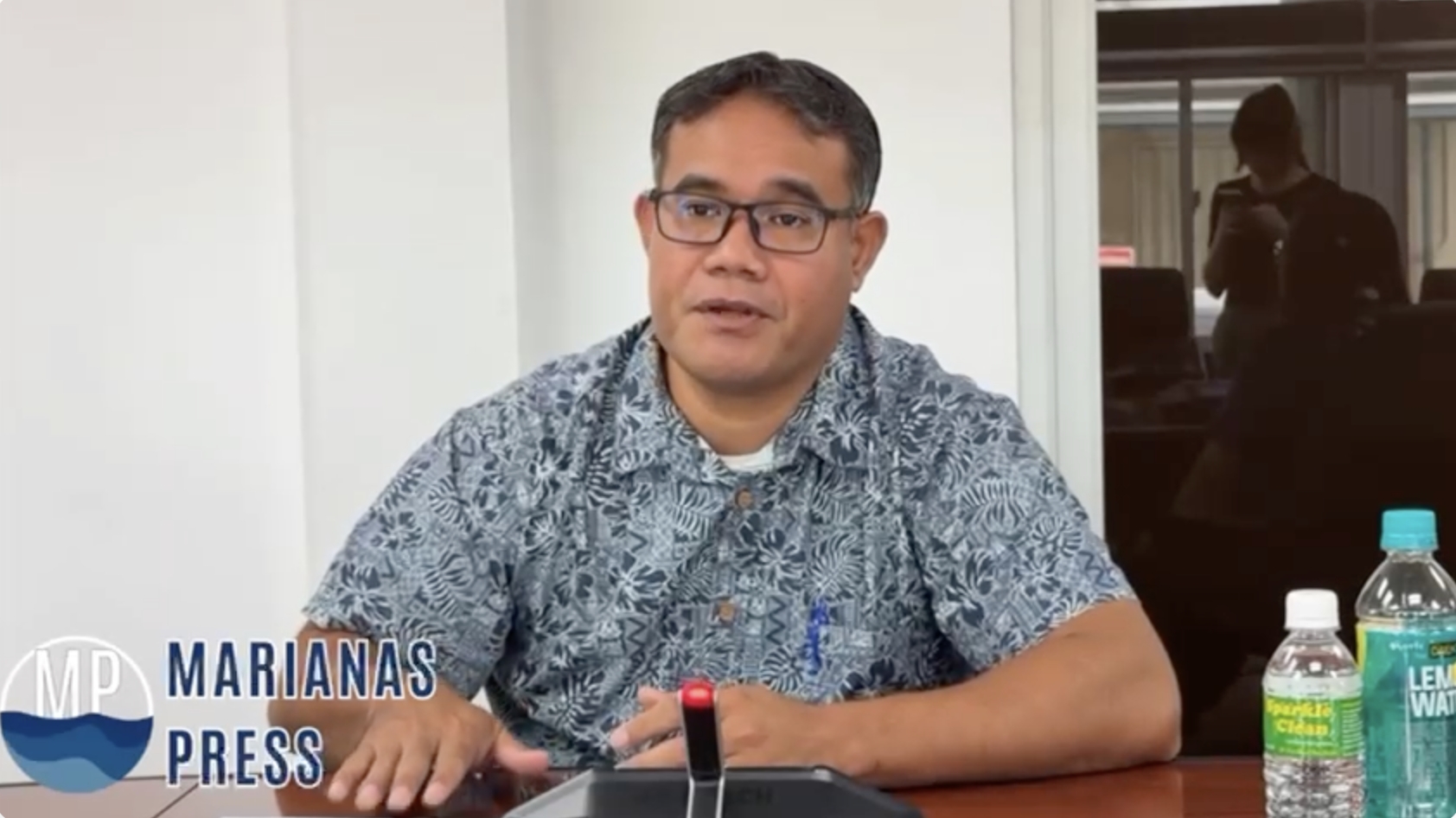
MRC shareholders Clyde Norita and Anthony Torres, in an interview, emphasized that their proprietary technology is ready to deploy, strictly regulated, and uniquely capable of generating hundreds of millions in new revenue for a Commonwealth that is currently struggling with a stagnant tourism economy.
"Our biggest economy really is tourism right now. Tourism is at a stagnant [point]," explained Clyde Norita. "This is all new revenue that is tax-based that is not going to affect manpower, and you don't require to have tourists fly in from China or wherever. Everything is the use of the internet and the technologies here. Why cannot we take advantage of technology?" Torres echoed this sentiment, framing the initiative as a way to "finally unlock a new source of jobs, tax revenue, and economic diversification for Tinian."
The financial projections shared by MRC CEO Blaine Graboyes during the press conference paint a staggering picture of economic potential by tapping into a legally established $100 billion global industry currently regulated in 35 countries and seven U.S. states. Under TLL 24-03, Tinian can issue up to 11 online gaming licenses, which could generate massive tax windfalls similar to a single online casino in Ontario that recently posted $323 million in annual Gross Gaming Revenue. Graboyes pointed out that this digital model would easily eclipse the former Tinian Dynasty Hotel & Casino—which paid roughly $6 million in local taxes at its peak—by potentially yielding $10 million to $40 million annually per license, delivering what he described as a "$110 million shot in the arm" if all licenses are maximized.
Furthermore, the central CNMI government would reap substantial rewards without having to manage the local regulatory infrastructure, as MRC estimates the Commonwealth would collect approximately 27 cents in Business Gross Revenue Tax (BGRT) for every dollar of gaming tax collected by Tinian.
A major point of contention from opponents has been the fear of unregulated access and the potential for money laundering. Graboyes detailed the robust, multi-layered security protocols that actually make online gaming significantly more secure, trackable, and transparent than traditional land-based casinos or local poker rooms. TLL 24-03 explicitly restricts online gaming to the Second Senatorial District (Tinian) and international jurisdictions where online gaming is legally permitted. Access from Saipan, Rota, Guam, the U.S. mainland, and countries where gambling is prohibited (such as South Korea or China) is strictly blocked.
The system enforces the law through a multi-layered approach that begins with geo-blocking, which acts like a "Caller ID" by utilizing IP addresses and mobile GPS to build a strict virtual fence; as Graboyes explained, the software simply ignores access attempts from restricted areas like Saipan, much like ignoring an unwanted phone call.
Furthermore, before depositing a single cent, players are subjected to global "Know Your Customer" (KYC) and Anti-Money Laundering (AML) protocols that require them to scan a government-issued ID for verification against global watchlists by both AI and human reviewers. Finally, the system ensures a permanent digital trail by securely logging every transaction, deposit, and withdrawal on a blockchain, creating an auditable footprint that makes money laundering highly impractical, as users must hand over their personal and banking details just to play.
The press conference also addressed the confusion surrounding Marianas US Dollar (MUSD) the digital stablecoin authorized by the local law. Rather than a volatile, speculative cryptocurrency, MUSD acts strictly as a digital casino chip and an automated accounting tool for the government. Backed strictly 1-to-1 by the U.S. dollar, the stablecoin ensures instantaneous, automated tax collection.
To explain the concept simply, Graboyes compared it to a familiar local event: "How many people have used the MVA stablecoins at the Taste of the Marianas? You give money to the cashier; you get these $1 stablecoin. Why are they doing it? Because it's an accounting tool. It's what allows them to know how much money has been spent by every vendor... That is exactly what MUSD is doing."
Graboyes added that instead of governments waiting all year for a casino to hand over self-reported accounting books—often leading to disputes or unpaid taxes, as seen with Imperial Pacific International (IPI)—the blockchain technology automatically routes the required gaming tax directly to the Tinian municipal treasury the exact moment Gross Gaming Revenue is generated. Furthermore, the actual U.S. dollars backing the MUSD sit in a Tinian treasury bank account, passively earning interest for the municipality while the digital chips are in play.
Despite being passed by a two-thirds majority of the CNMI legislature—a vote that successfully overrode a veto by the late Governor Arnold Palacios—the implementation of TLL 24-03 has been stalled since June of 2023 under a stipulated injunction. The CNMI Supreme Court is currently tasked with deciding whether Tinian exceeded its local legislative authority in passing the law.
Graboyes expressed deep frustration with the CNMI Attorney General's office, revealing that regulators pursued aggressive legal action without ever contacting the company to ask basic questions about how the software operates. MRC, a locally owned and funded company, ultimately had to petition the court themselves just to get the legal process moving forward.
This hostility, MRC warned, has a severe chilling effect on foreign investment. They noted that highly lucrative, established online operators—companies like DraftKings or MGM, who hold licenses globally and are extremely risk-averse—will be highly hesitant to invest in the CNMI if they perceive the local government as combative, legally unstable, and hostile to technological innovation.
"We're going to have a hard road ahead to attract them after what's happened to MRC," Graboyes admitted. "If you were DraftKings, would you take the risk of coming here?"
Despite the legal roadblocks, MRC remains committed to the project, urging local leaders to move past a "crabs in a bucket" mentality and embrace an innovative, highly regulated industry that stands ready to revitalize the Commonwealth's struggling economy.
Share this article: