Prutehi Guåhan: Iowa blast shows what Guam has lived with for 40-plus years
Members of a Guam-based nonprofit urged a close watch on the U.S. Army’s detonation of a stockpile of lead azide in Iowa, even as Guam has lived with U.S. Air Force detonations for more than 40 years.
Prutehi Guåhan members said the damage from the Air Force’s burning and blowing up of waste military munitions has piled up quietly in the soil, the water and the island's history for decades.
“Over a period of 40 years, you're going to get some sort of contamination turning up at that site,” marine biologist and environmental advocate Joni Quenga Kerr said at a Nov. 24 Prutehi Guåhan community conversation at the Guam Museum.
Group members are awaiting a U.S. Supreme Court decision on whether the Air Force must first study the environmental impact before it continues blowing up munitions at Tarague Beach on Andersen Air Force Base, where the practice began in 1982.
A day before Thanksgiving, the Army detonated nearly 5 tons of lead azide at the Iowa Army Ammunition Plant, and lead testing in the surrounding area is underway, NBC News, The New York Times and Associated Press reported. The U.S. Environmental Protection Agency took samples before and after the Iowa detonation to test whether the explosion released lead and other compounds.
The Army has said the stockpile of lead azide, an explosive, had become unstable in storage and detonating it was the safest option.
“This is something that we're going to have to pay attention to because it's going to release lead into the air,” Kerr told Guam residents before the Iowa detonation.
‘Cautiously optimistic’
The Supreme Court heard arguments in Department of the Air Force v. Prutehi Guåhan on Oct. 7. Prutehi Guåhan members joined their attorneys in Washington, D.C.
The group, formerly Prutehi Litekyan: Save Ritidian, sued in January 2022, alleging the Air Force violated the National Environmental Policy Act, NEPA, when it applied to renew its permit for open burning and open detonation at Tarague Beach without an environmental review or public input.
Tarague Beach sits above Guam's sole-source aquifer, which supplies drinking water to most of the island. It is also a nesting area for endangered sea turtles.
The Ninth Circuit Court of Appeals revived the lawsuit in February 2025. The Air Force appealed, arguing that a permit application is not a final decision that courts can review.
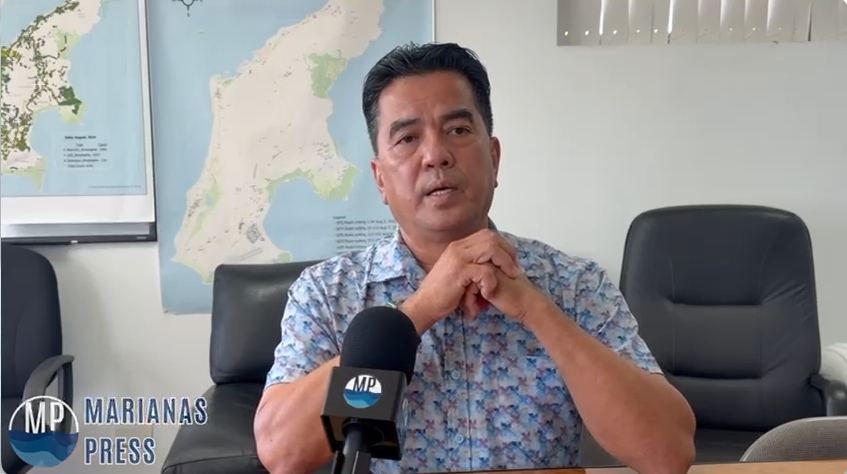
Earthjustice attorney David Henkin, who represents the group, said in a video message that a decision could come any time before June, most likely in the first quarter of next year.
Some of the Air Force’s “more extreme positions” met “a lot of skepticism, even by some of the justices who are viewed as more conservative,” Henkin said.
“We're cautiously optimistic,” he added.
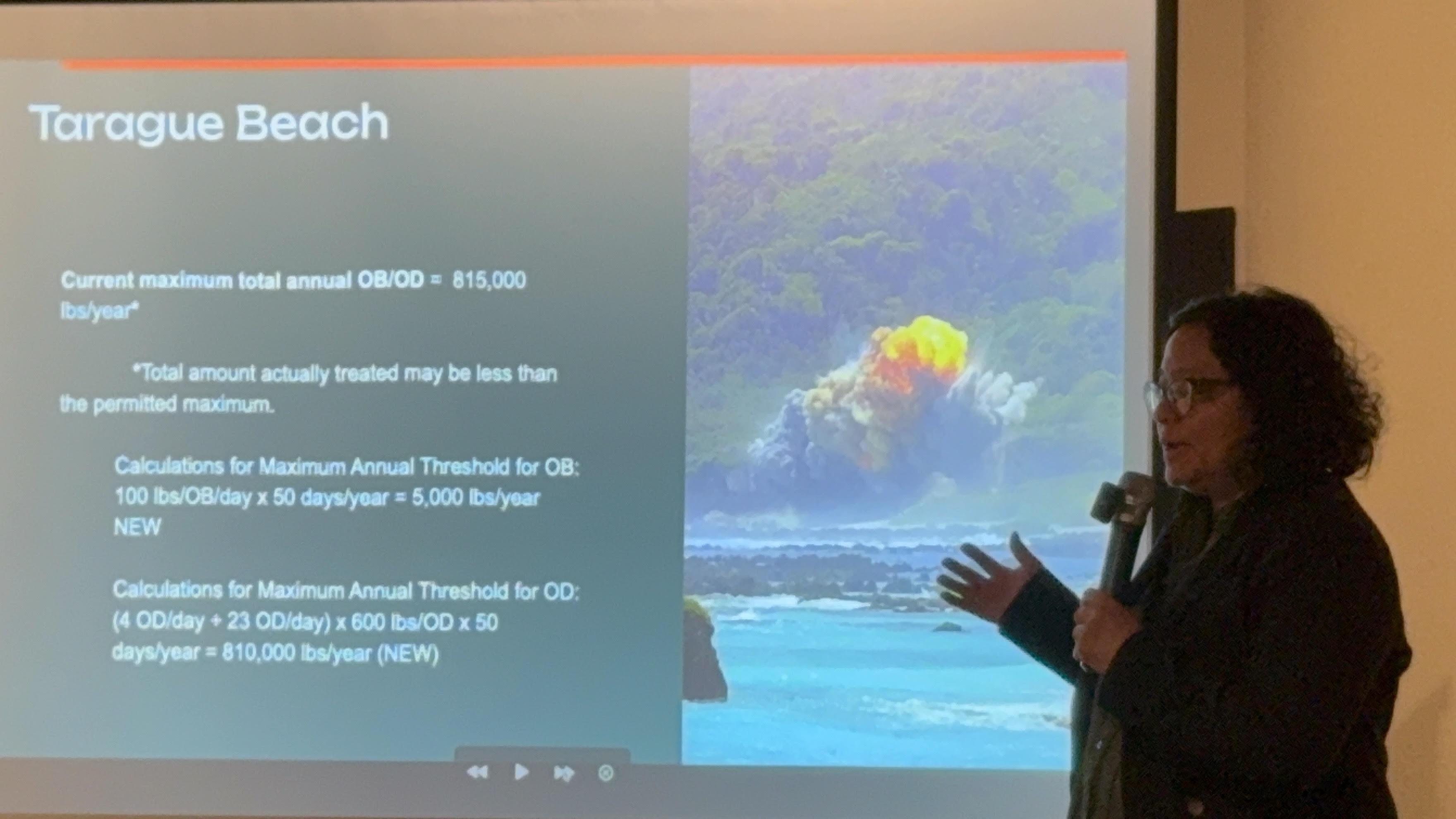
Sen. Sabina Perez, who has led legislative efforts against the practice, said the Air Force's permit application sought to dispose of 815,000 pounds a year at Tarague: 5,000 pounds through open burning and 810,000 pounds through open detonation.
“That's kind of unimaginable what that number looks like, but it sounds like a lot, right?” said Perez, who ran for lieutenant governor this month on the Democratic ticket with Sen. Therese Terlaje. They lost to Republicans Tony Ada and EJ Calvo.
Perez said the open-burning section of the application listed 1.11 pounds of uranium, along with lead and other heavy metals, for every event, not every year.
Federal rules adopted in 1980 banned open burning of hazardous waste but exempted waste explosives. Open burning at Tarague Beach stopped around 2002, and Guam banned it in 2022, but detonations continue, Perez said.
“We don't know the cumulative impacts,” said Perez, whose grandfather farmed copra at Tarague.
Kerr said detonated munitions release heavy metals such as lead, antimony, copper and tungsten, and that nesting turtles are easily driven off.
She noted that some Andersen Air Force Base wells are already out of use because of PFAS and trichloroethylene contamination.
Prutehi Guåhan’s Nicole DeLisle Duenas, who spoke on cultural resources, said Tarague is one of the island's oldest coastal settlements, with an occupation layer dating back more than 2,500 years, lime-painted pottery and burial features of families.
“This is what could be lost,” she said.
Prutehi Guåhan’s Jessica Nangauta, a farmer and traditional healer, said a 1980 Smithsonian survey found more than 50 useful plants at Tarague, including medicinal ones. She urged families to discuss the issue “at the dinner table because this is the health of our future.”
Sen.-elect Kallen Perez said her father, Dr. Walter Chris Perez, longtime state surgeon of the Guam National Guard, died of lung cancer at 61 without ever smoking, and once wondered whether burn pits during his deployments were to blame.
“It's not for me to claim causation, it's just anecdotal,” she said.
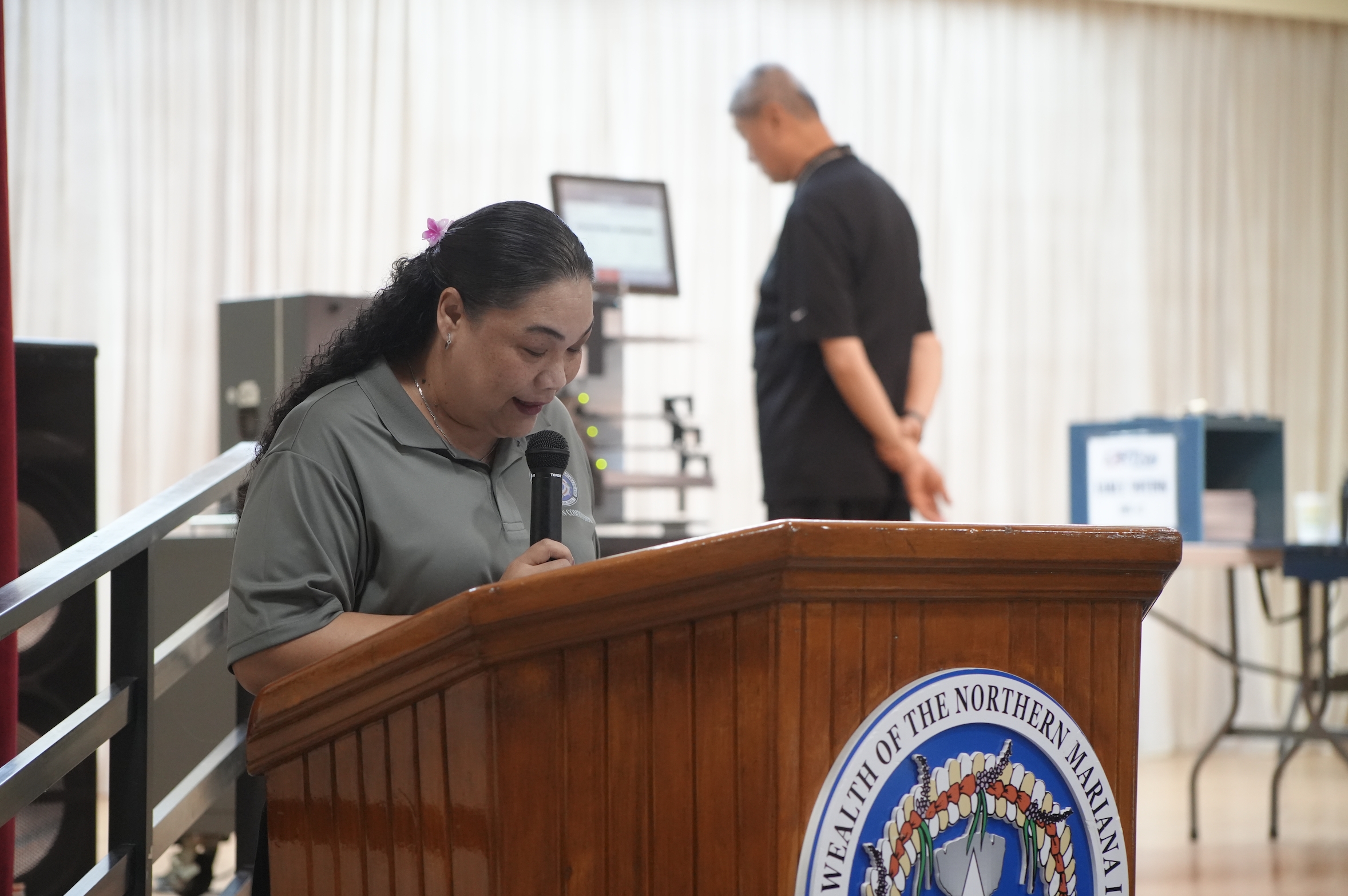
Prutehi Guåhan executive director Monaeka “Naek” Flores said NEPA is one of the few tools for a territory whose residents cannot vote for president and have no voting member in Congress.
“We did it with the missile defense system, we did it with the firing range,” Flores said. “Why not the open burn and open detonation permit applications?”
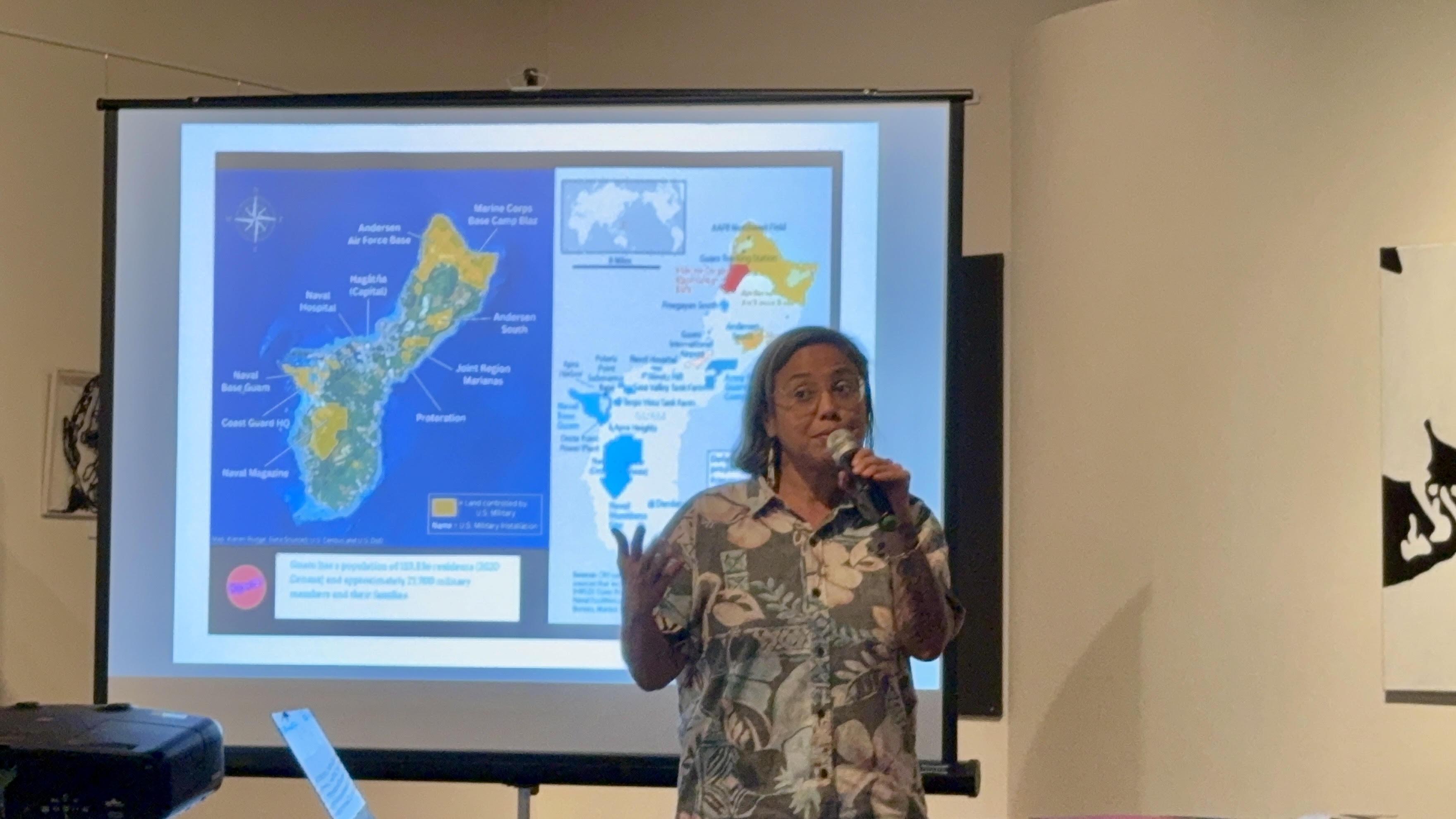
Joint Region Marianas and Andersen officials have said open detonation is the safest way to dispose of World War II-era munitions found on Guam, and that the Tarague ranges have undergone environmental analysis.
“Some of us do dream of the return of this land,” Flores said. “And what would it mean if we get this land back and it's so heavily contaminated that it's not safe for us to even be there?”
Share this article: