PSS sues Apatang, Finance over nearly $12M funding shortfall, seeks injunction on govt spending
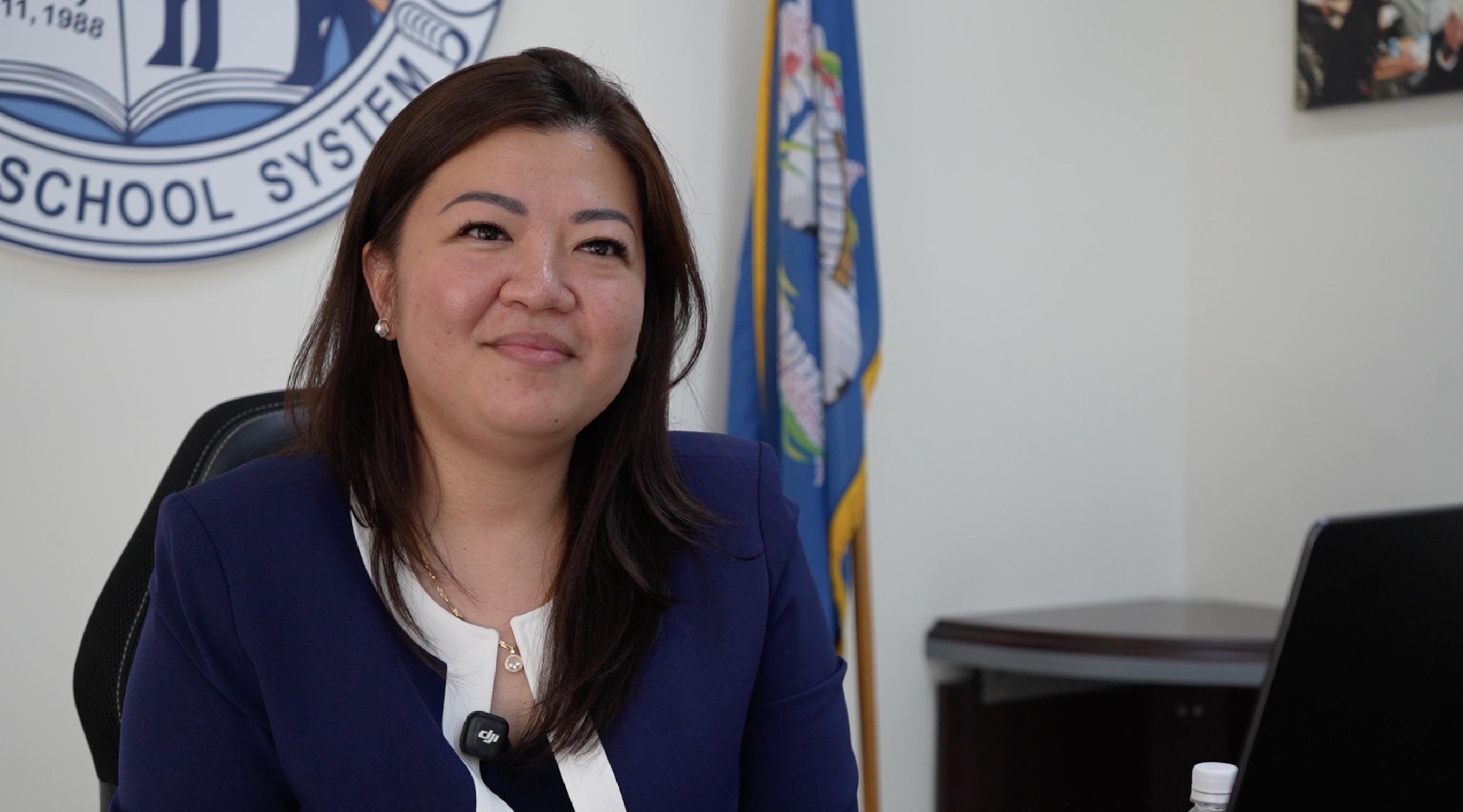
The CNMI Public School System has sued Gov. David M. Apatang and acting Finance secretary Natalia M. Sablan over what it claims is a nearly $12 million shortfall in its fiscal year 2027 budget, asking the Superior Court to declare portions of the Commonwealth's budget law unconstitutional and temporarily restrict non-essential government spending until its constitutionally guaranteed funding is secured.
The complaint for declaratory and injunctive relief was electronically filed on Oct. 30 at 6:12am and reviewed by the Clerk of Court on Nov. 5 at 10:17am. Marianas Press obtained a copy of the 11-page complaint at 3:24pm Thursday.
Filed by PSS through interim Education commissioner Jacqueline P. Che, the lawsuit challenges the government's method of calculating the school system's constitutionally guaranteed 25% share of the Commonwealth's general revenues under Public Law 24-40, the FY 2027 Budget Plan Act.
PSS argues that the government improperly deducted $47,713,905 in debt-service obligations before determining the amount of general revenue available for appropriation, effectively reducing the funding base used to calculate the education system's constitutional entitlement.
"This case concerns a simple constitutional requirement," the complaint states, citing Article XV, Section 1(e) of the CNMI Constitution, which guarantees public elementary and secondary education at least 25% of the Commonwealth's general revenues through an annual appropriation.
According to the complaint, the FY 2027 budget identifies $152,835,208 in budgetary resources, excluding Department of Public Lands revenues, before deducting $4,394,497 in special-revenue earmarks and another $47,713,905 in debt-service payments.
Those deductions leave $100,726,806 in net resources available for appropriation, the figure the Legislature used in determining PSS funding.
Under the enacted budget, PSS received an annual appropriation of $25,028,571, while the Board of Education was separately allocated $153,131.
PSS contends that the government should instead calculate its constitutional entitlement using a general revenue base of $148,440,711, resulting in a guaranteed annual appropriation of $37,110,177.75.
Taking into account the separate Board of Education appropriation, the complaint places the alleged constitutional funding deficiency at $11,928,475.75.
"The constitutional problem is the $47,713,905 debt-service deduction," the complaint states.
"Debt service is an expenditure. It is not, by that fact alone, a special source of revenue."
PSS bases its argument partly on the CNMI Supreme Court's 2020 decision in In the Matter of a Petition for Certified Question, which established that revenue cannot be excluded from the constitutional education funding calculation merely because the Legislature designates it for a particular purpose.
According to PSS, the high court's decision requires a sufficient relationship, or nexus, between the source of revenue and its restricted purpose before that revenue can be considered special rather than general revenue.
The complaint alleges that Public Law 24-40 circumvents that requirement by excluding debt-service payments and other mandatory obligations without determining whether the money used to pay those obligations actually qualifies as special revenue.
A significant portion of the challenged deductions involves the Commonwealth's $27 million annual payment to the Settlement Fund, which supports government retirees.
However, PSS makes clear that it is not seeking to interfere with that obligation or any other legally binding debt payments.
"PSS does not ask the court to cancel, reduce, delay, or impair any lawful debt, bond, loan, pension payment, Settlement Fund payment, or federal court obligation," the complaint states.
Instead, PSS wants the court to require the government to calculate its constitutional share from the appropriate revenue base before determining how the remaining money will be spent.
The lawsuit also traces the funding dispute to the passage of the FY 2027 budget, which Apatang signed into law on Oct. 5, subject to line-item vetoes.
According to the complaint, the governor initially proposed approximately $37.1 million for PSS, an amount close to what the school system now argues it is constitutionally entitled to receive.
However, the Legislature ultimately appropriated $25,028,571 and included provisions requiring the government to release a substantial portion of that amount during the first half of the fiscal year.
Apatang vetoed those front-loading provisions, but lawmakers subsequently overrode his vetoes.
As a result, Finance is required to transfer at least $2,696,171.25 monthly to PSS from October 2026 through March 2027, amounting to approximately $16.18 million during the first six months of the fiscal year.
PSS argues that while the accelerated payments provide funding earlier in the fiscal year, they do not address the alleged shortfall in its annual appropriation.
"Front-loading changes the timing of PSS payments. It does not change when Commonwealth revenues are collected," the complaint states.
The school system also warns that the alleged funding deficiency threatens its ability to maintain normal operations during the current school year.
According to the complaint, possible consequences include shortened instructional weeks, reduced employee work hours, teacher and staff reductions, and cuts to student services.
PSS argues that such disruptions could cause immediate harm that cannot simply be remedied through additional funding later.
"Instructional time and educational services lost during FY 2027 cannot later be recreated by a monetary payment," the complaint states.
Beyond seeking a declaration of its constitutional funding entitlement, PSS is asking the Superior Court to temporarily prohibit Apatang and Sablan, in their official capacities, from allotting, disbursing, or spending general revenues on non-essential central-government expenditures until the disputed funding calculation is resolved and sufficient money is preserved for education.
The proposed injunction would not apply to payments mandated by federal law, federal court orders, or binding pre-existing debt and contractual obligations, including Settlement Fund payments.
It would also allow expenditures necessary to protect public health and safety and maintain government services the court determines to be essential.
PSS further seeks an order requiring the defendants to recalculate the FY 2027 general revenue base, identify the funding sources behind each challenged debt-service deduction, and preserve sufficient revenues to satisfy the school system's constitutional entitlement.
The complaint acknowledges that the court cannot itself enact a budget or make an appropriation, but asks that the administration be directed to take lawful steps toward securing a constitutionally compliant funding allocation, potentially through legislative action.
It also seeks an expedited hearing, arguing that the disputed appropriation is already affecting the current school year.
The lawsuit names Apatang and Sablan solely in their official capacities because they are responsible for implementing the FY 2027 budget and administering government allotments and disbursements.
Share this article: