Red Cross officials answer Sinlaku survivors’ biggest questions on aid, shelters, and recovery
Over a month after Super Typhoon Sinlaku flattened large portions of Saipan and Tinian, American Red Cross officials are addressing the most common questions from survivors still waiting for financial assistance, shelter transitions, and recovery support.
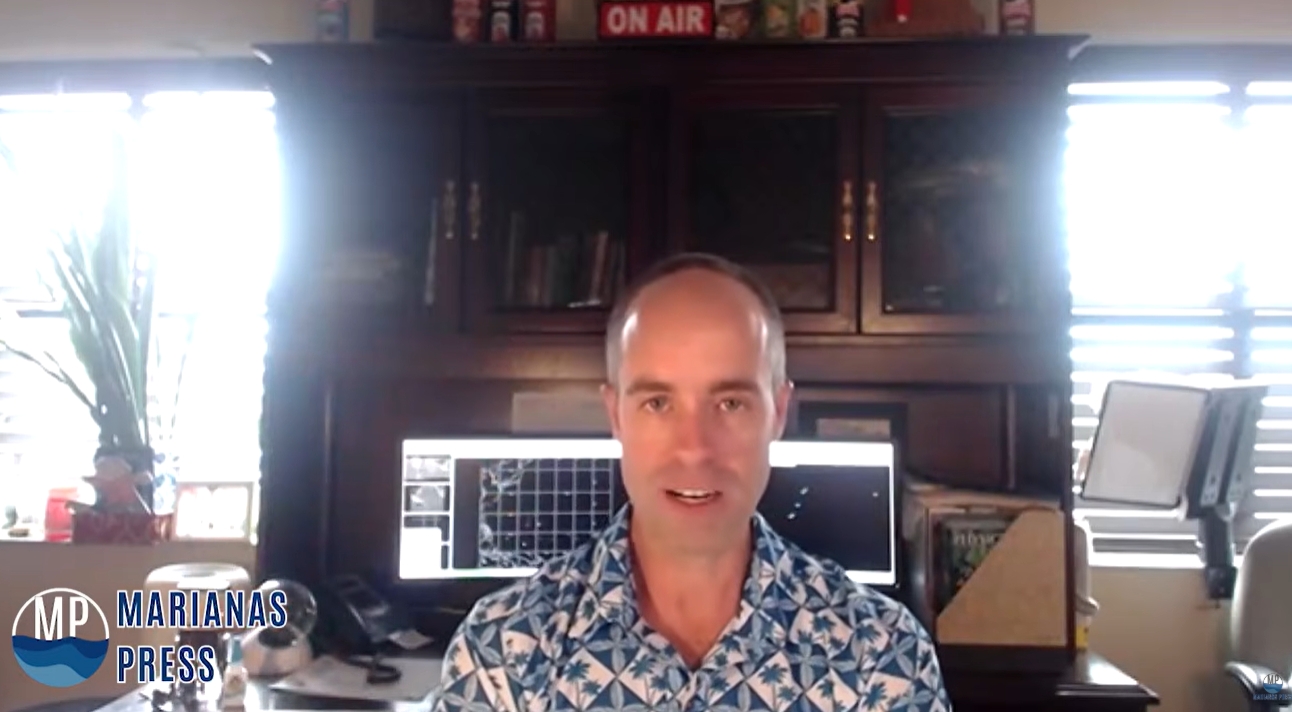
During an interview at the American Red Cross-NMI Chapter office along Airport Road, CNMI Red Cross board chair Dr. Joshua Wise and Red Cross Disaster Response incident commander Betsy Witthohn said the biggest concern they continue to hear from residents is how long it takes for aid applications to be processed.
“Right now, it’s somewhere between five and 11 days,” Witthohn said when asked about the average wait time for families seeking cash assistance. “We are working really closely with the mayor’s office to make sure we have the absolute accurate data so that we can get financial services to the folks that are most affected by this.”
Witthohn explained that applications move faster when survivors arrive with complete documentation.
“If you come into the site and you’ve got an ID that has your name and your street address, then we can open a case,” she said. “We simply need to find out if the damage falls within the same categories that FEMA has for qualifying damage.”
She stressed that Red Cross assistance is targeted toward residents who suffered the heaviest damage from Sinlaku.
“We are helping those that have the absolute worst damage on their home,” Witthohn said.
According to Witthohn, homes do not need to be completely destroyed to qualify for aid.
“It doesn’t have to be all four walls down,” she said. “It could be your roof is blown off, or even your roof is fine, but you cook outside and have an outdoor kitchen, and that roof is off.”
She added that assistance eligibility focuses on whether the damage affects a family’s ability to live safely in the home.
“The damage is qualifying when it impacts where people live on their daily lives,” Witthohn said.
For families denied assistance, Witthohn said Red Cross allows appeals and second assessments.
“If they get a notification that we couldn’t fund because the damage did not look like it qualified, they can have an appeal,” she said. “We will go back and take another look.”
Witthohn said survivors whose homes have not yet been assessed should visit the intake centers at the Survivor Resource Center at the Gov. Pedro P. Tenorio Multi-Purpose Center and Kristo Rai Church before June 1.
Red Cross officials also addressed ongoing shelter operations. Witthohn said four shelters remain active, with two operated by the Department of Culture and Community Affairs with Red Cross support and two directly run by Red Cross.
“Last night, they had 91 people between the two of them,” Witthohn said of the Gilbert C. Ada Gymnasium and Kagman Community Center shelters. She added that another 29 residents remained at the Office of Aging and Tanapag shelters.
Still, she noted that shelter numbers are gradually declining.
“Oh yeah, people are going home. It’s great,” Witthohn said.
Wise highlighted the growing role local students and youth volunteers are playing in recovery operations now that public schools have closed for the academic year.
“We have at least 60-80 youth volunteers right now,” Wise said. “The youth of this island are just amazing.”
According to Wise and Witthohn, youth volunteers have been assisting with address verification, administrative work, relief distributions, and damage assessments.
“If you have a high school student that needs something to do, send them down to Red Cross,” Wise said.
Witthohn said Red Cross has already distributed cleanup kits and relief supplies to thousands of households struggling with mold, debris, and storm damage.
“We have given over 38,000 relief items to almost 8,000 households,” she said.
Overall, the Red Cross said more than 1,176 residents have stayed in shelters since Sinlaku struck the Marianas, while volunteers have served over 200,000 meals and snacks throughout the disaster response.
Witthohn described Sinlaku as one of the most unusual and devastating storms she has seen.
“To have a typhoon or hurricane of this magnitude, where it was Category 5, sit for three days? Oh my God, that doesn’t happen,” she said.
She praised the resilience of the CNMI community while acknowledging the emotional trauma caused by repeated disasters.
“We’re very sensitive to the fact that folks have been traumatized multiple times,” Witthohn said, referring to past storms including Soudelor and Yutu. “We want to be that hope and comfort to help folks and walk with people on their journeys.”
Witthohn added that Red Cross has deployed disaster mental health, disaster health services, and spiritual care teams to assist survivors coping with trauma and stress.
“Our disaster mental health folks are trained in disaster counseling and dealing with disaster trauma,” she said.
Officials also pointed to difficulties caused by incomplete street address systems in the CNMI, which has slowed application verification and aid processing.
“The biggest challenge for us is the speed of being able to process the applications and getting funding to people,” Witthohn said.
Wise said the disaster highlighted the need for stronger address and identification systems moving forward.
“We’re going to be on the local side working with our local leaders and government on putting policies in place that will require a street address as well as a P.O. box and their IDs,” Wise said.
As the interview concluded, both officials thanked the CNMI community, volunteers, and survivors for their patience and resilience during recovery efforts.
“I would just like to say thank you to all our volunteers,” Wise said. “These guys are rock stars, and they’re the ones who make the Red Cross run and run beautifully.”
Witthohn also thanked the community for welcoming Red Cross teams from around the world.
“It’s an honor and it’s a privilege,” she said. “You will all be in our hearts.”
For survivors still waiting for their aid applications to be approved, Witthohn urged patience.
“We’re all working together to make this move as quickly as we can,” she said. “Give us grace, and we will get there.”
Share this article: