Sablan: CNMI finances went ‘from bad to worse’ as House passes $100.73M budget
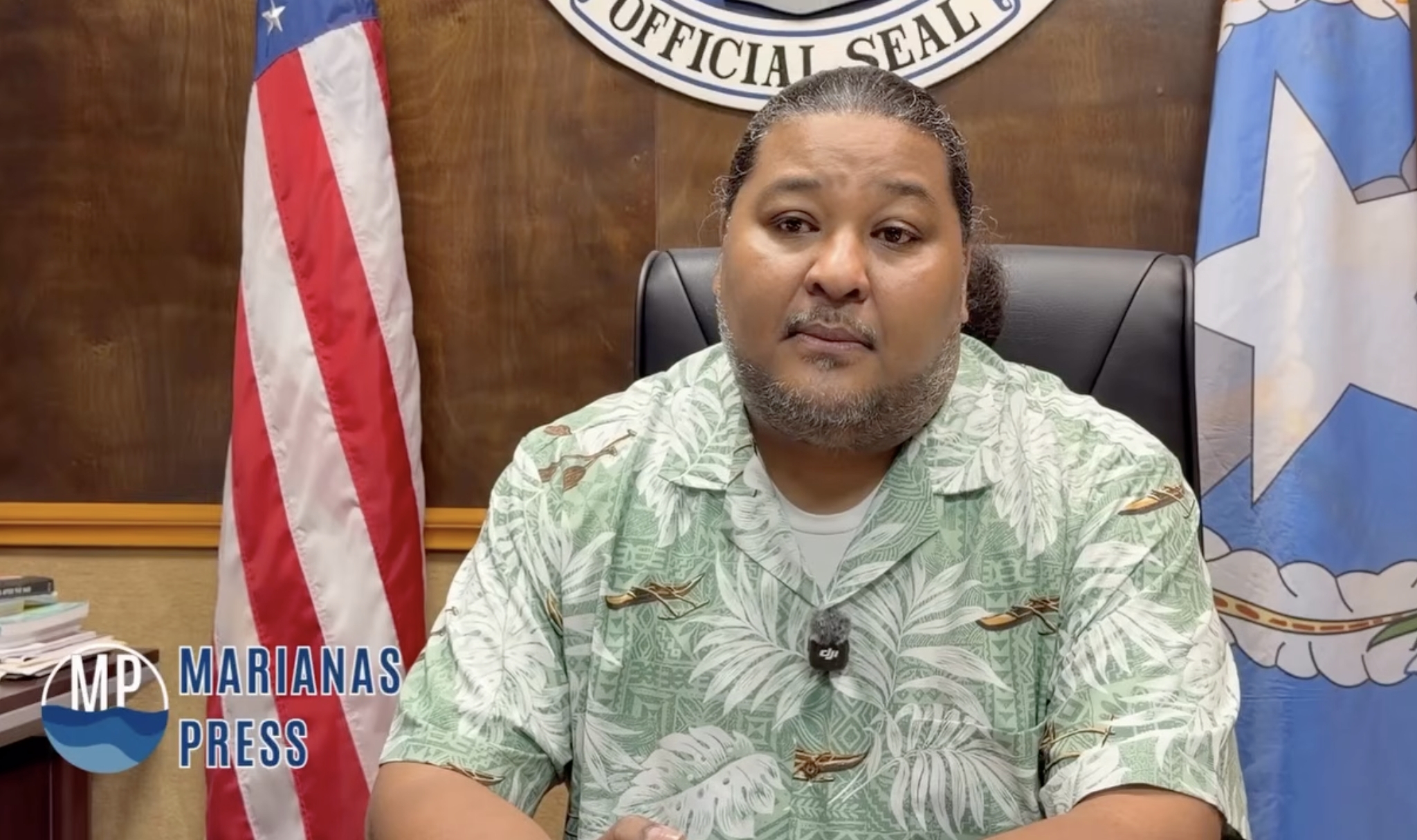
The CNMI’s budget figures went “from bad to worse” amid low economic activity and two devastating super typhoons, House Ways and Means Committee chair Rep. John Paul Sablan said as the House unanimously passed a $100.73 million fiscal year 2027 budget Friday, Sept. 18.
“With the low economic activity, along with two devastating super typhoons that have inflicted excessive damage to our islands, we saw our figures go from bad to worse in the budget submission on May 1st to the revised budget submitted on July 1st,” Sablan said before the vote.
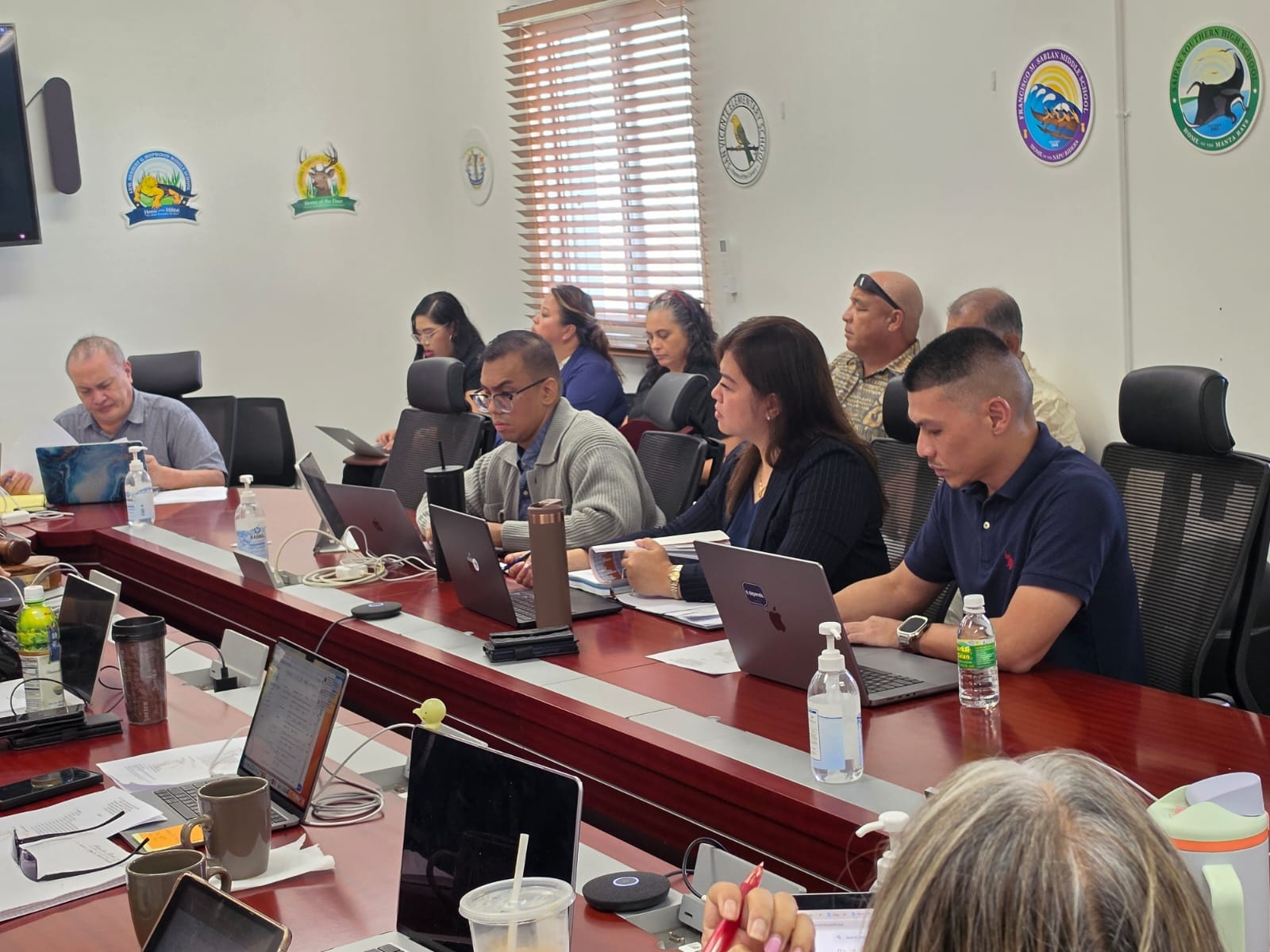
All 16 members present voted to pass House Bill 24-108, House Substitute 1, the Commonwealth government’s spending plan for the fiscal year beginning Oct. 1.
The House approved the measure despite a public appeal earlier in the session from the Judicial Branch over its proposed $3.64 million allocation and the bill’s 64-hour biweekly work requirement.
In a statement on behalf of Chief Justice Alexandro C. Castro and Presiding Judge Joseph N. Camacho, the Judiciary warned that its proposed funding would fall short of what the courts need to carry out their constitutional responsibilities.
The Judicial Branch is allocated $3,643,848, including about $3.27 million for personnel, $176,077 for operations, and $200,000 for utilities. The allocation covers the Supreme Court, Superior Court, Drug Court, Mental Health Court, and administrative operations.
“When the courts are underfunded, it is justice delayed,” the Judiciary said, citing the potential impact on victims awaiting trial, families waiting for custody or protective orders, and residents and businesses seeking resolution of disputes.
The Judiciary also asked to be exempted from the bill’s 64-hour biweekly work requirement, saying it is a co-equal branch of government rather than an executive agency.
“We simply ask that the judiciary’s constitutional role not be treated as discretionary or be asked to bear a disproportionate share of that sacrifice,” the statement said.
Despite the appeal, the House did not increase the Judiciary’s appropriation before passing the budget, retaining its $3,643,848 allocation.
The $100,726,806 General Fund spending plan, before the House floor amendments, was divided into $36.39 million for personnel, $61.69 million for operations, and $2.65 million for utilities, covering 3,065 positions.
Among its largest allocations are $37.59 million for the Public School System, plus $153,131 for the Board of Education, and $6.54 million for Northern Marianas College.
The House substitute adopted before final passage also shifted $959,500 to address government employee health and life insurance funding. Sablan said the administration had informed lawmakers of a $950,000 shortfall for active employees.
The amendment took $479,750 each from Medicaid reimbursement and the Health Network Program and redirected $950,000 to personnel and $9,500 to operations for active-employee GHLI. It also added 15 positions to the Office of Grants Management that Sablan said had been mistakenly omitted.
“Many of our active employees are relying on their GHLI and we made a tough choice in removing certain funds from other government activities in order to fund this,” Sablan said.
The bill requires General Fund-supported government employees to be compensated based on 64 hours each biweekly period. Employees funded from sources outside the General Fund are exempt. It also provides that there will be no furloughs until the Civil Service Commission promulgates rules and regulations governing them.
Sablan said the committee included the 64-hour schedule “with hopes that matters will improve after two quarters,” noting that a new administration will take office during the second quarter of the fiscal year.
“Many would say this is a terrible risk we are taking. However, I am confident that the Commonwealth would persevere,” he said.
The budget allocates $28.27 million to the executive branch. Rota receives $4.21 million, Tinian and Aguiguan $4.17 million, while Third Senatorial District offices receive a combined $2.33 million.
Sablan said retirees were also considered despite the Commonwealth’s limited resources.
“Despite being unfunded under Schedule A, your committee has not forgotten the importance of our retirees,” he said.
Schedule A lists $1 for the 25% retirees’ pension benefits line item and no General Fund appropriation for retiree government health and life insurance. Other provisions identify funding sources that may be reserved for retiree benefits.
Sablan acknowledged that the spending plan would not satisfy every government funding need.
“We are not claiming that what we are acting on is perfect, but what we know in our heart that we tried to be fair with the amount we were given,” he said.
HB 24-108, HS1 generally requires FY 2027 funds to be allotted monthly, although programs and agencies requiring one-time payments—including PSS, NMC, CHCC, Medicaid, and NMTI—may receive advance allotments.
The House-passed budget bill now goes to the Senate for consideration.
Share this article: