The Salvation Army began mass feeding operations last Monday, April 20, at the Garapan Fishing Base, distributing hundreds of meals to residents affected by Super Typhoon Sinlaku.
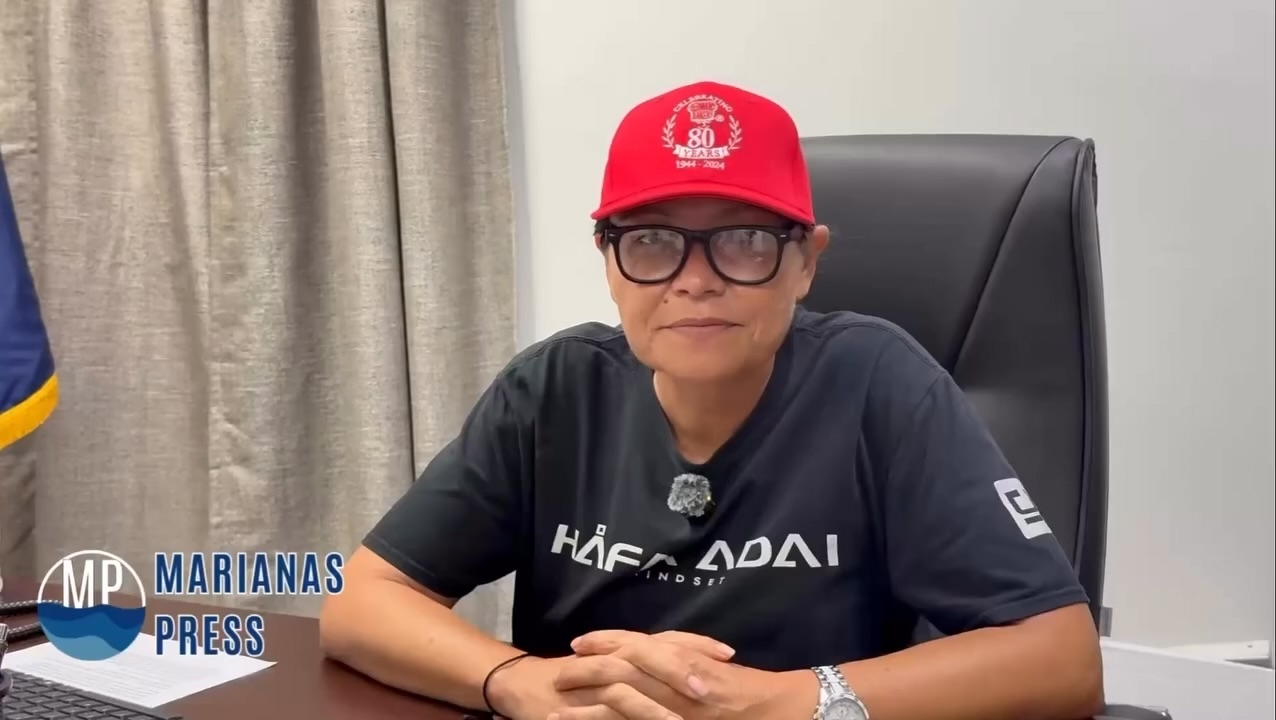
“This is our first distribution day for mass feeding, which is what we do during disasters. We have distributed today 500 meals, and we hope to do this every day, although the numbers may change. The locations and the rules may change, and we’re hoping to get with another nonprofit, a local nonprofit, and open up another mass feeding site,” said CNMI Salvation Army leader and pastor Wayne Gillespie.
He said the meals follow standard disaster feeding practices.
“Yes, that’s the gold standard. There’s two gold standards in feeding programs. The first is peanut butter, but not a whole lot of people like peanut butter on our islands. And when you’re short on water, it’s kind of hard to choke down peanut butter. The second gold standard is beef stew, because it has meat and vegetables included, and then we put that over the rice,” Gillespie said.
“Now, inevitably, some folks are going to get a little tired of beef stew and rice, but we’ve got to do what we’ve got to do. We do have some other menus that we’re going to rotate in occasionally, things like corned beef, corned beef hash, chili, things of that nature. Spam, lots of Spam. So we’re going to change up the menus as we can,” he added.
Gillespie urged residents to stay updated as distribution plans evolve.
“Check our Facebook page. That’s where the announcements will be made. If there are changes, if there are updates, they’ll be made on our Facebook page, which is CNMI Salvation Army on Facebook,” he said.
Residents who lined up at the Salvation Army food distribution said the assistance provided immediate relief in the aftermath of Super Typhoon Sinlaku.
“I think it was really helpful mostly to other peoples who are like in need of such things. So I think that this is a really good event for other people who are in need,” one resident said.
Another said the storm had severely impacted their home.
“My experience was troublesome because my house got ruined. So I say with this event and for my ruined home, this is really helpful. Thank you,” the resident added.
One student, Lina, said her family business also sustained damage but has begun recovering.
“My dad’s shop was kind of broken. I think the glass was shattered everywhere, but right now he’s back in business and for people that have broken windows on their car, they can get 50% off,” she said.
Residents emphasized the importance of the food distribution for those still without basic utilities.
“It’s good. It helps a lot of people, for people in need, people that doesn’t have a home to cook their food in,” another said.
Others expressed gratitude to volunteers and organizers.
“Yeah, really great. Supporting the community and even if the portion is small, it’s helpful. It helps a lot,” one resident said.
Reflecting on the storm’s impact, Gillespie attributed the outcome to what he described as divine mercy.
“The mercy of God. I can’t credit anything or anyone else other than God himself was merciful to us. This island should, and I don’t know what the other islands look like, this island should look like a bombing raid was conducted on it. When I went out on my early windshield tour, I fully expected to see hotels with walls blown away. I expected to see huge concrete structures that had wings missing or maybe even blown down entirely. The damage that I see, and I’m not a damage assessor, but the damage that I see, it just stunned me. It’s not even 10%. Even as bad as it is, it’s not 10% of what it should have been,” he said.
Meanwhile, Star Water resumed operations along Beach Road, restoring limited access to potable water for residents.
“We resumed just now, April 20, around 10am,” said operations manager Edgar Ombac.
“Today, maybe 6 o’clock. As long as we have water, we’re still open,” he said of operating hours.
Ombac said the facility is currently running at reduced capacity and has imposed limits to ensure more customers are served.
“Our capacity right now, we give a limit to the customer. We only give five bottles of 5 gallons, so that everybody can have. The maximum is five,” he said.
He added that operations are about half of normal levels.
“For now, our operation is like 50%. Because most of our services is only here, just walk-in. We don’t deliver to the house. Even the tanker, we select those priority establishments. We supply only Commonwealth Utilities Corp., non-potable water. But for drinking water, we don’t deliver yet,” Ombac said.
Despite constraints, demand has been steady since reopening.
“We don’t count, but the line is non-stop. Supposed to be we gonna open 10 o’clock, but we’re done fixing everything 9:30, so we start 9:30,” he said.
He encouraged customers to come while supplies last.
“To our customers, they just come here at the Star Water. As long as we have water, we give you continuously. As long as we have supply, we can give you water,” Ombac said.
Share this article: