Supreme Court brings law to life for SIS students
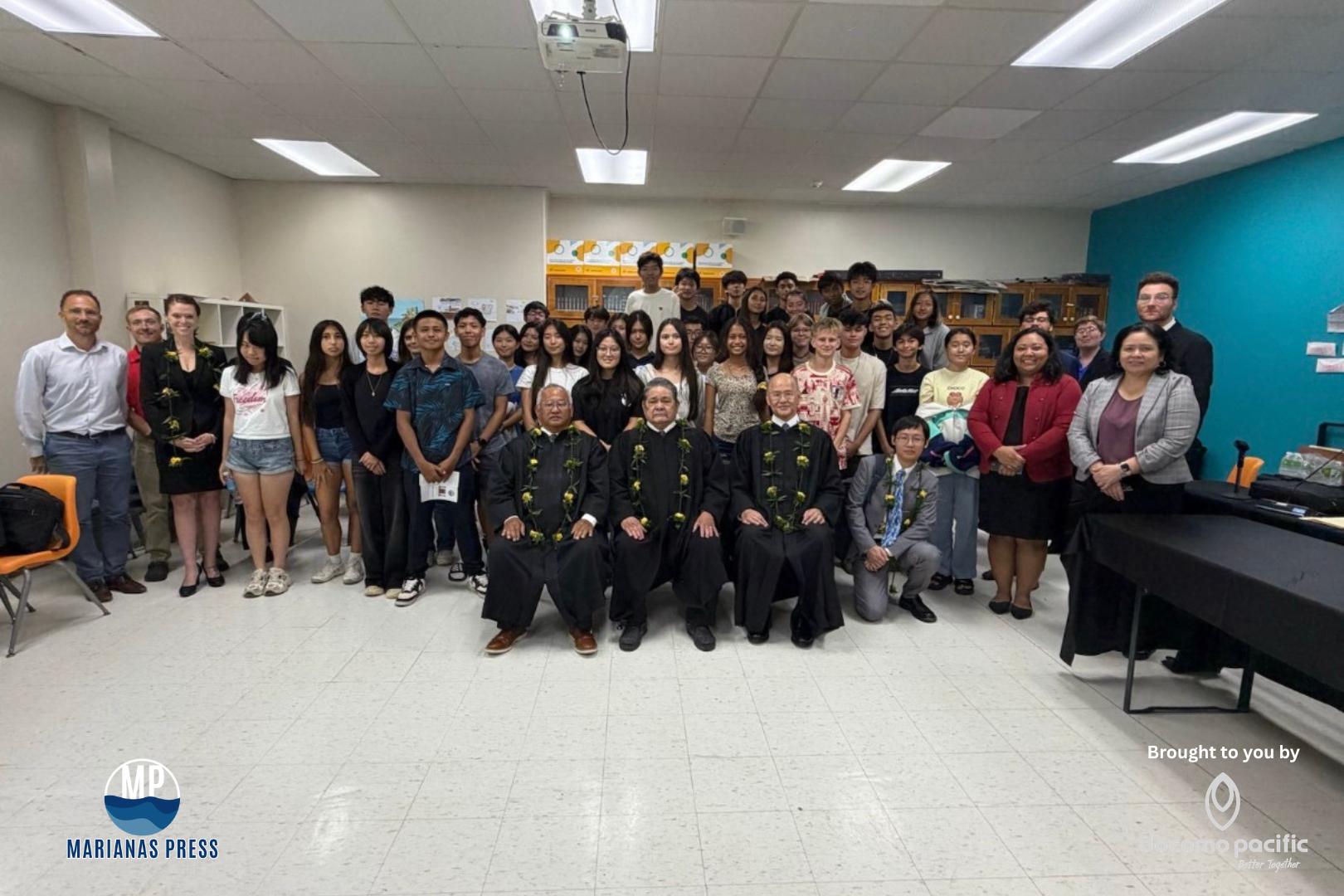
Saipan International School students got a firsthand look at the workings of the CNMI Supreme Court last Nov. 5 when the Commonwealth's highest court held an appellate hearing on campus before fielding questions ranging from artificial intelligence in legal practice to judicial independence, moot court competitions, and the challenges of becoming a lawyer.
Chief Justice Alexandro C. Castro and associate justices John A. Manglona and Roberto C. Naraja presided over the hearing, part of the Judiciary's community outreach program aimed at giving students a better understanding of the judicial system.
The justices heard oral arguments in a case involving military veteran Brandon Russel Camacho, who is challenging prosecutors' decision to deny him access to Mental Health Court because of the violent nature of the criminal charges against him.
After the arguments, the court took the matter under advisement and opened the floor to students, who were eager to learn more about the legal profession and the workings of the judiciary.
One student asked how legal practice has changed over the years, prompting a discussion about technology and artificial intelligence.
The students learned that legal research, which once required lawyers and judges to spend hours in law libraries, can now be accomplished electronically, with case records and legal references readily accessible through computers.
"And of course, everybody speaks about AI these days," saidManglona, noting that attorneys may now use the technology to anticipate questions that judges might ask during oral arguments.
The justices acknowledged that technology has fundamentally changed legal practice and that members of the judiciary must continue adapting to those developments.
Another student asked how long it takes to become chief justice, leading to an explanation of the judicial appointment and retention process.
The justices explained that Supreme Court justices are appointed by the governor, confirmed by the CNMI Senate, and subsequently face retention elections every eight years.
The discussion also touched on Castro's successful retention in the Nov. 3 general election and the importance of maintaining an independent judiciary.
The students were reminded that the judicial, executive, and legislative branches are coequal under the CNMI Constitution, with the separation of powers serving as an essential safeguard of democracy.
The conversation later turned to moot court competitions, with students asking how the Judiciary develops competition problems and selects themes.
Court personnel explained that law clerks help prepare fictional legal problems, generally avoiding controversial local issues that could eventually come before the courts.
This year's moot court problem concerns beach access, while its theme draws inspiration from FIFA and soccer. Previous themes included Barbie and K-pop Demon Hunters, reflecting an effort to make the competitions more engaging for students.
SIS junior Jose Saban, who said he was participating in moot court for the first time after previously competing in mock trials, asked about common mistakes that cost participants points.
Manglona said nervousness is often the biggest obstacle, particularly when students encounter unexpected questions during arguments despite having prepared extensively.
"But one of the principal purposes of moot court is to help you build that confidence," he said.
"And in addition, of course, the legal research and the writing part, but just the confidence in public speaking."
The students were encouraged to participate in more competitions and classroom discussions to develop their confidence and ability to think on their feet.
Another student recalled a previous moot court competition in which Castro deliberately referred to an incorrect weapon to test how participants would respond.
Asked whether similar situations occur in actual court proceedings, the justices acknowledged that attorneys sometimes need to correct factual misunderstandings during oral arguments, especially when judges are reviewing voluminous case records.
The discussion also offered students a glimpse into the demands of law school, including time management, academic pressures, culture shock, and balancing studies with extracurricular commitments.
One lawyer recalled leaving Saipan to attend law school in Michigan and struggling to adjust to freezing temperatures and living alone.
Others emphasized the importance of managing one's time and knowing when to scale back activities to focus on academic responsibilities.
The students were encouraged to develop good study habits and take advantage of the academic preparation available at SIS, including its Advanced Placement courses, which could help prepare them for the rigors of college and eventually law school.
Toward the end of the program, SIS headmaster Martin Jambor thanked the justices, attorneys, and court personnel for bringing the appellate session to the school for a second consecutive year.
"It's been a wonderful opportunity. I think when you start doing back-to-back two times in a row, that can become a tradition," Jambor said.
"But we certainly hope to have you back next year as well," he added.
Jambor also thanked SIS senior Irene Park for helping organize the event, saying another student would eventually have to take over the responsibility to keep the initiative going.
Share this article: