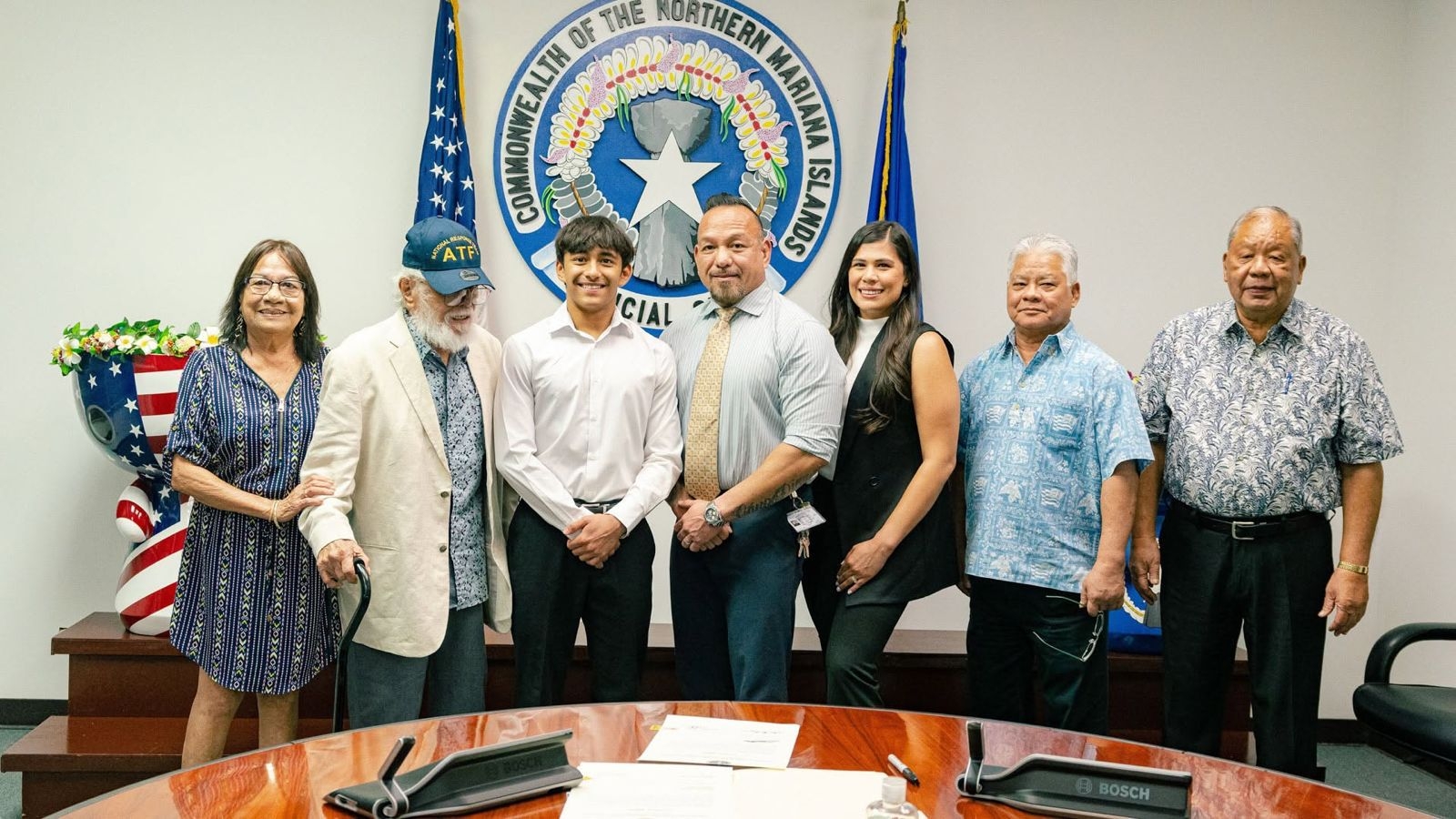
Tinian Mayor Edwin Aldan voiced conditional support for the proposed Project PIKA Subsea Fiber-Optic Cable System during a Division of Coastal Resources Management public hearing on Jan. 16 at the Bar-K Diner in San Jose, emphasizing the need to balance critical infrastructure development with protection of the island’s marine environment.
“Infrastructure projects of this nature are important for our island’s future,” Aldan said, noting that reliable communications systems support public safety, education, healthcare, economic development, and overall quality of life. At the same time, he stressed Tinian’s deep “commitment to the protection of our marine environment,” which he said remains central to local culture, food security, and tourism.
Based on the information provided, Aldan said the project design appears to incorporate measures intended to minimize environmental impacts.
“[These include] burial of facilities where feasible and careful routing of subsea components. The involvement of DCRM and the environmental review process ensures that potential effects on coral reefs, marine habitats, coastal processes, and water quality are thoroughly evaluated and that appropriate safeguards and mitigation measures are required,” he said.
In closing, the Tinian mayor said he supports projects that advance essential infrastructure while respecting the Tinian people’s responsibility to be good stewards of the island’s natural resources.
“This hearing is an important step in ensuring transparency, accountability, and community participation. I encourage everyone to share their views, ask questions, and offer constructive input so that decisions reflect both professional expertise and the voices of our community,” he said.
Aldan was the only speaker to offer formal public comment during the hearing. Several community members who attended said afterward that they did not provide testimony because they had limited knowledge of the project details, underscoring the technical complexity of the proposal and the early stage of public engagement.
The hearing was convened to gather public input on Unicornfish Services Inc.’s proposal to install a subsea fiber-optic cable landing at Lasarino Beach on Tinian. The project presentation was delivered via phone patch by Kristine Gaspar, environmental lead with GHD Inc., who outlined the project design, construction phases, environmental safeguards, and permitting status.
Based on Federal Communications Commission filings and official project descriptions from 2024 and 2025, Unicornfish Services Inc. is identified as an indirect, wholly owned subsidiary of Google LLC.
Project PIKA involves the installation of surface-laid subsea fiber-optic cables that transition to articulated pipe protection nearshore and buried conduits from the reef flat to beach manholes at Lasarino Beach.
According to Gaspar, the cable would be approximately 1 inch in diameter until reaching 20 meters water depth, after which it would be encased in 6-inch articulated pipe extending to a marine bulkhead. From the marine bulkhead to the beach manholes, the cables would be buried in 6-inch conduits. The project also includes four ocean ground beds.
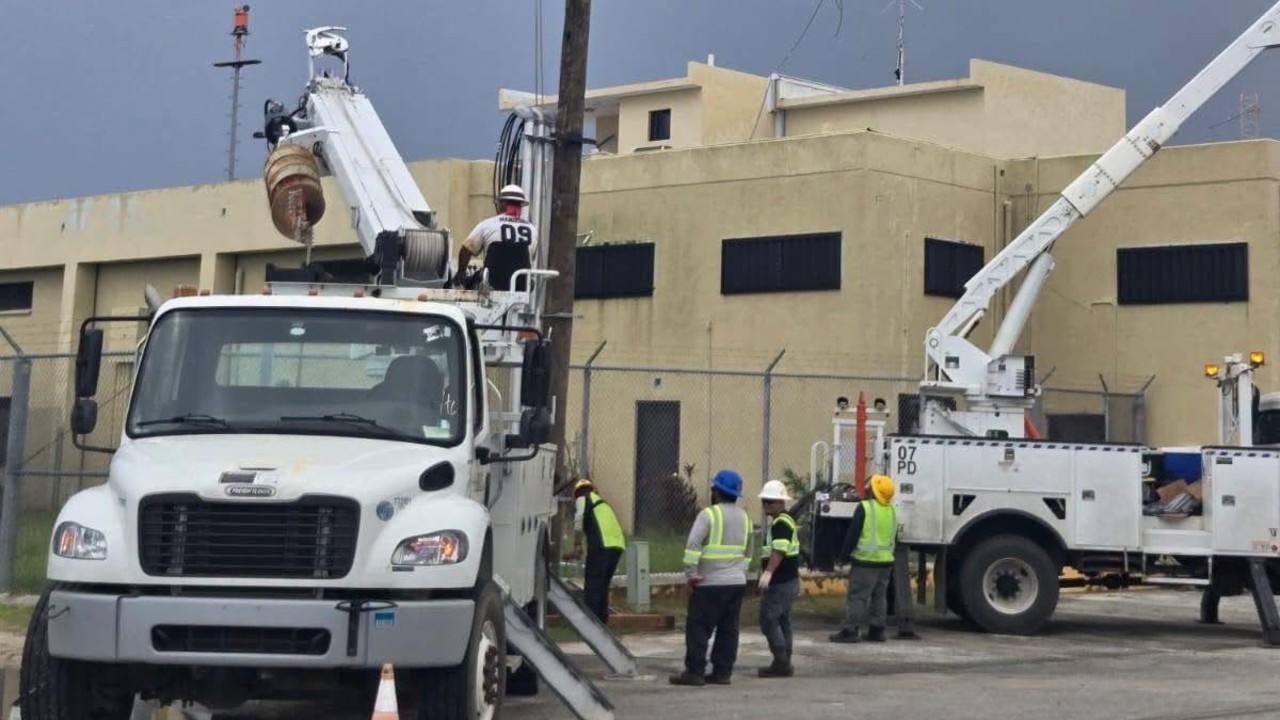
Construction would use an existing dirt access road and a temporary staging area. Marine trenches, about 360 linear feet long, and beach trenches, about 170 linear feet, would be excavated to roughly 3 feet deep, then backfilled and stabilized.
The project is planned in three phases, beginning as early as April 2026, with work extending into 2027. Coral relocation would occur ahead of certain construction activities.
Gaspar said an Environmental Impact Assessment identified potential impacts to coral reefs, essential fish habitat, green sea turtles, and water quality, with mitigation measures including turbidity controls, water quality monitoring, erosion control practices, and avoidance and minimization measures for sensitive marine resources.
Cultural resource protections, including procedures for unexpected archaeological discoveries or human remains, were also outlined.
The proposal is undergoing review by multiple local and federal agencies. The DCRM major siting permit is under review, along with approvals related to submerged lands, temporary occupancy, water quality certification, historic preservation, and federal environmental consultations.
Aldan said the public hearing was an important step in ensuring transparency, accountability, and community participation, encouraging residents to ask questions and offer constructive input as the review process continues.
DCRM director Agnes "Sam" M. Sablan said the agency will consider the hearing record, including Aldan’s remarks, before making a final determination on the project.
Share this article: