US-based startup eyes offshore mineral lease in CNMI EEZ
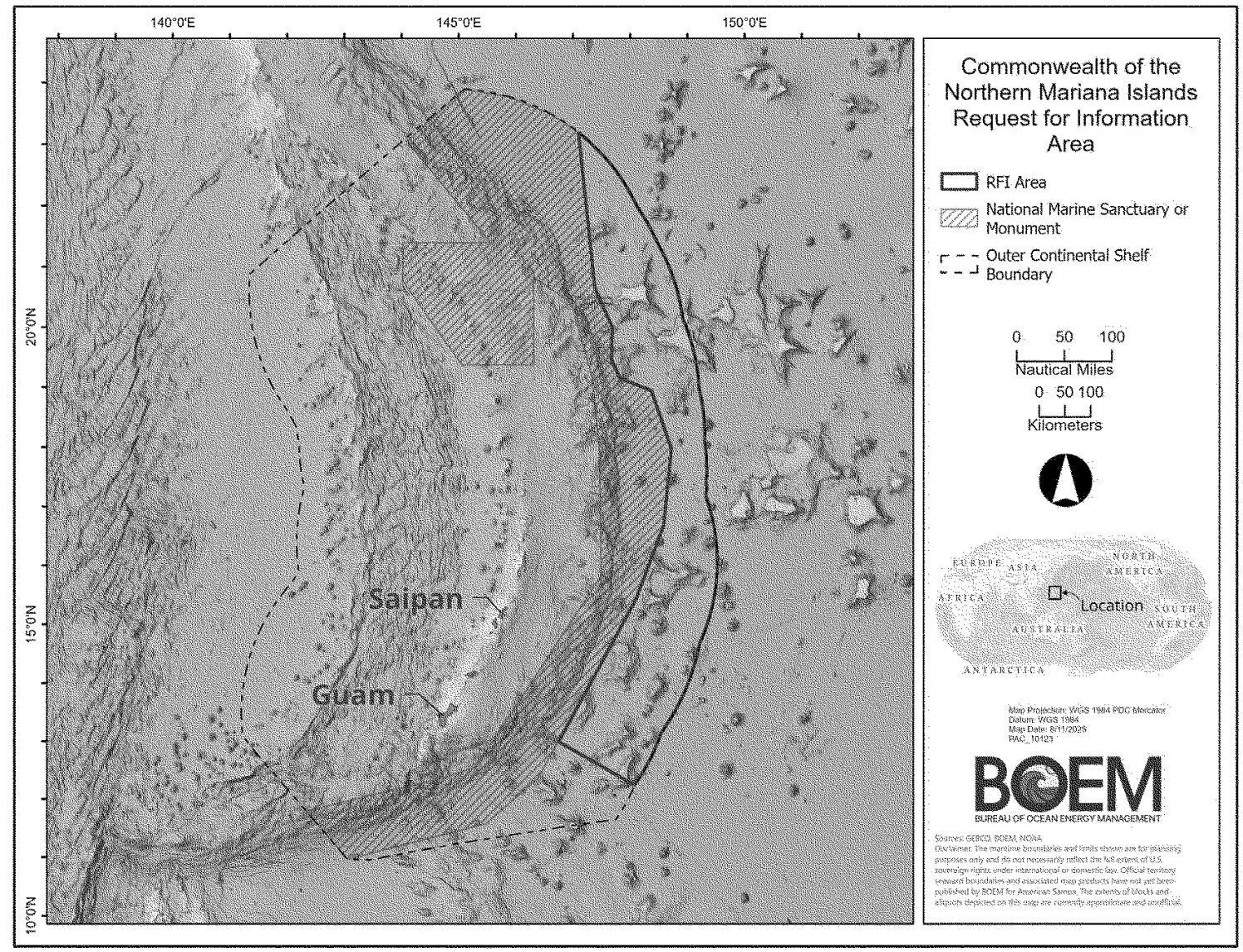
A deep-sea mining startup has formally expressed commercial interest in obtaining an offshore mineral lease in the CNMI’s Exclusive Economic Zone and is urging the Bureau of Ocean Energy Management to move quickly toward a proposed lease sale.
The company argues that the United States is falling behind China in securing critical mineral supply chains and that polymetallic nodules east of the Mariana Trench could provide a major domestic source of nickel, cobalt, manganese, copper, and rare earth elements.
“The United States sits atop an estimated billion-ton reserve of polymetallic nodules that can underwrite a century of industrial leadership, yet today those resources lie fallow while China races to secure global supply,” the company wrote in a letter to BOEM. “We therefore write both to affirm our commercial interest in a lease in this area, and to urge the Bureau to advance expeditiously from this RFI to a proposed notice of sale.”
The company said it plans to deploy its autonomous underwater vehicle technology, which it claims removes individual nodules without generating sediment plumes, avoids megafauna, and leaves at least 60% of nodules untouched. It said full-scale production could begin as early as 2028, following environmental impact assessments.
It also said it would proceed with mining only if it is satisfied that the Environmental Impact Statements show no material, long-lasting impacts on marine habitats or other ocean uses, including fishing, transportation, recreation, and submarine cable infrastructure.
As for benefits to the U.S., the company said mining polymetallic nodules would mitigate national security risks and vulnerabilities stemming from the country’s heavy reliance on foreign sources of critical metals.
These include nickel, copper, cobalt, manganese, and rare earth elements. The company said development of these resources would also generate revenue for the U.S. Treasury through leases, royalties, and taxes.
The company further promised a 1% profit share for the CNMI community, along with employment, training, and capacity-building opportunities. These include the creation of high-skilled jobs in a new industry, potential federal investment in critical infrastructure, expanded scientific knowledge of the CNMI EEZ seabed and environmental conditions—beginning at the exploration stage—and possible revenue sharing from federal leases, similar to offshore oil, gas, and renewable energy projects.
It proposes leasing areas consistent with International Seabed Authority norms—up to approximately 75,000 square kilometers for exploration—while excluding seamounts, guyots, hydrothermal vent systems, and cobalt-rich crusts due to their unique biodiversity.
The company also said exploration activities would not interfere with submarine cables and that data collected—such as bathymetry, imagery, and sampling—could benefit CNMI infrastructure planning. It also requested access to all government-held scientific datasets from past research cruises conducted in the CNMI EEZ.
The expression of commercial interest comes as BOEM last Dec. 12 extended its request for information. The original comment deadline of Dec. 12 has been moved to 11:59 p.m. on Jan. 12, 2026.
Group condemns rushed public comment period
Despite the 30-day extension, Friends of the Mariana Trench criticized the federal government’s handling of the public comment period.
“Despite clear requests from both governors and congressional delegates from Guam and the Northern Mariana Islands, as well as community leaders and organizations, for a 120-day extension, the federal government extended the comment period by only 30 days,” the group said in a statement. “The original timeline began during the federal government shutdown and runs through Thanksgiving, Christmas, and New Year, making meaningful participation nearly impossible.”
Board member Angelo Villagomez, a senior fellow at the Center for American Progress, warned that deep-sea mining could have irreversible impacts on the ocean and the Marianas’ way of life.
“Our communities asked for 120 days because these decisions are complex and consequential,” Villagomez said. “Instead, we were given a timeline that ignored our voices and our religious holidays.”
Board chair Sheila Babuata, a Right to Democracy Environment and Democracy fellow, said holding a comment period over Christmas is not just inconsiderate but disregards the faith and traditions of the majority of the population.
“For many in the Marianas, Christmas is a sacred time for family and worship,” she said. “To force public engagement during this season is a heavy burden and feels contrary to the values of respect and inclusion.”
Another board member, Tina Sablan, said there is a collective responsibility to be stewards of creation, adding that “decisions about our ocean should reflect that responsibility and show respect for the people who live here.”
Despite concerns over timing, Friends of the Mariana Trench encouraged residents of Guam and the Northern Mariana Islands to educate themselves on the issue and participate to the extent possible.
Share this article: