A Reminder for all CNMI Leaders: Our Islands Are Not for Sale | Opinion
In the CNMI, land is not just property. It is our identity, history, and inheritance. It connects us to our family histories and anchors our future. As a cornerstone of the CNMI Constitution, Article 12 protects land ownership for persons of Northern Marianas descent (NMD), the Chamorros and Carolinians. CNMI leaders should remember that these protections are intentional, hard fought, and rooted in the lived experiences of our elders, our grandparents and great-grandparents.
Their generation negotiated Article 12 into the Covenant knowing exactly what was at stake. They witnessed first-hand how land could be taken, centralized, militarized, and commercialized with little regard for our culture and history. They understood that without strong land protections, political union with the United States (U.S.) would mean very little. That is why they insisted that NMD lands remain in NMD hands.
Article 12 preserves who we are as Chamorros and Carolinians. Without it, self-government would be hollow, especially if our own people were priced out, as we have seen in Hawaiʻi and Guam, where median prices for a single-family home exceed $1 million and $500,000 respectively. Prices like these would be out of reach for most local families, both NMDs and non-NMDs. Once land values rise beyond what local incomes can support, the consequences last generations.
Today, we see why Article 12’s protection matters. Families who leased land decades ago during difficult times later watched its value rise beyond the reach of their grandchildren and great-grandchildren. Long-term leases that stretch across generations carry real risk. When land is tied up for nearly a century, or transferred to investors with no connection to our islands, future generations may lose meaningful access. Safeguards like Article 12 exist to prevent our communities from being priced out and forced to leave.
For that reason, the CNMI must be clear: Our islands are not for sale.
Recent comments by Governor David M. Apatang at an investment forum in Hawaiʻi, telling investors they could “buy an island,” is simply the wrong kind of message. Even if the intent was to promote opportunity, that language overlooks constitutional reality. CNMI land access is protected for a reason. Investors cannot buy our islands.
This does not mean we reject investment. We need jobs, infrastructure updates, and industries that allow our young people to build lives here instead of leaving. But too often our economic strategy leans heavily on outside interests, particularly tourism and the military, while internal investment remains limited. CNMI leaders should ask themselves: How much are we investing in local entrepreneurs, students, farmers, teachers, nurses, and small businesses? How much local revenue circulates within our own communities before flowing outward?
There is also a national security dimension, but it begins with responsible stewardship. Land policies must first ensure our communities can live and thrive here. That long-term stability is only possible because of our Covenant with the United States. But our needs must come first. Federal protections do not replace local responsibility. Real security, both economic and personal, begins with protecting the land that sustains us.
While NMD land protections are foundational, they are not the whole story of who makes up our community. Families whose parents or grandparents came as contracted professionals and skilled workers helped build our schools, hospital, and infrastructure. Their children were raised here. Strengthening the CNMI means expanding economic opportunity for everyone who lives here long-term while preserving constitutional protections. Real economic strength does not come from selling access. It comes from investing in economic opportunities within our local communities first, so they can withstand recession and external pressures.
Strengthening opportunity also does not require weakening protection. That is why proposals like Senator Manny Gregory T. Castro’s S.L.I. 24-03, which would extend land lease terms from 55 to 99 years, deserve critical review. A 99-year lease binds at least two generations of NMDs. But not all land should be treated the same. If longer leases are allowed, they should apply only to parcels already zoned and operating as major commercial developments. Residential, agricultural, watershed, and other lands should remain under the 55-year cap so they are not tied up for a century, risking our natural environment and the rights of family members not yet born.
Our elders opened a clear path when they secured Article 12. We need to honor their foresight by maintaining that path, investing in our local communities, and remembering a simple truth that should guide every economic conversation: Our islands are not for sale.
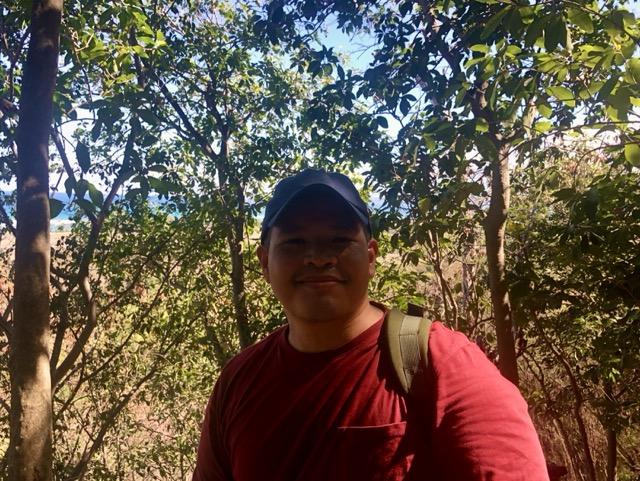
Johnny Tudela Aldan, MPH is an epidemiologist and doctoral student born and raised in Saipan. He is currently based in Hawaiʻi. His current work focuses on community-centered public health, disease surveillance, and strengthening health data systems in Pacific Island communities. His research interests include maternal and child health, infectious diseases, and the health impacts of environmental pollutants in Pacific Island populations. He is also a strong advocate for resource policy rooted in Indigenous approaches to environmental stewardship. His earlier research experience includes environmental toxicology and immunology, with peer-reviewed work examining lipid metabolism, mast cell activation, and inflammatory signaling. Across both research and applied public health, his work centers on connecting science, policy, and community needs to improve long-term health and resilience at home.
Share this article: