Acting PSS Commissioner of Education Rallies 5-Day School Comeback Amid Deepest Fiscal Deficit in 30 years
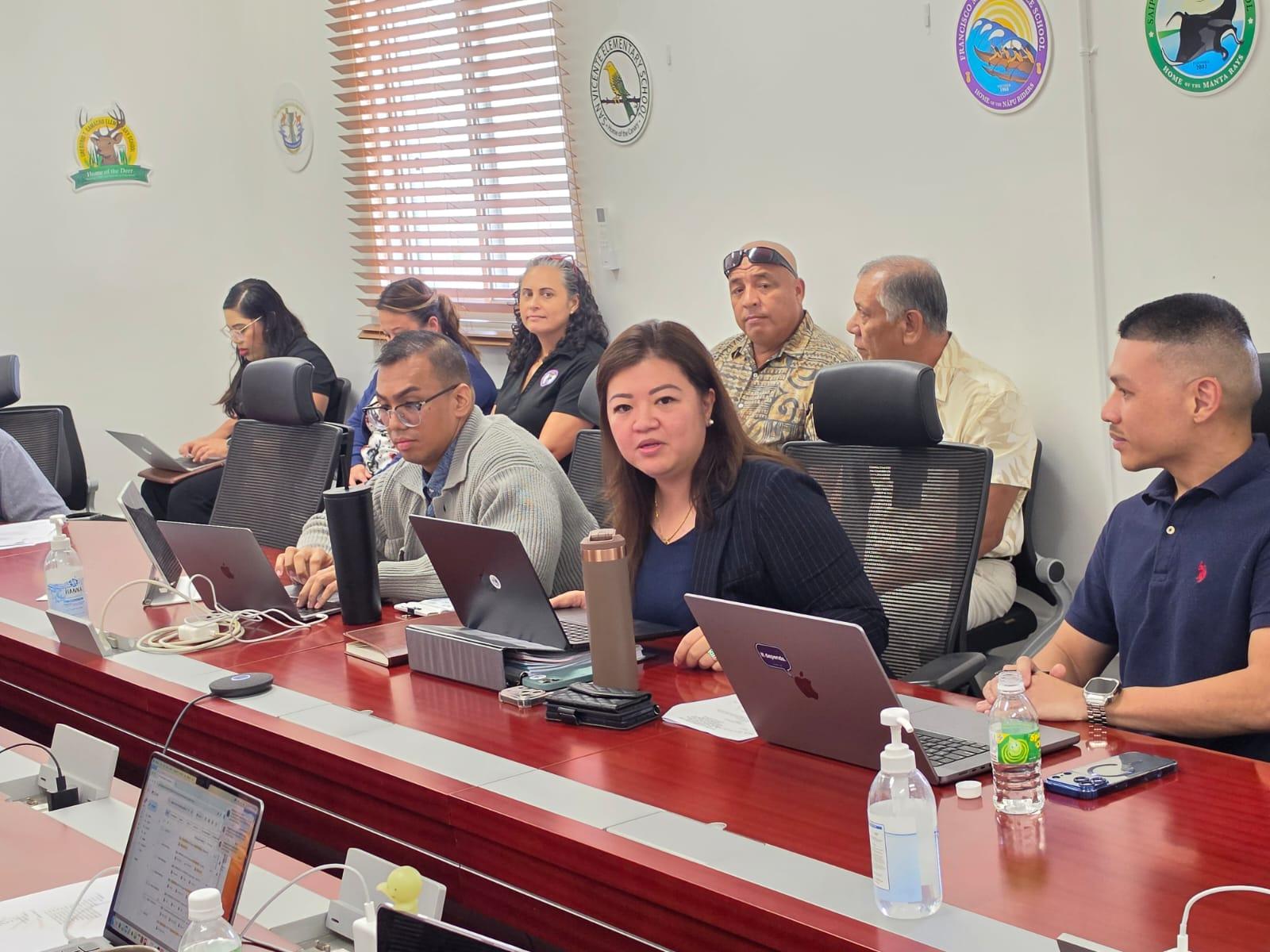
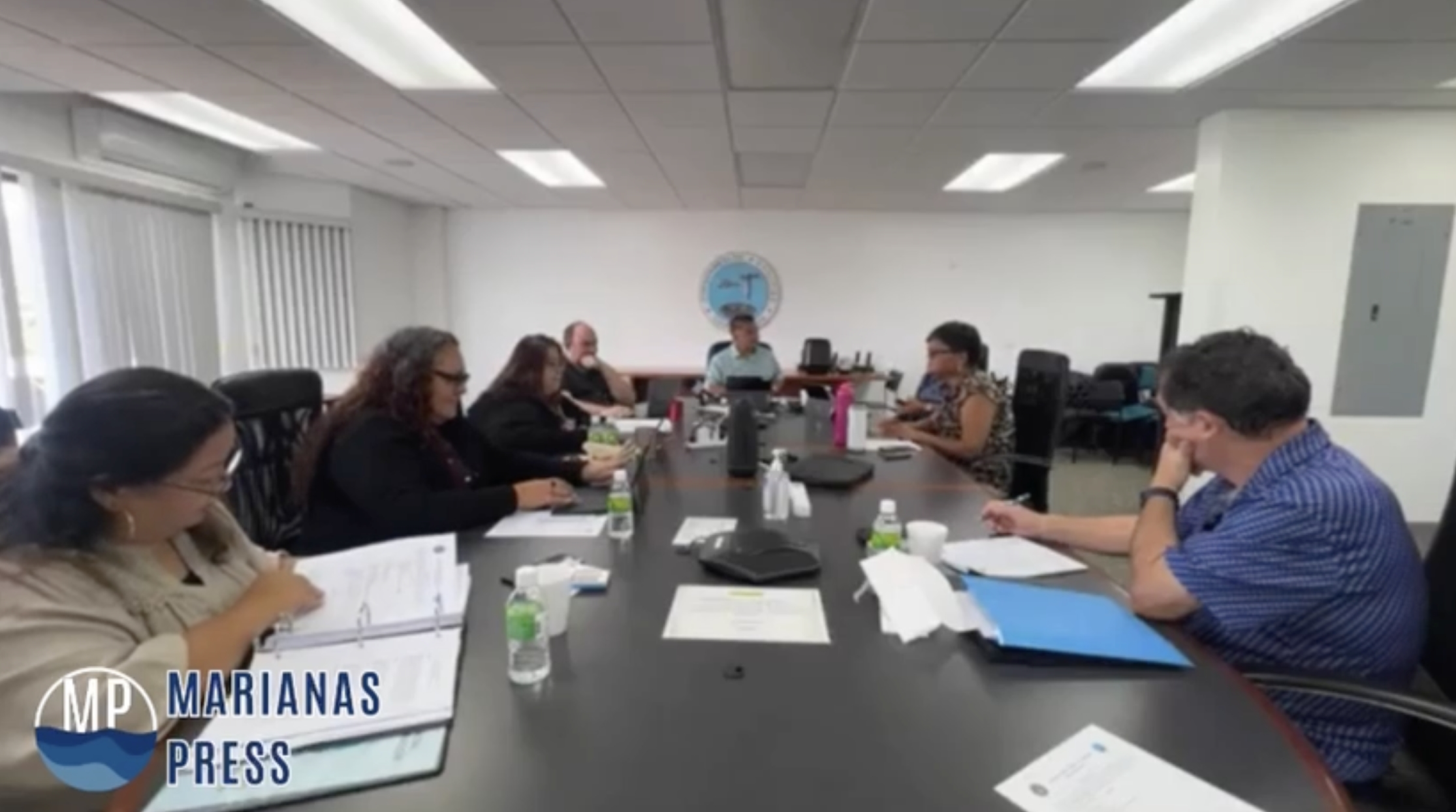
Acting CNMI PSS Commissioner of Education Jacqueline Che detailed the 5-day Promise initiative during the Board of Education Regular meeting on September 17, outlining an aggressive roadmap to restore a five-day school week by October 1 while navigating the deepest financial deficit the Commonwealth of the Northern Mariana Islands Public School System (PSS) has faced in 30 years.
Addressing the board during her first commissioner’s report, Che explained that PSS leadership recently secured positive feedback from federal partners in Washington, D.C., to implement strategic financing flexibilities and waivers at zero additional cost to the system.
Under the operational rollout, four-day school weeks and "Austerity Mondays" will be converted into dedicated academic and wellness hubs. "Austerity Mondays will be transformed into a targeted intervention day where there will be high dosage tutoring intervention," Che said. "We're also going to embed and integrate trauma-informed social-emotional learning support to children who are dealing with anxiety and other issues."
The drive to restore instruction comes against a grim fiscal forecast for Fiscal Year 2027. Lawmakers are currently considering an appropriation that could slash local education funding down to an estimated $24.3 million—a historic low driven by shrinking net general revenue projections that directly erode the constitutionally mandated 25% educational share. The projection falls precipitously below the $44.9 million PSS requested to sustain a standard 80-hour biweekly schedule and sits far under the governor’s proposed $37.6 million austerity budget, which was modeled on a 64-hour pay period.
Che warned board members that reductions of that magnitude would dismantle basic operations and trigger unprecedented institutional disruptions. "If we're looking at only our instructional staff, that already costs us $19 million—and that's not including school operations," Che emphasized. "At $24 million, that's not even half of 37. If we go below 64 hours, we're going to be at 50 hours, which is not good. At that level, it's really unheard of. It would mean really consolidating three schools into one."
The initiative comes at a critical juncture for the district, which opened all 20 campuses on August 18 despite coping with typhoon damage, prolonged utility disruptions, and the loss of 137 employees—including 47 classroom teachers—since January. Che reported that full-day sessions are resuming for both Kagman Elementary and Cha Cha Oceanview Middle School as power is restored, underscoring that institutional momentum must be preserved. "Our mission does not change based on a budget deficit," Che stated. "Now more than ever, we anchor ourselves to our core promise of students first, educators always. Over the last 90 days, my primary objective has always been very clear, and that is to align our entire system around a single, non-negotiable priority, which is putting our students first."
Following Che’s presentation, Acting Federal Programs Officer Peter Arriola delivered the federal status report, announcing that PSS has expended approximately $59 million—or roughly 65%—of its active $91 million federal portfolio as of July 30. "Overall, our $91 million federal portfolio remains in a healthy position, and we're closely tracking the grants that require the most attention," Arriola reported.
Arriola highlighted that PSS has frozen remaining balances from its $20 million school year 2025–2026 Consolidated Grant to reprogram carryover funding into two immediate priorities: district-wide classroom device replenishment and operational staffing for the Monday Success Academy under the 5-Day Promise. He also clarified that lower spend rates on awards like the SASSY grant and the newly awarded MAP 2026 capital improvement grant reflect multi-year lifespans extending through 2028 and 2029 for major facility repairs. Additionally, PSS is awaiting decisions on $13.3 million in submitted competitive federal applications, including $4.9 million for campus safety overhauls, $7.5 million under Project AWARE for youth behavioral health systems, and $900,000 for Chamorro and Carolinian language preservation.
PSS Director of Finance Jonathan Aguon followed with the local fund status report, confirming that the central government has transferred 96% of the district's revised $35 million local appropriation under Public Law 24-20, with the final $1.4 million allotment queued in the CNMI Treasury portal for dispersal before month's end. PSS has already obligated 93.7% of its total local budget, leaving no surplus balance for the upcoming fiscal cycle. "In terms of carrying over to the next fiscal year, it'll be nary a dollar," Aguon told board members. "We're going to spend every single cent or at least obligate them... we are on trend to spend every single dollar that we have planned to spend."
Aguon explained that while PSS operated without a centralized repair budget, the finance office leveraged operational savings from post-typhoon utility disruptions—where power outages reduced utility costs from a budgeted $1.7 million to $1.1 million—alongside unexpended vacancy funds to cover an unbudgeted $759,000 emergency school safety and maintenance line item. Board members commended the administration's proactive grant repositioning and financial discipline, reiterating that as local revenues tighten, every available funding stream must remain tethered to the classroom.
Alongside structural finances, the board acted on direct student and family services. Members unanimously approved an overhauled 2026–2027 school lunch menu that increases protein portions across secondary campuses and expands a farm-to-school partnership with NMC-CREES and local farmers to replace processed grains with local taro and sweet potatoes starting March 1. The board also approved the School Year 2026–2027 Early Intervention calendar running from August 11, 2026, through June 10, 2027, and moved to protect $250,000 in expiring Head Start federal funds through a broader budget revision package, while referring employee retention incentive structures to an upcoming special meeting for administrative refinement.
Share this article: