The three candidates vying to become the CNMI’s next attorney general made their cases directly to voters last Sept. 12, outlining how they would prosecute crimes, handle conflicts of interest, protect the Commonwealth’s interests, and restore public trust in one of the government’s most powerful offices.
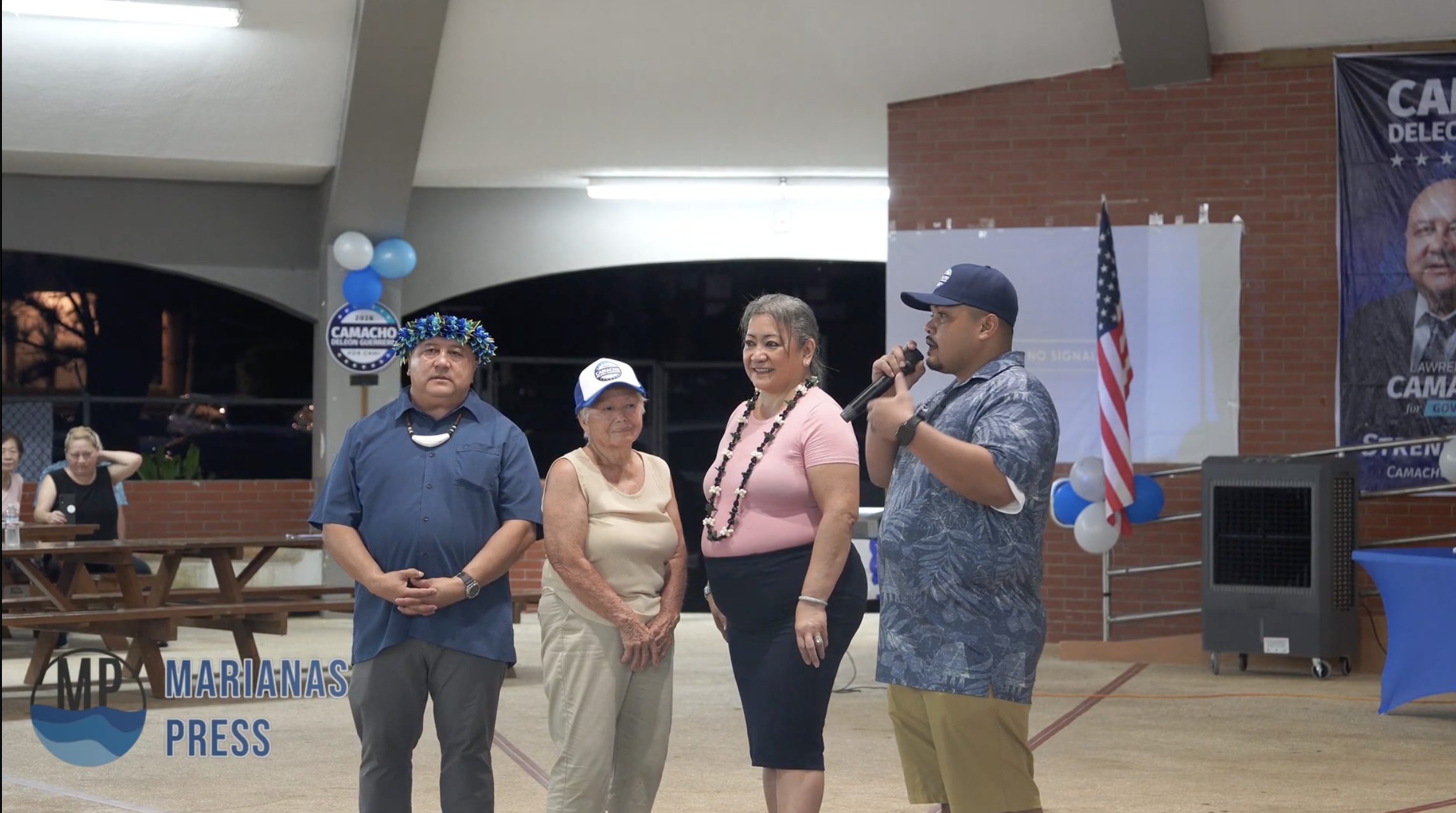
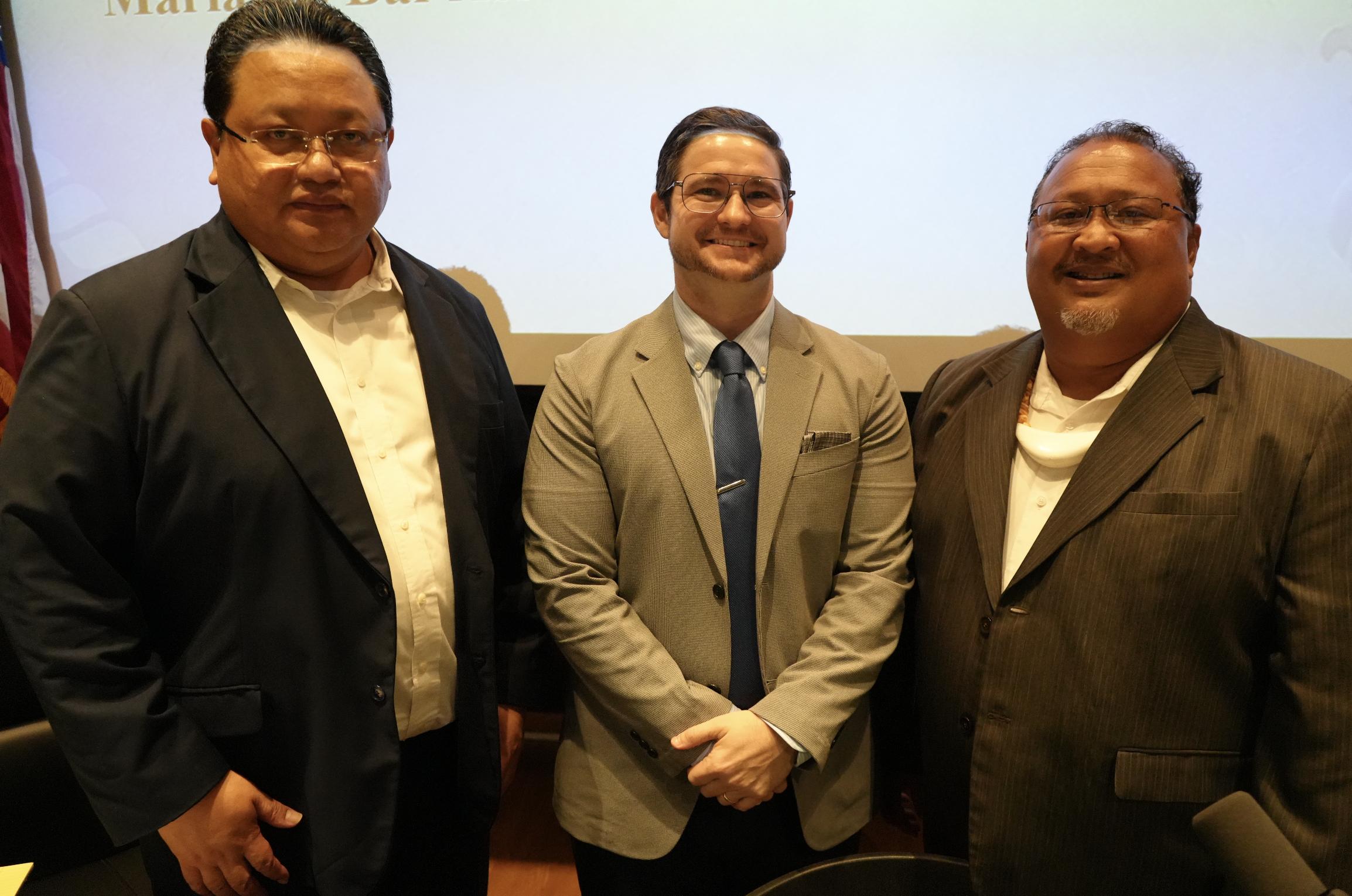
Joaquin “Jack” DLG Torres, Jonathan Robert “Robby” Glass Jr., and Michael “Mike” Evangelista took the stage at the American Memorial Park indoor auditorium in Garapan for the CNMI Attorney General Candidates’ Forum hosted by the CNMI Bar Association.
The forum gave voters a rare side-by-side look at the three candidates seeking to lead the Office of the Attorney General, which serves as the Commonwealth government’s chief legal office, advises the governor and government agencies, represents the CNMI in legal matters, and prosecutes violations of Commonwealth law.
CNMI Bar Association president Gretchen Smith, who moderated the forum, said the organization hosted the event as a nonpartisan effort to give the candidates an equal and balanced platform to discuss their experience, priorities, and vision for the office.
Five questions were selected from more than 100 submitted by members of the public and the Bar Association, followed by audience questions after a break. The topics ranged from prosecutorial priorities and public safety to conflicts of interest, deep-sea mining, office leadership, consumer protection, homelessness, mental health, and addiction.
In their opening statements, all three candidates emphasized experience and independence, but each offered a different argument for why voters should choose him.
Torres pointed to more than two decades of legal practice, including experience at the Attorney General’s Office and in private practice.
“I want to create an office, an environment in the office where the attorneys, assistant attorney generals can yell across the hallway and ask for help,” Torres said. He also said he wants OAG attorneys to be more accessible to government agencies.
Glass, who said he has spent the past 10 years at the Attorney General’s Office, made independence a centerpiece of his campaign.
“I will not be beholden to political parties, powerful individuals, or well-connected people,” Glass said. “I will be accountable to the people only and guided by the law and the law must apply equally to everyone.”
Evangelista, meanwhile, pointed to nearly 30 years of public and private legal experience and said his leadership would be built around integrity, accessibility, transparency, and community safety.
“My legal advice will be based on what the law requires, not what someone wants to hear,” Evangelista said.
The candidates were first asked what standards they would establish for prosecutors making charging decisions and sentencing recommendations in serious criminal cases.
Torres said repeat offenders should be dealt with firmly while stressing the need for better coordination and training between the Attorney General’s Office and Department of Public Safety.
“We all make mistakes, but at the same time, repeat offenders need to be treated the way they are,” Torres said.
Glass said prosecutors should make sure investigations are solid before filing charges and should examine the available evidence against each element of an alleged crime.
“The first thing I'd actually do is talk to the prosecutors and tell them to make sure we have solid investigations first before charging,” Glass said.
Evangelista said community safety would be his priority, while rehabilitation should remain available for offenders who can benefit from treatment and do not pose a serious danger to the public.
“My priority is the safety of our community,” Evangelista said.
The candidates also faced a question on one of the more sensitive responsibilities of the office: what to do when allegations involve a relative, political ally, former client, or someone previously advised by OAG.
Glass said appropriate safeguards, including separating attorneys from matters in which conflicts exist, should be used.
Evangelista said the office must examine both the evidence and the relationship involved and be prepared to step aside when an actual conflict or appearance of impropriety warrants it.
“As attorney general, I will remove myself if it's called for,” Evangelista said.
Torres said he would withdraw from a matter and appoint a special prosecutor or independent attorney when necessary.
“If there's a conflict, and whatever the conflict is, if I'm conflicted out, I'm going to conflict myself out,” Torres said.
On deep-sea mining, the candidates generally said the attorney general does not set government policy but should advise the governor and protect the Commonwealth’s legal interests.
Evangelista said the governor sets policy while OAG must determine whether that policy and any related action comply with the law.
Glass similarly said the attorney general is a legal adviser, not a policymaker, but should research and advise the governor on the CNMI’s rights when offshore activity could affect local waters and fishermen.
Torres said his administration would work to ensure applicable federal regulations are followed to protect fisheries and the environment.
“I'm a fisherman and I've got to make sure that our fisheries and our environment are protected,” Torres said.
The candidates also generally said the public sometimes misunderstands the attorney general’s role, particularly by viewing the office as a policymaking body.
Torres said OAG represents the Commonwealth government rather than any particular individual. Glass said the office advises agencies but does not run the CNMI, while Evangelista said the attorney general is bound by the law and available evidence when deciding whether criminal cases can be brought.
Their differences became more pronounced when they were asked about defendants who also struggle with homelessness, mental illness, or addiction.
Glass pointed to treatment courts and said justice does not always mean incarceration.
“Sometimes criminal justice and doing justice as a prosecutor is helping someone,” he said.
Evangelista said authorities should determine the underlying cause of criminal behavior and coordinate treatment and rehabilitation where appropriate, while making clear that committing a crime does not automatically warrant a “free pass.”
Torres, drawing from his experience handling involuntary commitment cases, placed greater emphasis on treatment for people whose actions stem from mental illness.
“We don't need to prosecute these individuals when there's no intent to commit the crime,” Torres said.
After a 10-minute break, the candidates answered questions submitted by the audience, including why voters should choose them, OAG’s role in reviewing government contracts, and how they would strengthen public confidence in the office.
Asked for the strongest reason voters should choose him, Evangelista pointed to his experience on both sides of the justice system and his independence.
Torres argued that his combination of government and private-practice experience gave him the strongest background of the three.
Glass answered with one word: “Independence,” before pointing to his 10 years inside OAG and his experience as chief solicitor.
On government contracts, the candidates generally said OAG’s responsibility is to determine whether contracts comply with applicable legal requirements rather than to make policy decisions.
Torres said he would streamline contract reviews and argued that some contracts have been delayed at OAG for weeks or months. He said he believes such delays can discourage investors from doing business in the CNMI.
Glass said contracts should be reviewed to ensure procurement laws and regulations were followed. He disputed the broader suggestion of a backlog, saying that during the times he served as acting attorney general, contracts before him were processed within the week.
Evangelista said contract reviews should ensure Commonwealth resources are spent legally and bidders are treated fairly. He also said delays in the review process can affect the economy.
The candidates also offered different approaches when asked how they would strengthen public trust in OAG.
Glass said laws must be enforced equally and government procurement should provide a level playing field.
Evangelista said politically sensitive matters should be handled quickly and independently when conflicts arise.
“The law has to be applied fairly, equally. No one is above the law and no one is beneath the law,” Evangelista said.
Torres said the attorney general must be more visible and accessible to the public and pledged an office that people can reach when they have questions.
The candidates ended the nearly 90-minute forum with closing appeals to voters ahead of the Nov. 3 general elections.
Evangelista said the election ultimately comes down to whom voters trust with the considerable authority of the office.
“The Attorney General's office does not belong to any politician or political organization. It belongs to the people,” Evangelista said.
Glass again stressed independence and called for politics and family connections to be put aside in government decision-making. He also said he wants to hire a full-time consumer protection attorney and pointed to settlement money he said could be used for consumer protection efforts.
Torres said he entered the race because he believes OAG needs new leadership and a new direction.
The Bar Association said the purpose of the Sept. 12 forum was to help voters make an informed choice about an office whose work affects public safety, government spending, equal treatment under the law, and people struggling with homelessness, mental illness, or addiction.
“Our purpose in hosting this forum is to help voters make an informed choice,” Smith said in closing. “Please carry these conversations into your homes and your villages. Please keep asking questions, and please vote.”
Share this article: