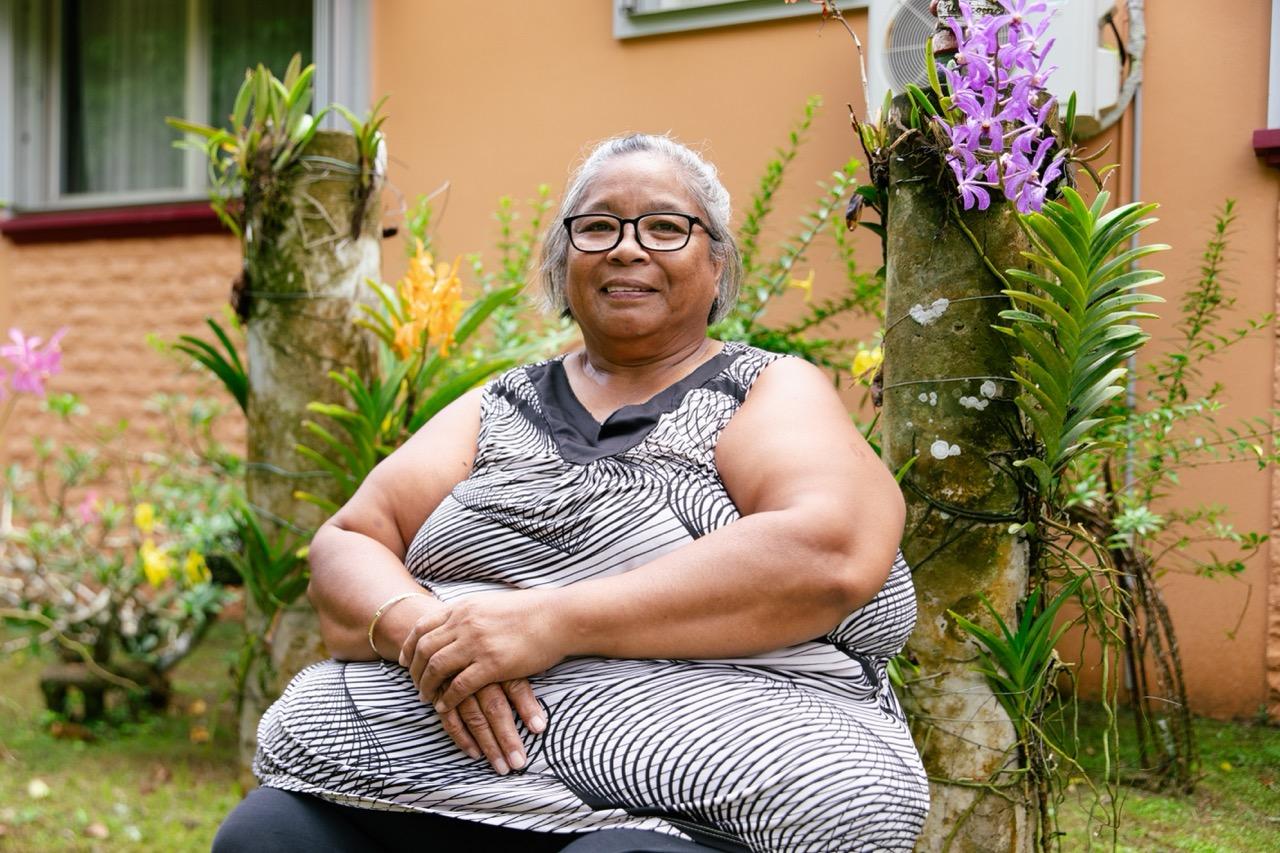
The first time Consolacion Torres, age 64, tasted apigigi, she was too young to remember, but the scent of coconut smoke curling through banana leaves has been with her ever since - a thread connecting her childhood to her grandchildren's.
In the quiet valleys of I-Denni Village, Consolacion (known as ‘Connie’ to her family) home sits surrounded by swaying greenery, most of it food trees that have fed her family's business for decades. "Everything we use to make apigigi, we take from outside," she says, relaxed at the foot of her wooden dining table, a small smile playing at her lips. Through sheer curtains, coconut palms rustle in the breeze. "Out there, in the land, we have coconut trees that we use just for apigigi. What we can't use, we need to burn. It's such a waste." She gestures toward the window. "Whatever I can make with it… me and my family, we make and give it away. And when we didn't have what we needed outside, we bought it from people in Rota or Tinian."
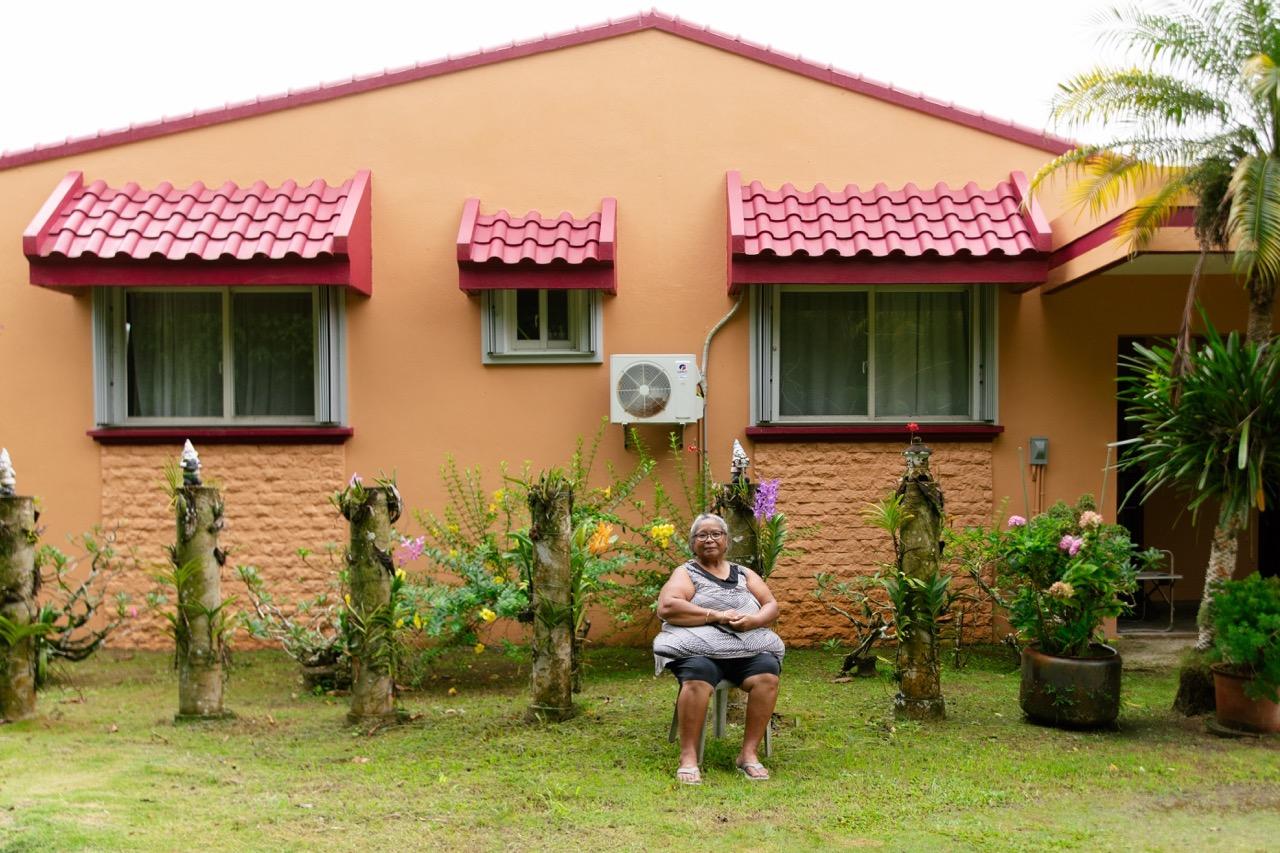
This is the home the Dela Cruz family of Susupe built - not with imported materials or foreign capital, but with profits from apigigi - columns of hand-grated coconut wrapped in fresh banana leaves and lightly smoked over firewood. Officially established in the 1980s, the family business operated from a central kitchen in Susupe, where apigigi would be fresh from grating just minutes before being laid out, wrapped, and set above the coals. Connie and her siblings were their parents' helpers, harvesting fresh ingredients and making door-to-door sales throughout the neighborhood.
She laughs recalling those days. "It was funny because my siblings would take a plate of fish and go hide at the påpa såtge"—a narrow open area under the house, a remnant from when homes were elevated on latte stones—"they would hide there to eat. Back then, five pieces of fish cost a dollar."
The business stretched beyond Saipan. Customers in Rota, Tinian, and Guåhan placed orders before they even arrived. "When they come, the first thing they'd do is place their order," Connie says. "Or if they have family coming, they'll ask them to do pickups from us. We can do that."
From childhood to adulthood, Connie has watched time pass through the unchanging flavor of her family's signature dish. While food businesses evolve and experiment, the Dela Cruz apigigi has remained sealed in tradition, preserved out of respect for her parents' ingenuity. When asked if she's ever attempted different methods or flavors, she only smiles. "I've tried. But the old method is the only method.” She leaned forward, a hand resting on the kitchen table. “If I changed the flavor, it wouldn't be apigigi."
Every piece was made to the standards of a legacy recipe: homegrown ingredients, handmade to every last detail.

These days, that legacy is still alive. Just steps from Connie's front door, an outdoor kitchen houses freezers and cast-iron grills that see weekly use. Though the family business officially closed in 2015, Connie still fires up the grill for events and family gatherings, making Chamorro treats to contribute to the food table. The occasional apigigi order still floats by, but she's content letting the flow of the Dela Cruz business land in her daughters' hands, and now her grandchildren's.
The kitchens offered far more than coconut treats. Tamales mendioka, gisu, and suni were offered to customers, alongside containers of titiyas manha and titiyas mais. There were pots of steaming escabeche and åhu. It was a childhood full of sensory delights and filial responsibilities, both of which Connie recounts with eyes glazed with nostalgia.
After decades at her parents' business, the process has become second nature. "Every ingredient has to be fresh, and you can't get it straight from the grocery stores," Connie explains. "The banana leaves, the coconut… You have to learn to harvest these fresh. And then you have to make them with firewood."
The family was accustomed to the demands after years of running the operation. Batches upon batches ended up in fragrant stalls at the open-air markets on Thursday nights and Saturday mornings, gone before vendors could close up shop. Careful not to overharvest, the Dela Cruz family took only what was needed to keep sales going. When Saipan ingredients ran low, money from the business would flow to people in Rota or Tinian to supplement their stores with pounds of fresh produce. In this way, profits cycled through and stayed within the Marianas.
The business was an enriching experience in every sense. Connie credits vacations to Japan and her education to the money her family made selling apigigi, and to the support of the wider Chamorro and Refaluwasch communities.
"It's very important that we support each other, you know?" Connie says, her voice warm with conviction. "That support kept our business going."
For order inquiries, text Connie at (670) 287-2497.
Share this article: