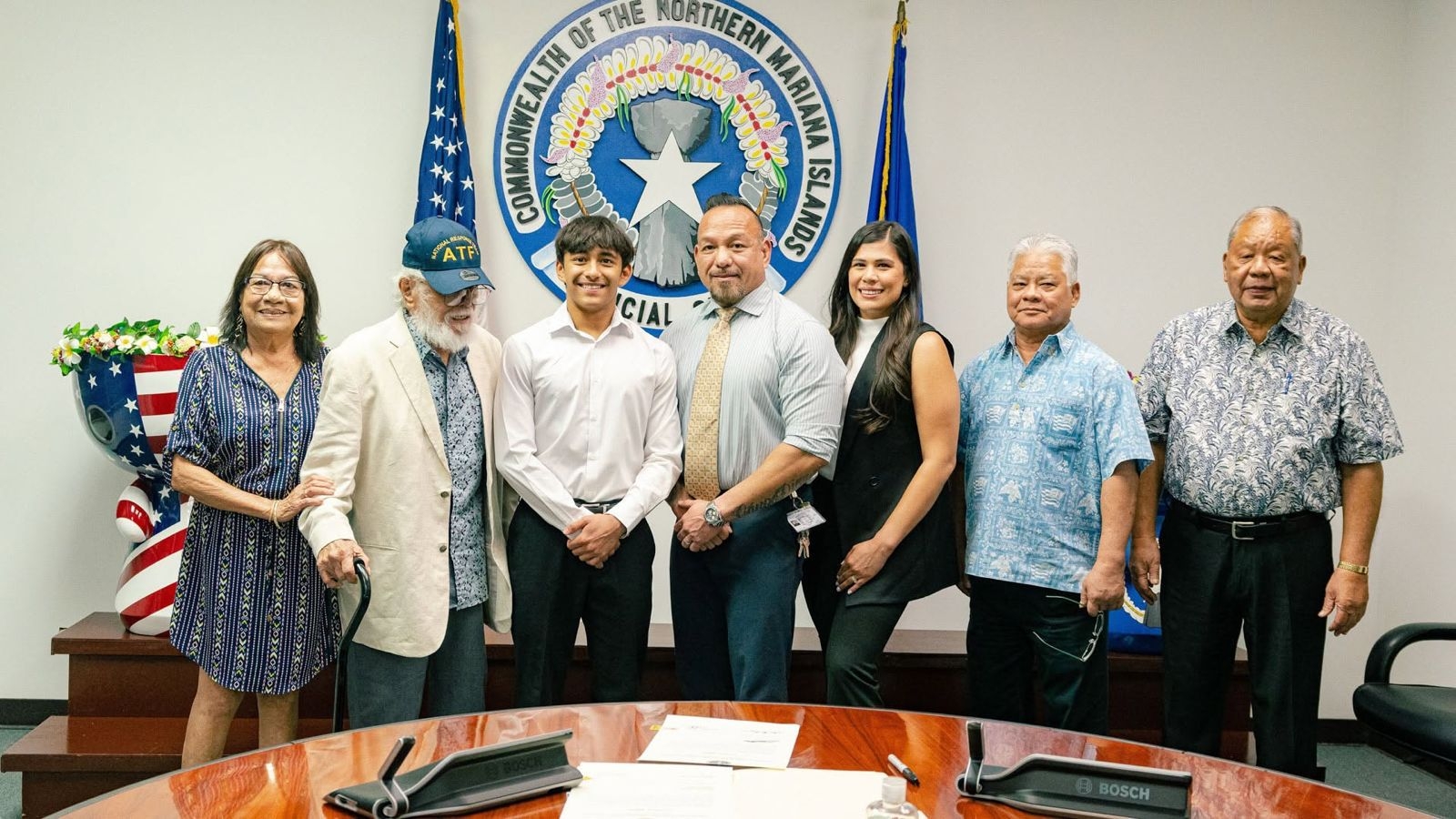
The Commonwealth Economic Incentive Authority elected Anthony Torres as chair and Tina Azarvand as vice chair during its historic first board meeting last Jan. 6 at the Governor’s Office conference room on Capitol Hill.
Torres is the commissioner of the Department of Corrections, while Azarvand owns Azarvand Tax Law.
Following his unanimous election, Torres outlined the statutory mandate of CEIA, describing the authority as a central mechanism for driving long-term economic diversification through the regulation, promotion, and management of economic incentive districts in the CNMI.
Torres said CEIA is empowered to issue economic incentive district licenses to qualifying businesses operating within designated districts.
“These licenses max out at 20 years and pack a punch with tax perks, exemptions, and rebates on things like gross revenue, tax, excise tax, developers tax, you name it, up to 100% for those two decades, all tuned to the real economic value they bring us.”
He emphasized that CEIA’s role extends beyond issuing licenses, noting that the authority is mandated to actively promote economic incentive districts globally, reduce bureaucratic barriers, and engage contractors or third-party entities to assist in marketing, administration, and compliance.
"We're not passive incentive givers. We're active boosters for businesses that match our vision, helping them succeed while they give back to our communities in meaningful ways. And folks, our base is stronger than ever and growing fast,” he said.
Torres highlighted CEIA’s responsibility to oversee existing and newly authorized economic incentive districts, including the foundational district adjacent to the Francisco C. Ada/Saipan International Airport and the newly authorized Garapan district.
He said the Garapan designation, made possible by recently enacted local legislation, allows underutilized commercial properties to be repositioned for technology, professional services, and other non-tourism industries.
Torres also underscored CEIA’s obligation to coordinate with partner agencies and organizations, including the Trade Council of the Marianas, to streamline licensing, improve regulatory clarity, and ensure businesses operate within environmental, labor, and land-use standards.
The newly elected CEIA chair cautioned against incentive structures that result in little or no public benefit, saying CEIA is mandated to balance competitiveness with fiscal responsibility.
“We've seen it time and time again, 0% effective tax rates don't build lasting wins for us. Instead, aim for 3% to 7% effective rates. This could funnel billions into our coffers over time, especially if paired with incentives like 50% personal tax rebates and our uncapped H-1B visa programs. We're tapping into the CNMI's ultimate edge, top-tier tax savings in a U.S. jurisdiction.”
He added that CEIA must work to align economic incentives with workforce development, environmental protection, and tourism compatibility, calling those elements core to the authority’s mission.
Torres concluded by pledging to lead the board with transparency and collaboration, committing to work closely with government agencies to expedite permits and regulatory approvals while maintaining accountability and public trust.
Other members of the CEIA board are Department of Commerce Remedio C. Mafnas, Burger, Comer & Associates’ David Burger, and Noel M. Calvo of Tinian.
The board also voted to advance draft regulations for future action, post a job opening for an executive director, and explore statutory requirements for annual independent audits and legal counsel.
In an interview with Marianas Press after the meeting, Torres said the inaugural meeting CEIA comes at a pivotal time, describing it as the start of a high-energy, proactive effort to revive economic incentive districts, particularly Garapan.
He thanked Gov. David M. Apatang for the appointment and fellow board members for their confidence, saying the role carries significant responsibility as CEA works to “turn things around” for the CNMI economy.
As chairman, he identified filling vacant buildings in Garapan as a top priority, along with aggressively marketing the CNMI as a leading tax jurisdiction. He said the work ahead offers renewed optimism for 2026 and called the inaugural meeting a historic step forward for the authority.
Torres said the CEIA board achieved a quorum at the first meeting with five members present, including representatives from Saipan and Rota, while additional nominees await Senate confirmation. Discussions included draft regulations expected to come up for action at the next meeting, potential collaboration with outside experts, and the aforementioned upcoming search for an executive director.
Share this article: