CNMI advocates, experts slam BOEM expansion of deep-sea mining area
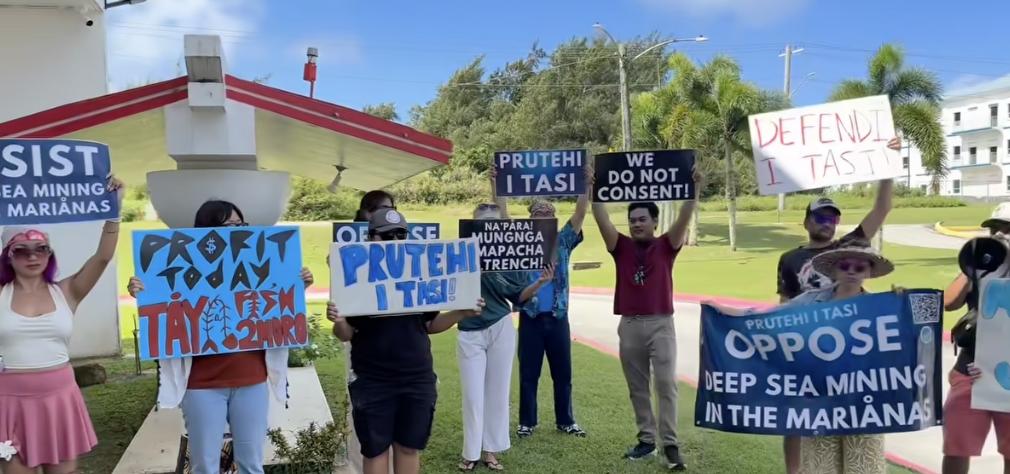
Local and regional voices are sharply criticizing the U.S. Bureau of Ocean Energy Management after it expanded the area under consideration for potential deep-sea mining around the Marianas. The move, which doubles the Area ID to 69 million acres—roughly the size of Nevada—comes despite tens of thousands of public comments opposing such development.
Therese “Isa” Arriola, chairwoman of Our Common Wealth 670, said in an open letter that the, “The decision to nearly double the area identified for potential deep-sea mining demonstrates a profound disregard for the expressed concerns of our community.”
The group highlighted repeated public objections, including fears of irreversible environmental damage, the importance of respecting Indigenous rights, and the growing global consensus against seabed extraction.
“Our ocean should not be reduced to a reservoir of strategic materials for defense agendas that do not reflect the will, needs, or consent of the people who live here,” she added.
Zeno C. Deleon Guerrero, Jr., vice chairman of Our Common Wealth 670, emphasized the broader implications of BOEM’s decision.
“This push for deep-sea mining highlights militarization under the guise of resource security and reflects enduring colonial dynamics that continue to shape the relationship between the CNMI and the United States.”
Angelo Villagomez, senior fellow for conservation policy at the Center for American Progress, also weighed in from Washington, D.C.
“This decision to advance the largest seabed mining proposal in U.S. history ignores the overwhelming concerns voiced by the people and local governments. Deep sea mining poses irreversible risks to fragile ecosystems, fisheries that sustain our communities, and the cultural heritage of the Chamorro and Refaluwasch peoples.”
Villagomez stressed that BOEM’s process lacked meaningful consultation.
“This decision ignores baseline science and was made without meaningful consultation or any guarantee that the Indigenous peoples most affected would even be protected, let alone see benefits.”
The open letter from Our Common Wealth 670 urged BOEM to halt the expansion and engage in genuine partnership with affected communities, noting that free, prior, and informed consent is a right affirmed under both the United Nations Declaration on the Rights of Indigenous Peoples and the CNMI Covenant.
“As people of the Commonwealth of the Northern Mariana Islands, we resolve to make this promise a reality—for the sake of our families, our islands, our waters, and our home,” the letter reads.
BOEM stated that Area ID is an early step in the leasing process and does not authorize mining. The agency said it will now prepare an Environmental Assessment to evaluate preliminary activities such as surveys and sampling, while consulting under environmental and historic preservation laws.
In a statement last March 19, BOEM said it had finished the “Area Identification” stage, which determines which offshore tracts may be studied further for potential critical mineral development. The agency stressed that the step does not authorize mining or commit the government to issuing leases.
The memo follows the agency’s Request for Information and Interest released in November 2025. BOEM said it received more than 65,000 public submissions from stakeholders, including Indigenous communities, government agencies, industry and private citizens, reflecting both opposition to and support for offshore mineral activity.
With the Area Identification phase now concluded, BOEM will move to the next stage—preparing an Environmental Assessment under the National Environmental Policy Act. The review will examine the potential impacts of issuing leases and allowing preliminary exploration activities, such as seabed mapping, geological and geophysical surveys, and limited sampling.
The process will also include consultations required under federal laws, including the National Historic Preservation Act.
BOEM said any lease issued at this stage would be limited to early data collection and would not permit commercial extraction. Findings from these preliminary activities would inform any future decisions on whether to proceed to testing or mining plans.
The agency said it would continue a “rigorous and science-based” process incorporating local knowledge as it evaluates the potential for critical mineral resources offshore the CNMI.
Share this article: