CNMI hoping for relief on fuel prices following US-Iran ceasefire
CNMI leaders are cautiously optimistic following the announcement of a tentative U.S.-Iran ceasefire, saying any reduction in global tensions could ease the disproportionate impacts felt by residents in the Northern Mariana Islands.
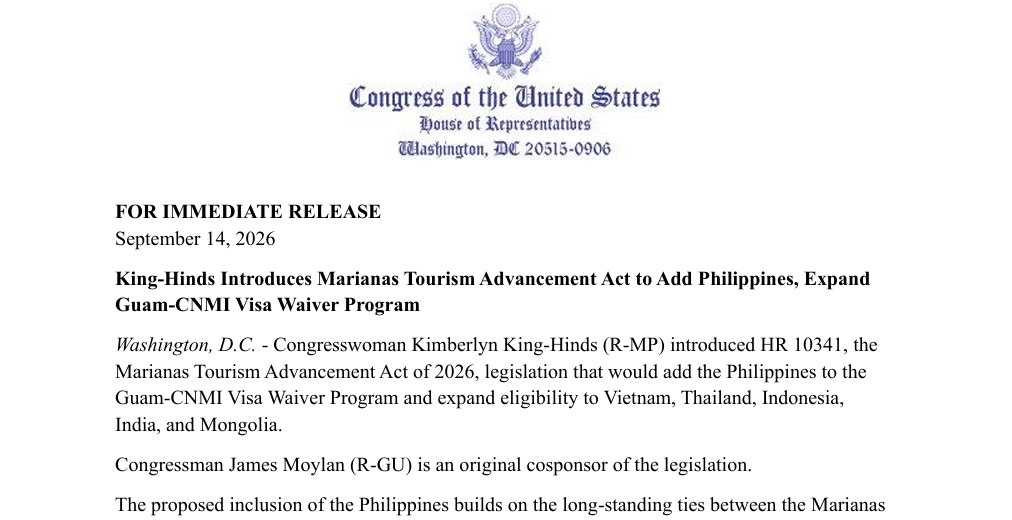
Delegate Kimberlyn King-Hinds said the ceasefire offers hope for relief amid rising fuel and utility costs.
“We are seeing the very real and disproportionate impacts that global events have on the people of the CNMI. Any positive development that offers the possibility of relief from the fuel and utility costs our community is facing is welcome. I have been in regular communication with the White House to convey the severity of these impacts on our residents and to discuss ways to address rising fuel prices. Efforts that help stabilize global supply chains, which directly influence the cost of living in our islands, are important and deserve recognition,” she said after an email query from Marianas Press.
King-Hinds also acknowledged the human cost of conflict.
“My heart, my thoughts and my prayers are with the members of our armed services, especially those from the CNMI serving today. Conflict anywhere in the world naturally brings concern to our community and to the families of our service members, and is felt here at home in very real ways.”
Joshua Wise, president of the Saipan Chamber of Commerce, said local businesses are closely watching global developments.
“Hopefully the prices can go down before the higher prices hit us. But I heard there are groups meeting here to try and combat the effects before it starts, but I’m not directly in those conversations,” Wise said.
Lawyer Michael White, known for his criticism of President Donald J. Trump, took a more humorous approach. “I have lettuce in my refrigerator that will last longer than the ceasefire,” he said.
Businessman Romeo Malasarte said higher fuel prices have a cascading effect on the local economy.
“Higher fuel prices increase operating and transportation costs, which leads to more expensive materials and services. This reduces profit margins and may force businesses to raise prices, causing some customers to delay or limit projects. Overall, it puts pressure on our businesses,” he said.
As a parent of a CNMI service member, Malasarte also highlighted the personal stakes. “Every parent simply wants their child to be safe. And for me, that is what a ceasefire truly represents,” he said.
The potential stabilization of fuel prices due to the ceasefire was also a hot topic in the Commonwealth Utilities Corp.’s board meeting last April 9, with Sen. Corina Manglona asking the board to delay a planned 100% increase in the Fuel Adjustment Charge.
She essentially urged patience to the utilities company board, pointing to a recent slide from roughly $109 to about $76 per barrel and urging the board to delay a FAC hike while lawmakers explore support.
CUC board member Simon Sanchez said the CNMI “is not immune to global oil crisis,” with prices still elevated despite temporary relief, and CUC board chair Allen Perez reiterated that CUC faces the same market forces as residents, stressing that any rate action must reflect real fuel costs rather than short‑term price swings.
Private citizen Del Benson, who is running for representative in the November polls, said the ceasefire could lead to a drop in oil prices if the world market starts moving.
The Associated Press reported that the U.S. and Iran agreed to a tentative two-week ceasefire on April 7, 2026. The agreement aims to pause a major military campaign in exchange for reopening the Strait of Hormuz, a vital maritime chokepoint responsible for roughly one-fifth of global oil trade.
Global markets reacted immediately, with crude oil prices dropping more than 15% to under $95 per barrel, down from highs above $110 during the conflict. Analysts expect gasoline prices at the pump could ease within 36 hours, with national averages potentially falling below $4.00 per gallon if the truce holds. Diesel and jet fuel also tumbled on hopes of resumed energy supplies.
However, experts caution that the ceasefire is fragile. Reports of potential sea mines in the Strait of Hormuz and continued conflict in the region have already pushed oil prices back toward $97 per barrel as of April 9.
Damage to Middle East energy infrastructure may take months to repair, and a new transit system imposed by Iran and Oman could add up to $2 million per commercial vessel in passage fees, potentially keeping fuel costs higher than pre-war levels.
Share this article: