The CNMI has submitted more than $12.5 billion worth of infrastructure projects for federal consideration, hoping to secure assistance to improve its aging power plants, seaports, airports, water systems, healthcare facilities, and roads.
Special assistant to the Governor for the Commonwealth Bureau of Military Affairs Edward C. Camacho disclosed the figure last Oct. 8 during a press conference reviewing the CNMI delegation's participation in the Interagency Regional Convening in San Francisco from Sept. 23-25, 2026.
The gathering, organized by the Department of War's Office of Local Defense Community Cooperation, brought together Commonwealth and federal officials to discuss infrastructure improvements needed to support civilian needs and U.S. military operations in the region.
Camacho said federal officials emphasized the need to prioritize projects that would benefit both CNMI residents and the military.
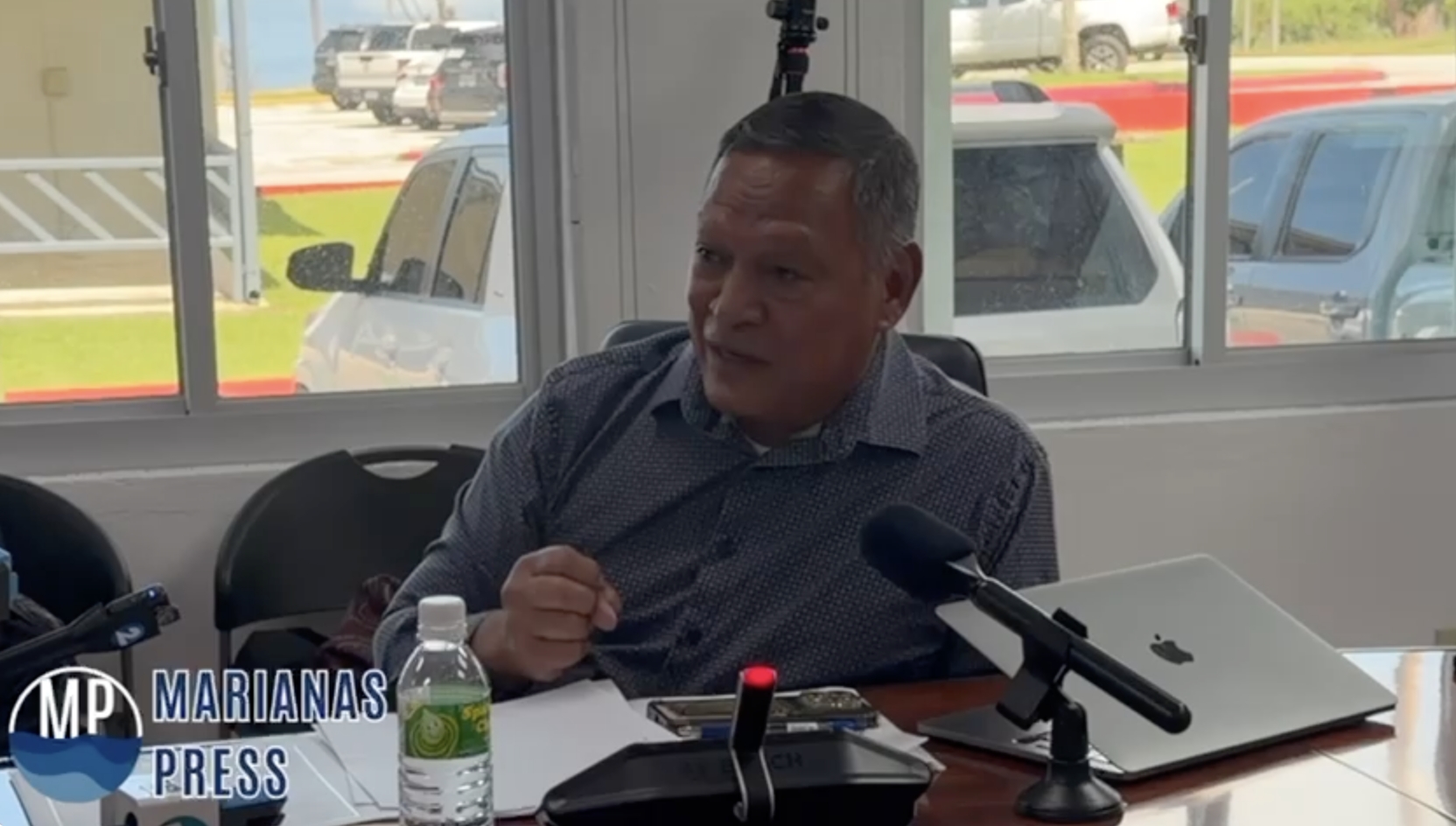
Gov. David M. Apatang said he called Thursday's press conference to inform the public about what the delegation accomplished during the meetings.
Apatang, who could not attend because of the fiscal year 2027 budget deliberations, sent his chief of staff, Henry S. Hofschneider, to represent him.
“So this is going out to our people so they can be well informed as to how we spend the money,” Apatang said.
Hofschneider said the discussions went well, with federal representatives showing interest in the Commonwealth's infrastructure problems.
“One of the things that I emphasized that governor wanted to emphasize to our federal partners is that we want them to understand the commonwealth. To understand our constraints and to identify where we can work together,” Hofschneider said.
He said representatives from the Department of War, U.S. Department of Agriculture, Department of Housing and Urban Development, and other federal agencies participated in the discussions.
Camacho said it was the first time the CNMI had participated in such a large federal gathering. He said the Commonwealth sought greater federal assistance because of the impact of recent typhoons, the COVID-19 pandemic, declining tourism, and increasing military activities.
“We were asking for a rescue, and they were listening,” Camacho said.
He said the Commonwealth's aging infrastructure needs to be improved not only for residents but also to support the growing U.S. military presence in the region.
Commonwealth Ports Authority executive director Esther Ada said her agency presented 11 priority projects, including repairs to Rota's West Harbor, the purchase of a cargo crane for Rota, improvements to Saipan's Charlie and Delta docks, and backup generators for airports and seaports.
Ada also sought permanent repairs to the leaking roof of the Francisco C. Ada-Saipan International Airport terminal and its aircraft rescue and firefighting station.
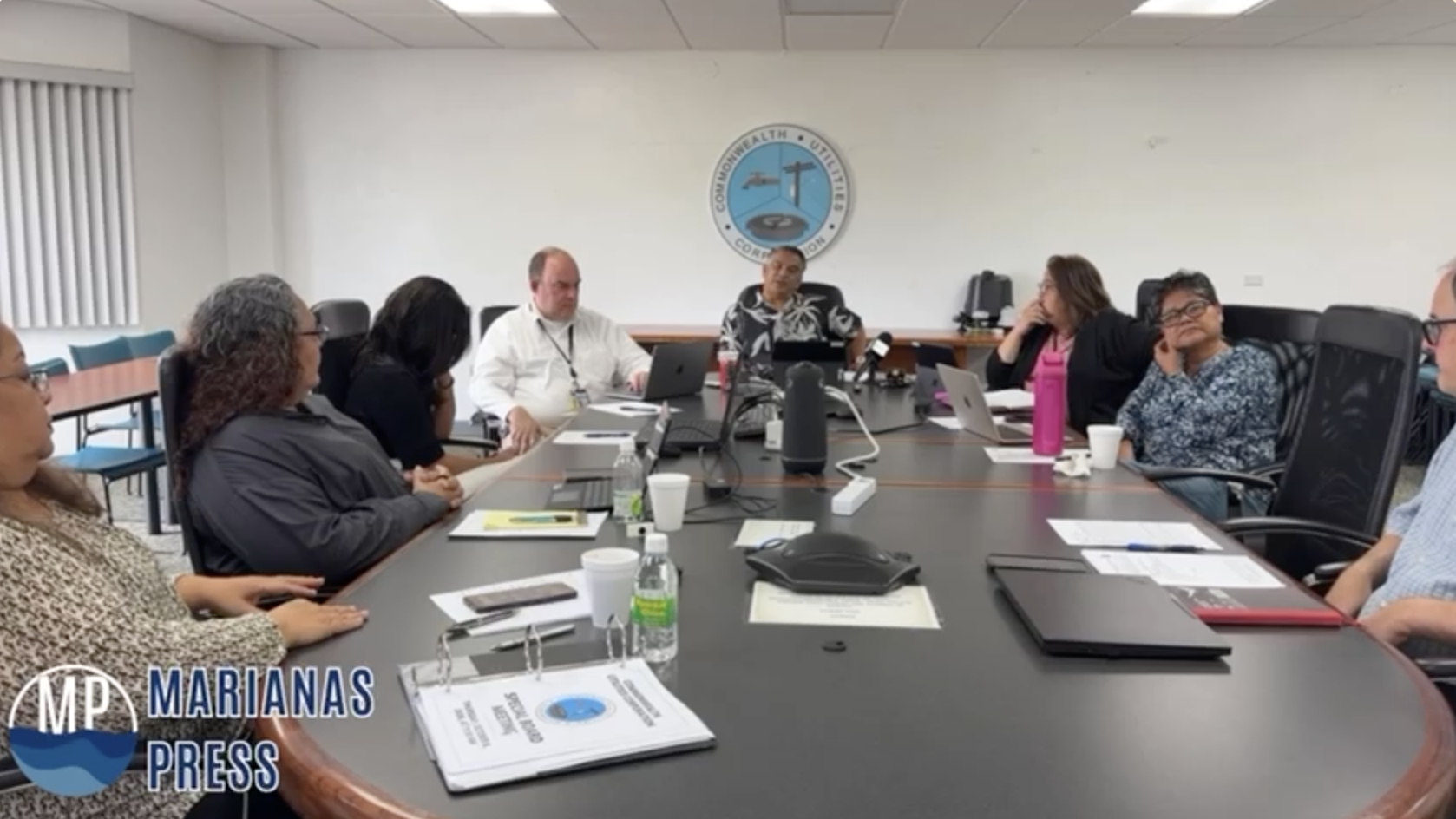
Commonwealth Utilities Corp. executive director Kevin Watson and board chair Allen Perez discussed the utility's immediate financial problems and long-term infrastructure needs.
The utility sought assistance for new power plants on Saipan to replace Power Plants 1 and 4, as well as a replacement power plant and backup generation on Rota.
It also presented water projects to address groundwater contamination from so-called forever chemicals and reduce water losses.
Watson said the agency learned about additional federal grants and low-interest loans, while Perez emphasized the need to address the utility's financial problems to keep operations running.
Commonwealth Healthcare Corp. Public Health and Hospital Emergency Preparedness director Warren Villagomez said the agency presented 26 priorities involving aging medical facilities, healthcare infrastructure, and engineering needs.
Department of Public Works Secretary Ray Yumul said his agency presented about 10 projects, including six involving roads.
Yumul also raised the urgent need to repair Rota's harbor, where restrictions on heavy cargo have made it difficult to transport equipment needed for recovery from Super Typhoon Bavi.
He said discussions with the Federal Emergency Management Agency also explored how stronger building standards could allow damaged infrastructure to be rebuilt to withstand future typhoons.
Bureau of Environmental and Coastal Quality administrator Floyd Masga raised environmental concerns associated with military expansion, particularly wastewater and septic system issues on Tinian.
DPW-Energy Division director Lauren Garibay discussed possible federal assistance in exploring alternative energy sources, including small modular nuclear reactors and geothermal energy, to reduce the CNMI's dependence on imported fuel.
Capital Improvement Projects Office representative Luise Villagomez said federal officials discussed possible assistance with matching requirements for projects involving cranes, generators, and water system improvements.
Governor's Authorized Representative Patrick Guerrero discussed working with federal agencies, including the U.S. Army Corps of Engineers and Naval Facilities Engineering Systems Command, to help complete major recovery projects despite the Commonwealth's shortage of contractors and engineering firms.
Meanwhile, BJ Nicolas, policy adviser for military affairs under the CNMI Office of the Governor, said the San Francisco meeting could lead to the activation of an Economic Adjustment Committee.
Nicolas explained that the committee would bring together 22 federal agencies, with the secretary of War serving as chairman and the secretary of Commerce as co-chairman.
However, he said activation would require action by President Donald Trump following further federal discussions and recommendations.
“The EAC is not a guarantee,” Nicolas said.
He explained that the committee could potentially open additional funding opportunities and allow the Commonwealth to seek waivers from federal matching requirements.
Some grants require the CNMI to shoulder 25% to 50% of project costs, which Nicolas said the financially struggling Commonwealth cannot afford.
“Whether it's a dollar or a thousand dollars or a million dollars, the Commonwealth does not have that kind of money to be able to put forth,” Nicolas said.
Camacho said the San Francisco meeting was only the beginning of what could be a lengthy process.
Federal officials are expected to issue a report by mid- to late November outlining possible next steps and identifying areas where agencies could assist the Commonwealth.
Hofschneider also stressed the importance of maintaining the same infrastructure priorities when a new CNMI administration takes office in January to avoid delaying projects and jeopardizing progress with federal partners.
Share this article: