CNMI’s 20-year brown tree snake interdiction effort keeps invasive threat at bay
More than two decades of sustained prevention have kept the brown tree snake from gaining a foothold in the Northern Mariana Islands, with no established population detected despite years of risk from neighboring Guam.
That success—highlighted during Day 2 of the CNMI Biosecurity and National Security Forum last April 7 at Crowne Plaza Resort Saipan—was outlined by U.S. Fish and Wildlife Service presenter Trey Dunn, who detailed how the program has held the line since the last confirmed snake was found in 2014 on Rota and an earlier incident in 2000 at the Francisco C. Ada-Saipan International Airport.
“So, when I say it's successful, I mean that we've not detected an incipient population of snakes in the CNMI,” Dunn said.
The program’s record comes despite regular reports from the public, averaging several sightings a year, which are investigated through a detailed verification process.
He said some of the sightings are cases of mistaken identity.
“Every year we get three to five sightings. A lot of them are pretty easily attributable to certain things. We'll have folks who saw a black and white striped snake-like creature at the beach in the water and that's an eel,” he said.
Despite this, Dunn said the USFWS still needs to take cues from the community.
“We need to listen to those folks who are telling us those things and go through some of that interview process with them to make sure that we really determine what it is and make sure that it's not something different,” he said.
Dunn said a recent report triggered months of surveys, trapping, and environmental DNA testing, but yielded no evidence of snakes.
“There were no snakes found and I do not believe there's an incipient population of snakes in the CNMI,” he said.
The vigilance stems from Guam’s experience, where the species was inadvertently introduced in the late 1940s or early 1950s, most likely through military cargo shipments.
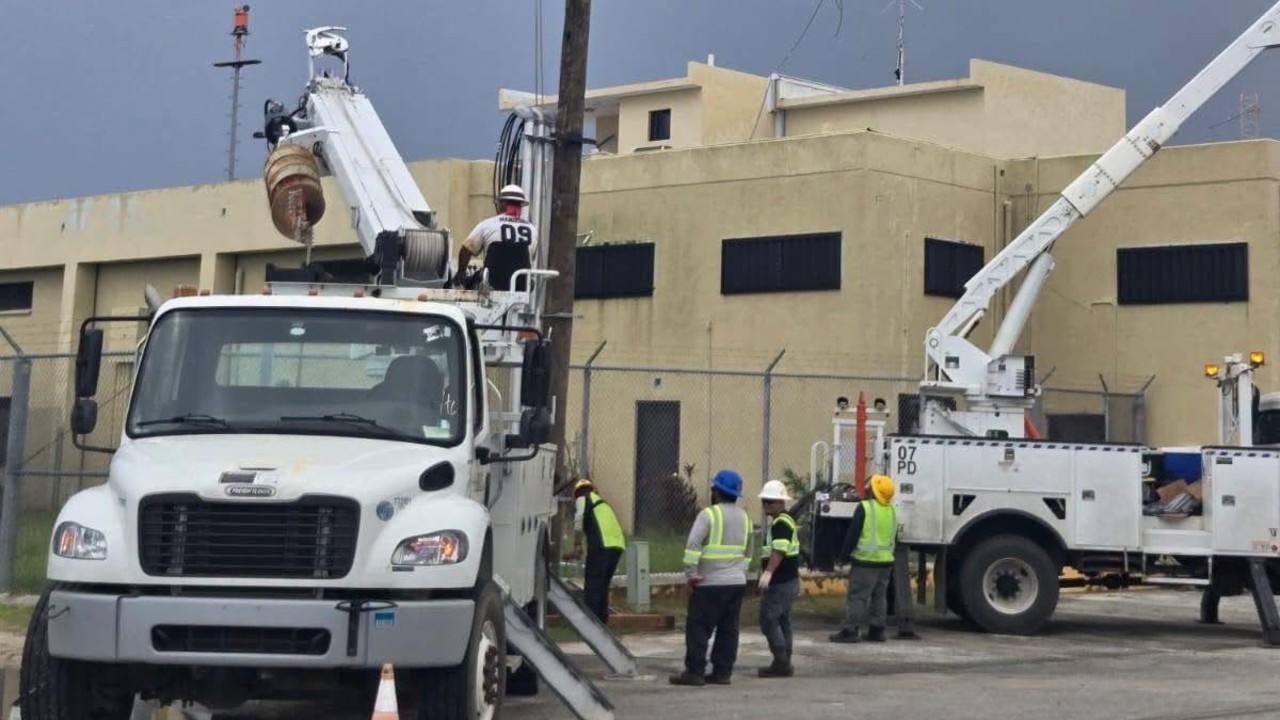
From a small initial population, Dunn said the snakes spread across the island over several decades, wiping out much of its native bird life and causing widespread ecological damage, while also triggering frequent power outages costing millions of dollars annually.
That history underpins the CNMI’s focus on prevention, built around a regional interdiction system designed to stop snakes from leaving Guam and intercept any that make it through.
Dunn said the approach relies on multiple layers of protection, from trapping and removal near Guam’s ports to inspections of outbound cargo using trained detector dogs and visual checks, followed by redundant inspections upon arrival in the CNMI.
“It’s not 100%, right? It’s similar, it’s better than you looking for a snake but it’s not, you know, if there’s a box, they’re 100% going to find it,” he said alluding to rudimentary traps placed in the Saipan airport’s perimeter.
Because of that limitation, redundancy is critical, he said, ensuring that missed detections at one stage can be caught at another.
At CNMI ports, inspections often take place at vendor sites where sealed containers are opened under controlled conditions, while aircraft cargo requires rapid checks due to tight turnaround times. Maritime cargo, though slower, presents higher overall risk due to volume and complexity, especially when dealing with open equipment such as vehicles that can allow snakes to escape if not immediately contained.
The program also employs barriers, traps, and continuous monitoring at ports of entry, though Dunn acknowledged that even traps are not always effective.
Public outreach remains a key component, with residents encouraged to report sightings, triggering a structured response that includes interviews, site surveys, and, if warranted, deployment of specialized teams to search for snakes over extended periods.
To this end, USFWS has placed advertisements with a catchy jingle to recruit the help of the public.
The program, however, faces ongoing challenges, including infrastructure needs, reliance on off-island training for canine teams, and staffing and funding uncertainties. Detection itself is inherently difficult, Dunn said, given the snake’s behavior and the realities of field conditions.
“There are going to be external factors that play into what their mindset for the day is and how effective they are.”
Despite those challenges, Dunn said the CNMI’s approach—built on coordination among federal and local agencies and sustained over more than 20 years—remains effective.
Share this article: