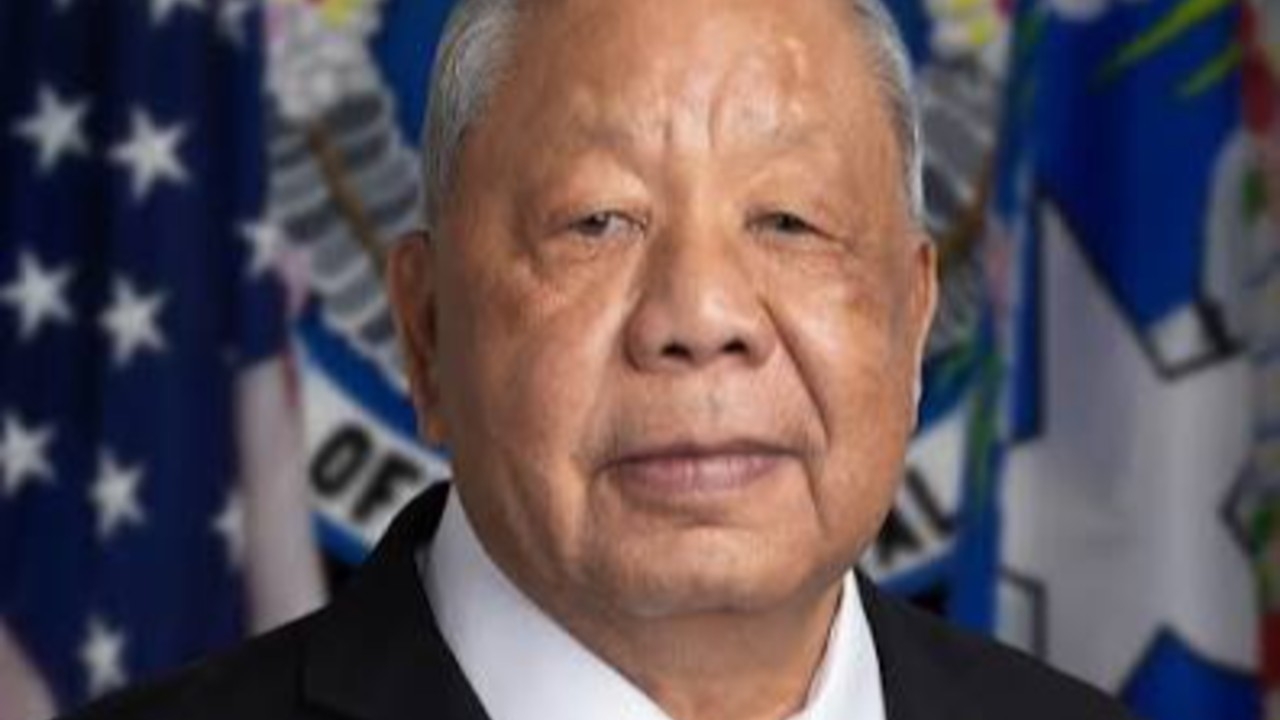
Commonwealth Ports Authority board chair Bart Jackson said CPA should use the recovery from super typhoons Sinlaku and Bavi as an opportunity to rebuild its facilities better and more resilient than they were before the two storms.
During a CPA board meeting last Aug. 7 at the meeting room of the Francisco C. Ada-Saipan International Airport, Jackson said the authority is moving beyond the immediate emergency response and returning its attention to normal airport and seaport operations.
“We have one more airline to go, that being PAL (Philippines Airlines). United [Airlines] has already re-initiated their Narita business. They're there three times a week. Hong Kong Airlines is back. Jeju [Air], of course, is back,” Jackson said.
He said CPA had responded well to the two typhoons and focused on restoring normal operations as quickly as possible, but that phase of the recovery is now giving way to the longer-term task of improving CPA facilities.
“And as we move forward, we need to once again begin refocusing on day to day. You know, how do we get better day to day? There aren't any more emergencies, right?” Jackson said. “We're going to approve the last of the emergency expenditures, and now we need to get back to the business of welcoming people, welcoming cargo, handling the entry and exit to the Commonwealth, and improving every day.”
Jackson said insurance claims and Federal Emergency Management Agency funding give CPA an opportunity to examine what was damaged and ensure the recovery produces lasting improvements.
“And as we look to, you know, as we normalize, and as we have insurance claims, and FEMA money, and begin looking at what happened during the typhoon, now that there are no emergencies, it's important as an organization that we, the improvements we make are permanent, are better, that we take the time to make sure whatever it is we are replacing, redoing, renovating, is better than it was before,” he said.
Jackson emphasized that CPA should not simply restore damaged infrastructure to its previous condition.
“Not as good as it was before, but better than it was before. That we're better able to handle larger volumes of people, we're able to offer a better experience, we're able to offer a safer experience, a more secure experience,” he said. “These things are really important, that we not just replace things that broke, but that we really take the time to make it better.”
Jackson said management shares that objective and added that the board has a responsibility to ensure the recovery moves CPA in that direction.
“And so I know that I've had this discussion with the executive director, and that's the intention of management, as well it should,” he said. “But from a board perspective, I think it's important that we provide the right kind of oversight and guidance in transforming the organization, once, now that we're out of the catastrophic response to challenges.”
CPA executive director Esther Ada, meanwhile, reported that the authority has already spent millions of dollars responding to Sinlaku and Bavi.
For Sinlaku, Ada said CPA had requested authorization for $4.5 million in emergency expenditures and had spent approximately $3.4 million as of the reporting period, leaving roughly $1 million. She cautioned that the balance likely had since declined because of additional expenses.
For Bavi, CPA requested $2.1 million in emergency spending authority. As of July 21, approximately $1.7 million remained, although Ada again said subsequent recovery expenses had reduced the balance.
With Bavi now covered by a presidential disaster declaration, Ada said CPA would be able to seek reimbursement for eligible expenditures, similar to what it has done for Sinlaku.
CPA has also received a $5 million advance from its insurer, which Ada said puts the authority in a position to accelerate repairs that had previously been deferred.
“So now we are positioned to accelerate a lot of the repairs that we have deferred,” Ada said.
She said CPA submitted its FEMA damage inventory within the required timeframe and has filed claims under Categories A and B for debris removal and emergency protective measures.
One reimbursement application involving a generator totaled approximately $948,000, while CPA was preparing another request of roughly $807,000 involving the terminal generator.
Separately, Eastern Power Solutions gave the board an overview of its proposed renewable-energy project and ongoing power purchase agreement negotiations with CPA.
EPS vice president of business development George Wallace said Eastern Power Solutions is a U.S.-based engineering, procurement and construction firm specializing in solar energy, battery storage and other energy technologies.
EPS told the board that its team has delivered more than 50 megawatts of solar generation and pointed to its experience with utility-scale solar projects in American Samoa.
Wallace said EPS intends to handle the project's life cycle from development, feasibility studies and permitting through engineering, procurement, construction and operations and maintenance.
The project is currently in the development stage, including design of the solar facilities, feasibility studies, work with local and federal agencies on permitting and PPA negotiations with CPA.
EPS said separate agreements would cover the PPA, operations and maintenance and engineering, procurement and construction portions of the project.
Wallace also told the board that federal tax credits are an important part of financing the project and cited their Dec. 31, 2027, expiration as an incentive to keep the project moving.
During the presentation, the parties discussed the possibility of CPA receiving electricity from the facility during the first quarter of CPA's 2028 fiscal year.
The board also debated compensation for exempt or contracted CPA employees who worked additional hours during Sinlaku and Bavi.
Management said CPA relied on a directive from a previous executive director establishing a standard operating procedure that allowed certain exempt contracted employees, including port managers, to receive one-to-one compensation for hours worked during emergencies.
CPA officials said contracted port managers on Tinian and Rota were paid one-to-one for the hours they spent dealing with the typhoons. Because the employees are exempt, the payments were straight-time compensation rather than overtime at time-and-a-half.
Management said draft amendments to CPA's personnel rules and regulations are being prepared to formally address the issue and would be presented to the appropriate committee.
Some board members expressed concern that the emergency compensation arrangement is not yet expressly provided for in CPA's regulations and said the authority should ensure such payments have a clear regulatory basis.
Jackson, however, said CPA has a responsibility to ensure employees who are required to work during typhoons are compensated.
“If someone works during a typhoon, if a CPA management works during a typhoon, it's our responsibility to make sure they get paid. Period,” Jackson said. “We're not going to ask people to be on the front lines of storms and to be responsible for getting us back on track and not approving their payment.”
Jackson said how CPA ultimately structures and funds such compensation is a separate issue.
“We can't ask people to work for no pay,” he said. “I just want to make sure we protect the people who work for CPA and that we stand behind them as best we can and that we create an environment where they're paid for what they do.”
The board did not adopt a new emergency-compensation regulation during the discussion.
Share this article: