Commonwealth Utilities Corp. board member Simon Sanchez said CUC’s shift toward solar energy is intended to reduce fuel consumption and ultimately lower power bills, but cautioned that the transition will require blending renewables with conventional generation and will not happen overnight.
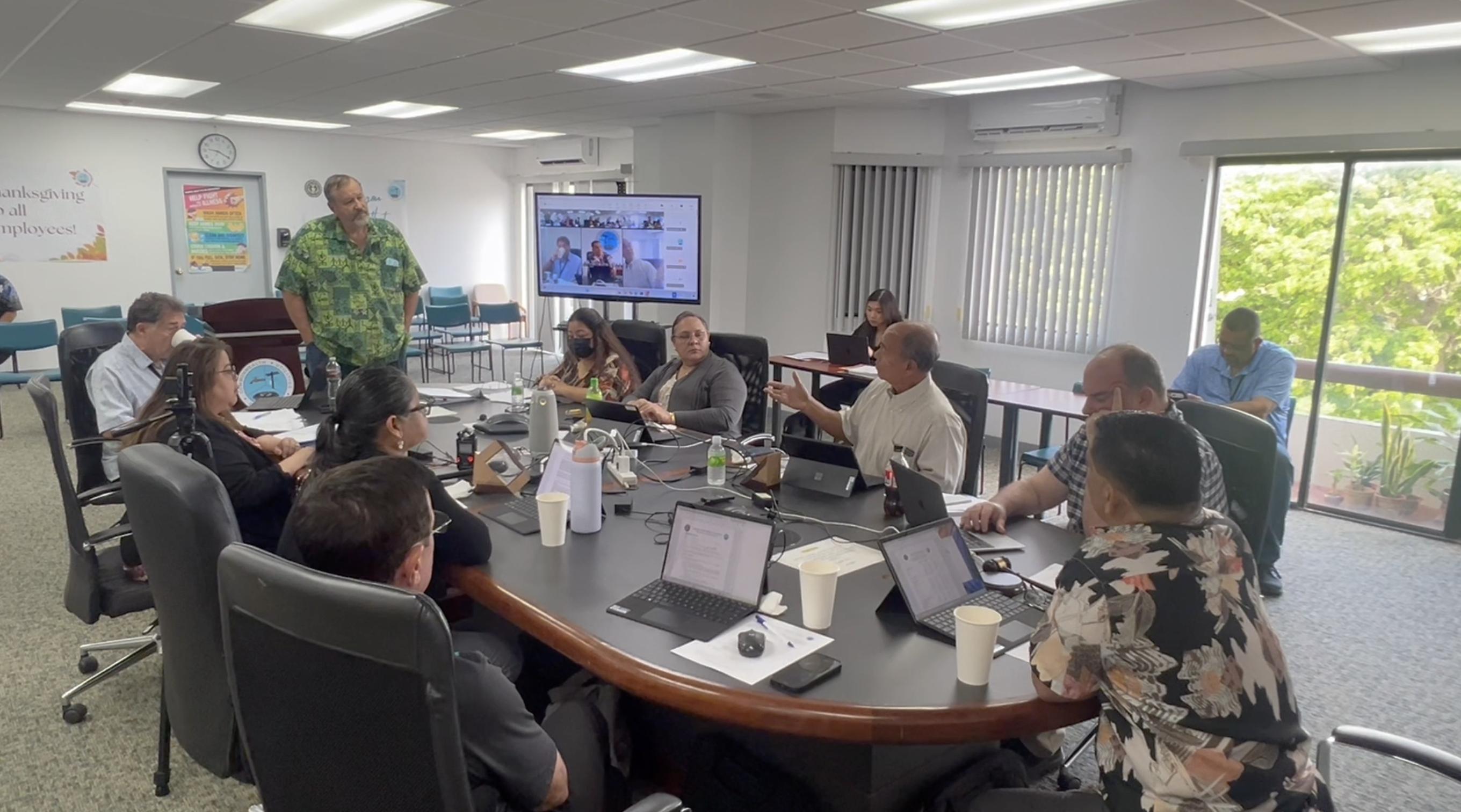
Sanchez responded to businessman and former representative candidate Del Benson during the CUC board meeting last Feb. 10 after Benson used the public comment period to question whether the proposed solar project would actually lead to tangible cost-savings for CNMI ratepayers.
“I have concerns about the solar. One of the concerns that I'm going to address is, is this expected for the rates to go down? From what I understand, you'll be contracting, they will be financing, you will be buying power from them at whatever rate is determined, and you will still collect, you will still have to run the power plant with the backup power.”
Benson raised concerns that CUC would still need to maintain infrastructure and personnel for power generation, and possibly take on a long-term contract that could lock ratepayers into higher costs.
Although public comment typically does not involve board dialogue, CUC board chair Allen Perez made an exception.
“This one time, I’m going to break protocol,” Perez said. “I’m going to let Simon respond to your questions. But at the same time, we’re not going to engage in dialogue here. He’s going to answer, and then we’re done.”
In his response, Sanchez—who has served 24 years on Guam’s utility commission—said CUC’s direction mirrors Guam’s renewable strategy.
“We're a little bit further north up here. But taking advantage of solar and the sun is a wise move because the biggest expense is fuel. So to the degree we can reduce our reliance on fuel, on carbon, and go to a source that is free, the sun, the infrastructure to convert sun to energy isn't free, but the fuel source, which is the largest piece, the good Lord gives us some access to an energy source that we don't have to pay for.”
He stressed that solar cannot fully replace conventional generation in an isolated island grid.
“In an isolated grid like Guam or the CNMI, we’re going to have to blend both conventional generation that burns carbon and, in this case, a renewable source, which is solar,” Sanchez said.
He noted private bidders are proposing 25-year solar contracts and that battery storage technology is improving.
“And tonight we release that battery for two, three, four hours of energy, and we don’t turn on a generator, which is going to burn fuel, which is more expensive,” Sanchez said.
Referencing Guam’s experience, he added, “When the solar farms that were the next phase of solar farms that we put online in the next three years, we’re going to knock another one-third of fuel off the consumption, and that’s going to further lower the power bill.”
He cautioned against comparisons with mainland states.
“It’s, unfortunately, you know, because we’ve chosen to live in this paradise, we don’t live in other places that have lower energy costs because they have economies of scale,” he said. “We’re always going to be paying a little more for energy out here than back in any major continental area.”
Sanchez said unpaid government accounts have historically burdened other ratepayers.
“Part of your power bill is paying for unpaid government power bills,” he said. “It’s not fair to the other ratepayers to carry on that burden.”
He closed by saying, “I am prayerfully optimistic that we’re making the right decisions here. We have to be patient. It doesn’t happen overnight.”
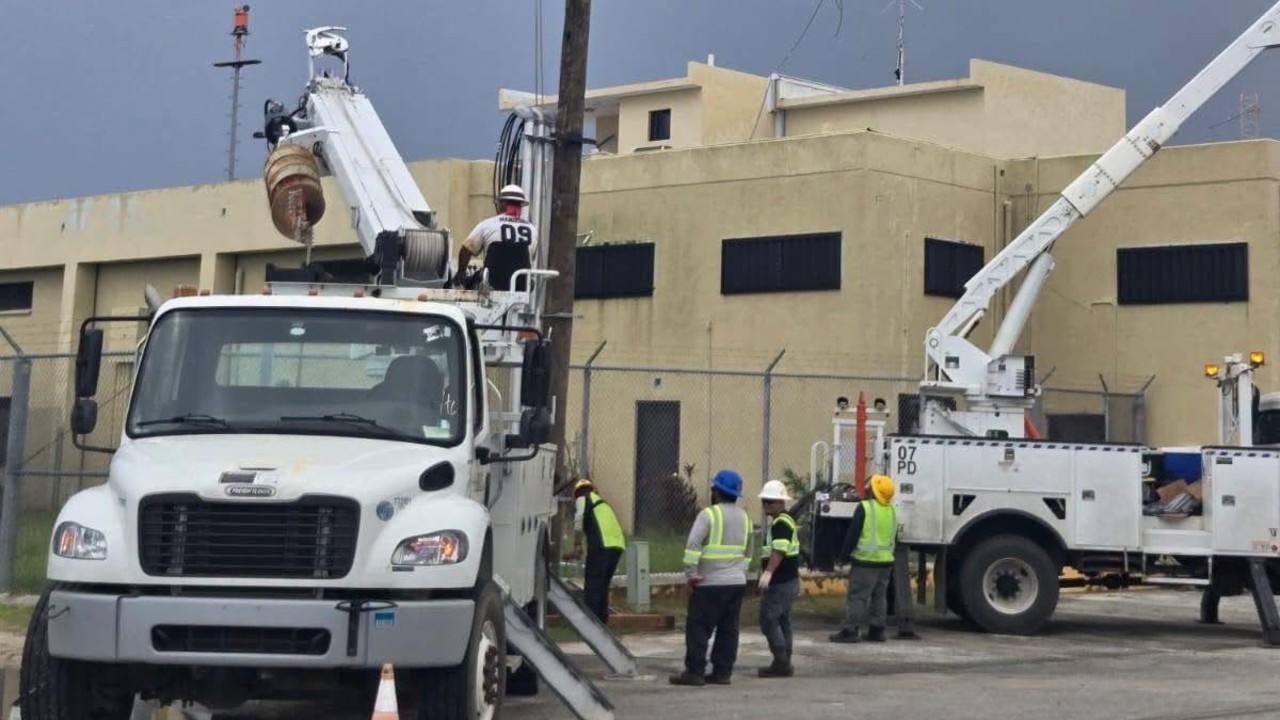
During the same meeting, CUC executive director Kevin Watson also told the CUC board that last Feb. 6’s islandwide power outage and water disruption in southern Saipan were caused by separate infrastructure failures that occurred around the same time.
Watson said the power outage was triggered by an overload at Power Plant 1.
“That was due to an overload on our transformers at Power Plant 1, and then just a snowball reaction or events occurred to protect the equipment,” he said.
“Automatically, the system started shutting down.”
Watson said the outage occurred during peak demand, complicating restoration efforts.
CUC first restored power to critical infrastructure. However, as other feeders were brought back online, the system tripped again.
“Once we had Feeder 1 and started the other feeders, then it overloaded the system again and tripped and had to start all over,” he said.
Watson said it took several hours to fully restore power.
“They started recovering within an hour, but then it dropped off. So it took several hours to get it fully restored,” he said. “It was about four hours total.”
At the same time, CUC crews were responding to a major water main break that left parts of southern Saipan without water for more than a day.
Watson said the cause was an aging pipeline.
“We had an 18-inch water main break on it, an old 60-year-old pipe, corroded and cracked, split,” he said.
The break required isolation of the Isley Reservoir, which drained portions of the distribution system.
“We had to isolate it at the Isley Reservoir, so a lot of the distribution mains drained,” Watson said.
After repairs were completed around 4:30am, crews began recharging the system.
The process took time because hydrants had to be flushed to remove trapped air.
Watson commended CUC crews for working nonstop despite the dual emergencies.
“The guys worked nonstop until the water was fully restored,” Watson said. “They did a very, very good job, and I’m proud of them.”
He said the response time to the water break was significantly improved compared to a similar incident three years ago.
“What they’ve accomplished compared to three years ago, it’s a difference of night and day,” he said.
Share this article: