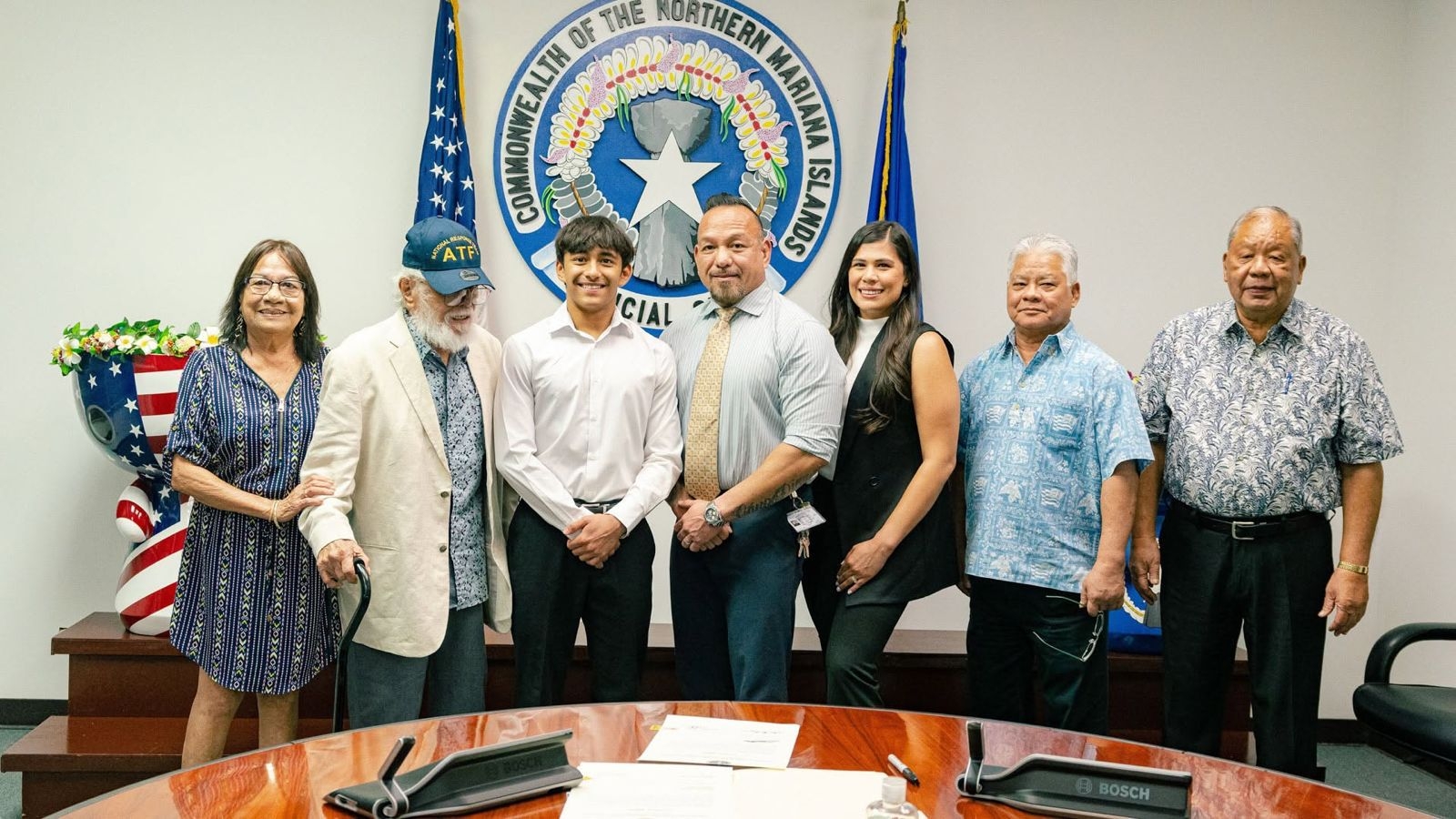
More than 20 Cabinet-level officials of the CNMI government attended a mandatory ethics workshop hosted by the International Public Safety Leadership and Ethics Institute on Feb. 11 at Aqua Resort Club.
The workshop, titled “The Challenges to Ethical Leadership in a Dynamic World,” was conducted by IPSLEI executive director and president Kevin S. Brame.
Before the daylong workshop began, Brame was interviewed by Marianas Press to discuss the purpose of the training and the broader issue of ethics in government, particularly in small island jurisdictions like the CNMI.
Brame said he was invited “to come and talk and present to Gov. David M. Apatang’s senior staff on ethical leadership challenges that we all face globally.”
At the heart of his message is personal accountability.
“All leadership starts with self-leadership, and all ethics starts with self-ethics,” he said.
Brame stressed that ethics is not confined to statutes or compliance manuals.
“What ethics is really about is decisions,” he said. “It’s not necessarily about what is legal or illegal.”
He underscored that institutions themselves do not act—people do.
“There is no such thing as an ethical corporation. There is no such thing as an unethical government. What there are, are individuals who choose to either act ethically or choose to act unethically,” Brame said.
In a small island government like the CNMI, where professional and personal relationships often overlap and where public officials are accessible to the communities they serve, those individual decisions can carry amplified consequences. Limited resources, geographic isolation, and economic pressures can further complicate the decision-making environment.
Still, Brame said the fundamentals of leadership do not change based on geography.
“Leadership is leadership. I don’t care where you go in the world. Leadership is still leadership and the challenges of leadership exist,” he said, noting that what differs is the context—including cultural, economic, and community dynamics.
He also pointed to the growing influence of technology and media.
“One of the things that impacts that is the power of the media. It’s the power of social media,” Brame said, noting that events today are “instantly out there.”
For island governments, where information already travels quickly by word of mouth, the speed of social media can heighten scrutiny and compress response times, adding another layer of pressure on public officials.
Brame explained that many ethical challenges are not clear-cut choices between right and wrong.
“An ethical dilemma is about making a decision between one important value and another important value,” he said. “You’ve got to make a decision.”
With the current administration set to wind down in January next year, Brame said ethics training is most effective when conducted early in an administration.
“Self-leadership, self-ethics development needs to begin at the very start of an individual’s career,” he said, adding that at any change of administration, programs like this should be implemented ‘right off the get go’ to establish a common foundation and language around leadership and ethics.
The CNMI workshop was grant-funded, according to Brame, who said IPSLEI is a 501(c)(3) nonprofit organization that relies on grants and covers expenses rather than charging standard fees.
Labor Secretary Leila Fleming-Staffler said one of the most powerful takeaways from the workshop was the reminder that leadership must be earned.
“Until people choose you as their leader, you are only an authority figure. The discussions on technical versus adaptive leadership challenged us to move beyond routine problem-solving and toward deeper collaboration. This has been my mantra since ever since: When we work together and improve interoperability, we strengthen our collective ability to serve the public effectively,” she said.
Public Lands Secretary Sixto K. Igisomar said the leadership and ethics workshop gave Cabinet members and agency heads a rare pause from the daily grind of government, calling it a timely opportunity to reflect amid the island’s ongoing economic challenges.
He said the morning session centered on identifying one’s “big why”—both personally and professionally—and examining how that purpose shapes leadership within departments and agencies. The discussion contrasted simply doing a job with leading with conviction and passion, urging officials to reassess how they guide their teams and whether improvements can be made.
In the afternoon, the focus shifted to ethical decision-making, particularly when leaders are forced to choose between two “right” options—such as protecting a friend or making a decision that may hurt someone close but serve a broader good. The session underscored the reality that public service often demands difficult choices that test loyalty and integrity.
“It was a very good moment for everybody to stop, take a deep breath, and ask themselves the big why,” he said.
Calling the workshop “very fruitful,” Igisomar said he highly recommends that the same course be offered to all government entities and added that he intends to recommend that all Public Lands staff undergo the training as well.
Corrections Commissioner Anthony C. Torres said attending the workshop was inspiring for him.
“One huge takeaway was that it drove home the power of adaptive leadership through expanding on interoperability or building relationships by rallying teams to tackle evolving obstacles with creativity, collaboration, and a growth mindset. We dove into navigating uncertainty and building cultures that are tough yet adaptable,” he said.
With over 60 Cabinet-level officials in the CNMI, a second day of training is set for today, Feb. 12, to accommodate the rest of the governor’s senior staff, also at the Achugao resort.
Share this article: