GAO: Foreign workers remain key as CNMI workforce shrinks
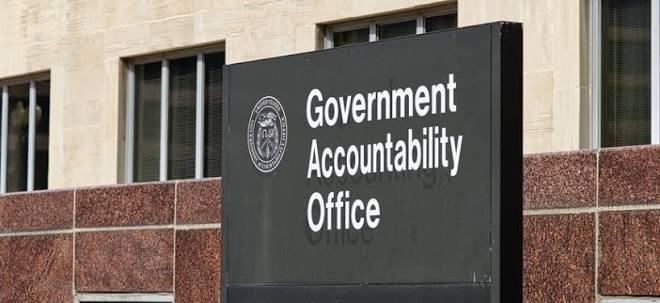
The CNMI’s workforce continues to shrink, but foreign workers still account for roughly one in every three employed workers in the Commonwealth, according to a U.S. Government Accountability Office report that warns of potentially serious economic consequences when the CW-1 program ends after 2029.
The GAO report, “Commonwealth of the Northern Mariana Islands: Agencies Should Assess Risk of Ending Foreign Worker Program,” was released May 13, 2026. It examined the ratio of U.S. and foreign workers from 2020 through 2024 and reviewed longer-term workforce and economic trends.
“Over the past 2 decades, the Commonwealth of the Northern Mariana Islands (CNMI) has experienced significant challenges, including the COVID-19 pandemic, natural disasters, and the loss of its manufacturing sector,” GAO said. “These challenges, along with a diminishing workforce, have contributed to its weak economic position.”
Despite those challenges, foreign workers remain a major part of the Commonwealth’s labor force.
GAO’s analysis of CNMI tax data found that foreign workers made up about one-third of employed workers, on average, from 2020 through 2024.
Their role is particularly important in tourism, the Commonwealth’s primary industry, which GAO said has struggled to recover following a 2018 typhoon and the COVID-19 pandemic.
CNMI officials and business leaders interviewed by GAO said there are not enough U.S. workers to fill existing job openings and that the Commonwealth will continue to need foreign workers as its economy recovers.
That dependence could become a bigger problem as the clock ticks toward the scheduled end of the CNMI-Only Transitional Worker, or CW-1, program.
The program allows eligible CNMI businesses to employ foreign workers under a visa classification created specifically for the Commonwealth as it transitioned from local to federal immigration control.
Congress extended the CW-1 program through Dec. 31, 2029, under the Northern Mariana Islands U.S. Workforce Act of 2018. The law was intended in part to increase the percentage of U.S. workers while keeping enough foreign workers to meet the Commonwealth’s changing economic needs.
But CNMI government officials, business representatives, and educators interviewed by GAO expressed concern that allowing the program to expire could have severe adverse effects on the economy.
Just how severe remains unclear.
GAO found that the U.S. Department of the Interior has not conducted a study assessing the potential risks to the CNMI workforce and economy if the CW-1 program ends.
Interior officials cited limited resources but agreed that such an assessment would be useful to policymakers.
GAO recommended that the Interior secretary ensure that the Office of Insular and International Affairs, or another appropriate office, work with the U.S. departments of Labor and Homeland Security, the CNMI government, and other federal agencies to assess the risks and identify possible responses.
The recommendation remains open, according to GAO.
The report also tied the CNMI’s economic stability to broader U.S. strategic interests in the Pacific.
GAO said the Commonwealth’s location gives the United States military deployment flexibility and an ability to monitor China’s expanding influence in the region.
“Maintaining economic stability in the CNMI is vital to U.S. interests in the Pacific region,” GAO said.
Without an assessment of what could happen after the CW-1 program ends and ways to mitigate those risks, GAO said federal and CNMI policymakers will lack information needed to determine how best to support the Commonwealth’s economy after 2029.
The full report, GAO-26-108239, “Commonwealth of the Northern Mariana Islands: Agencies Should Assess Risk of Ending Foreign Worker Program,” can be accessed on the U.S. Government Accountability Office website at gao.gov/products/gao-26-108239.
For its report, GAO analyzed CNMI and federal government data, reviewed previous studies, observed economic conditions in the Commonwealth, and interviewed CNMI government officials, business leaders, education professionals, and officials from the U.S. departments of Homeland Security, Interior, and Labor.
GAO noted that its worker classifications were based on CNMI tax records and that some workers could not be identified as either U.S. or foreign workers from those records.
Share this article: