Healthcare board eyes MOA with OAG for dedicated investigator
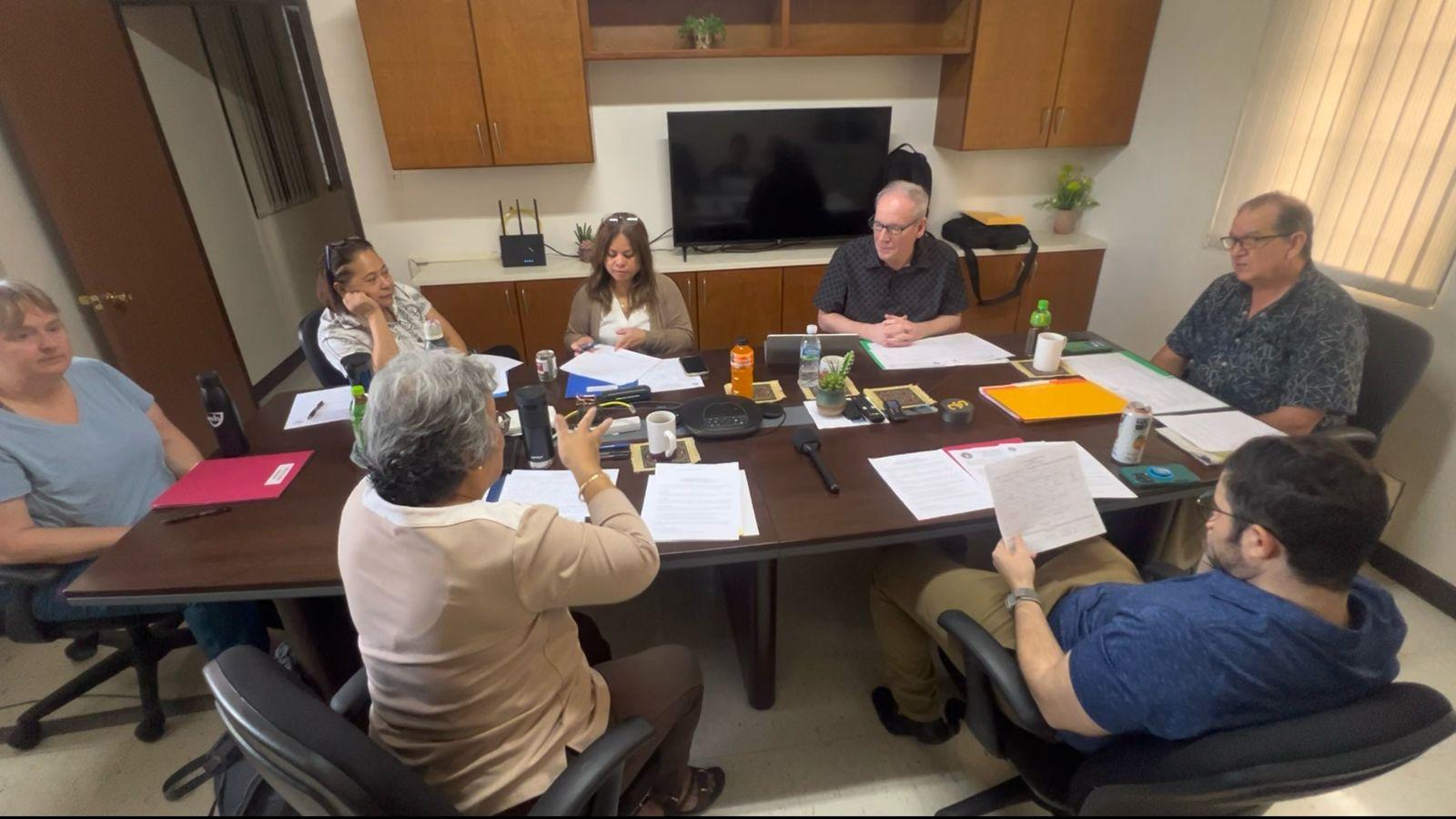
The Healthcare Professions Licensing Board is moving forward with a proposed Memorandum of Agreement with the Office of the Attorney General that would assign a dedicated investigator to support enforcement, inspections and licensure compliance across regulated professions.
The proposal, discussed during the board’s recent meeting, comes amid ongoing concerns about limited investigative capacity and the need for more visible and consistent enforcement.
Executive director Esther S. Fleming said she met with the attorney general last month to formally raise the board’s long-standing request for investigative support.
“I was able to meet last month with the general in regards to the board's request that we have some investigators be assigned to us,” she said. “I kind of decided that we should have our own investigator and separate from PBL because that training could be different. The whole thing.”
She said the attorney general was receptive to the proposal.
“And he was very receptive to it. He goes, that's not a problem,” she said. “He goes, ‘do a proposal and we'll take a look at it.’”
Fleming subsequently drafted a proposed MOA and forwarded it to board chair Ted Parker and legal counsel for review.
Under the draft agreement, the investigator would assist with complaint investigations, clinic site visits, verification of licensure status, and enforcement follow-up involving medical, dental, pharmacy, and social work professionals.
Fleming said accountability and visibility are key components of the request.
“For the request to get an assigned investigator, I would like to see that there's really some kind of accountability of how many we want him, does he go out every quarter, and reports to us every quarter or once a month,” she said. “I want it also to be visible in the clinics.”
She also cited concerns about late renewals and individuals continuing to practice while applications are pending.
“One of the things that I'm also seeing is that they submit applications very late and they're still practicing,” she said. “I want that when I produce the 60-day notice or the 30-day notice that we send out somebody, and they go, can you check whether they're working because they just submitted their application yesterday.”
Language in the draft referencing a “monthly quota” of site visits prompted discussion among members.
“If I read this correctly, it's saying that there's a quota,” Parker said. “Are you suggesting that we have a minimum number of visits?”
Fleming said the term could be adjusted to allow flexibility depending on workload and case complexity.
“We don't have to call it a quota,” she said. “Because also on some of the languages I also indicated that it all depends on if there's a case or to what extent is he, when he goes out to conduct an investigation, it may take a lot more time on a certain case.”
She noted the draft states that “the investigator should conduct a mutually agreed number of monthly site visits,” subject to availability, workload considerations and approval by the Attorney General’s Office.
Parker said the board may initially need to provide direction on priorities.
Compensation structure remains unresolved. Fleming said she left that portion of the draft blank pending board guidance.
“That one, I left that blank because I wasn't too sure how much is it the board. It's up to the board,” she said, adding that she would recommend obligating funds upfront rather than billing per case.
Parker floated the idea of a retainer model.
“We're going to retain you to provide services when we need them. So we'll have a monthly retainer fee that we'll pay every month,” he said. “Make that small, and then when someone actually goes out and does something, then we can fill it per case.”
Fleming said her preference is consistent monthly activity.
“My thought was that I would like to get an investigator out every month,” she said. “Whether he takes two clinics a day a month or three clinics a month. But it's consistent, because that's the intent of hiring an investigator.”
Other board members noted the scope would extend beyond medical clinics to include pharmacy, dental, and social work facilities, as well as other regulated activities.
“There’s a lot of things. We've just not been, because we didn't have an investigator, we just put everything,” Fleming said. “But we have a lot of stuff that needs to be investigated, I think.”
Legal counsel Robby Glass advised that further discussion on compensation and detailed MOA provisions should occur in executive session.
“This sounds like a great discussion for an executive session,” Glass told the board. “Where I can advise you guys on how to structure this compensation.”
The board voted to enter executive session to continue deliberations on the proposed agreement and assignment of an investigator.
Share this article: