King-Hinds blames fed barriers, Galvin wants focus on solutions
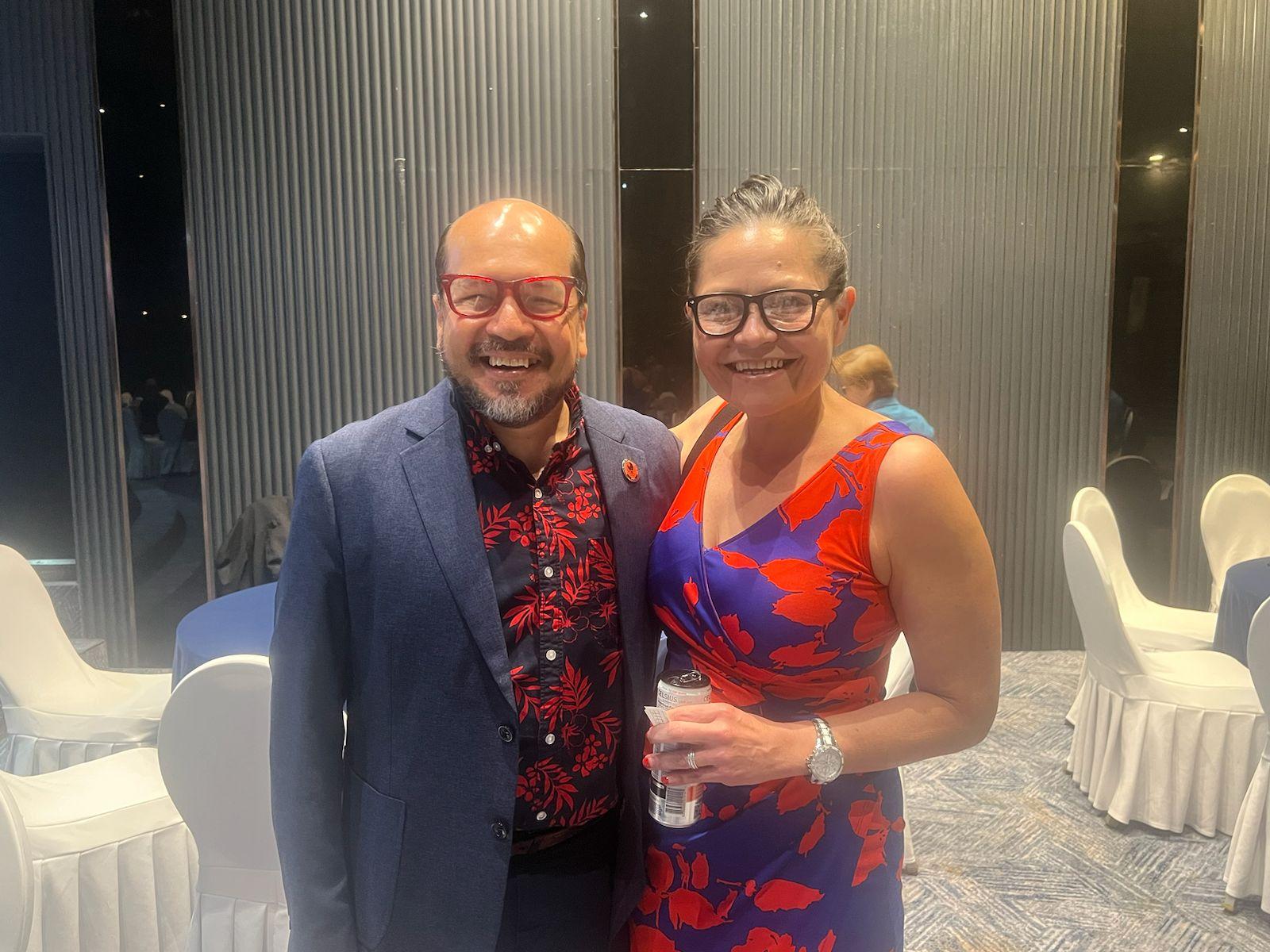
After exchanging pleasantries at the start of the Saipan Chamber of Commerce’s Economic Forum 2026 last March 11, Delegate Kimberlyn King-Hinds and delegate candidate Galvin Deleon Guerrero later showed their differences in approaching the economic abyss the CNMI has found itself in and how to deal with the federal government.
King-Hinds, who delivered the closing remarks at the Chamber’s summit, said the Commonwealth’s economic crisis stems largely from the collapse of outside spending and federal barriers affecting tourism.
But Deleon Guerrero, responding afterward, said the address focused too much on assigning blame instead of presenting solutions for the CNMI’s economic challenges.
Speaking at the conclusion of the forum, King-Hinds said the CNMI economy depends heavily on money coming from outside the islands, particularly visitor spending.
“The CNMI economy runs on outside spending,” she said. “When that spending disappears, everything else begins to fall apart.”
King-Hinds said many commonly held beliefs about the economy are incorrect, including the idea that government spending determines economic performance.
“The government is not the economy,” she said. “The government can only misspend money that the economy first produces.”
She also rejected the notion that the CNMI economy will recover on its own, saying past rebounds occurred because people in the community actively worked to restore economic activity.
“Each time our economy recovered, it happened because people in this community recognized what was needed and fought to make it happen,” she said.
While supporting long-term economic diversification efforts, King-Hinds said those initiatives would take years before they produce meaningful economic activity.
“I am excited about the opportunities the CNMI is pursuing with pharmaceuticals, auto manufacturing, and the development of new products,” she said. “These early steps will take years to complete, and years beyond that before they reach the level of economic activity provided by the industry we already have today.”
King-Hinds said tourism remains the CNMI’s primary economic driver and warned that the loss of visitors since the pandemic has had widespread consequences.
Before the pandemic, she said, tourists accounted for 54% of all customers in the CNMI and spent about $1.9 billion annually in the local economy.
“When you see a store or a restaurant close and wonder why, this is the reason,” she said.
She added that replacing that level of economic activity with agriculture or other industries is unrealistic in the near term.
“I am not talking about tourism because I like it,” King-Hinds said. “I am talking about it because I want to keep you employed, earning an income, and staying here in the CNMI.”
King-Hinds said federal policies and regulations have played a major role in limiting visitor arrivals to the Commonwealth.
“The CNMI economy relies on spending from outside our islands to sustain economic activity,” she said. “Those inflows have fallen to levels that can no longer support our private sector or our government finances.”
She urged federal officials to remove barriers affecting travel to the CNMI.
“Remove the barriers that keep tourists from coming to the CNMI,” she said. “Fix broken arrangements that pull our visitors to other destinations.”
If those issues are addressed, King-Hinds said the CNMI could begin moving toward recovery.
“If Washington agrees to these requests, and I hope they do, we can begin moving toward recovery by the end of this year,” she said.
Deleon Guerrero said the Chamber should be commended for organizing the forum and bringing together stakeholders from across the Marianas, including mayors from Saipan, Tinian, and Rota, as well as partners from Guam.
However, he said the closing remarks overshadowed the broader discussions held during the forum.
“It was disappointing and disheartening to see the delegate deliver closing remarks that focused on finding blame instead of finding solutions for the economic challenges that the CNMI is facing,” he said.
Deleon Guerrero pointed to several initiatives highlighted during the forum, including the Marianas Visitors Authority’s “Far From Ordinary” tourism campaign and discussions on economic diversification such as light manufacturing, digital currencies and remote back-office services.
“What was most concerning was criticism leveled against the federal government,” he said.
He also noted recent discussions between CNMI leaders and federal officials in Washington, D.C., including consultations under Section 902 of the Covenant, which he said were constructive steps toward rebuilding the economy.
“As delegate, instead of finding blame, I will find solutions,” Deleon Guerrero said. “Instead of focusing on what’s going wrong, I will build upon what’s going right.”
Share this article: