King-Hinds: CUC poised for millions in federal support, more aid pursued
Delegate Kimberlyn King-Hinds said the Commonwealth Utilities Corp. is poised to receive millions of dollars for power generation and utility infrastructure, while efforts are underway to tap additional federal resources tied to the military’s use of civilian infrastructure in the CNMI.
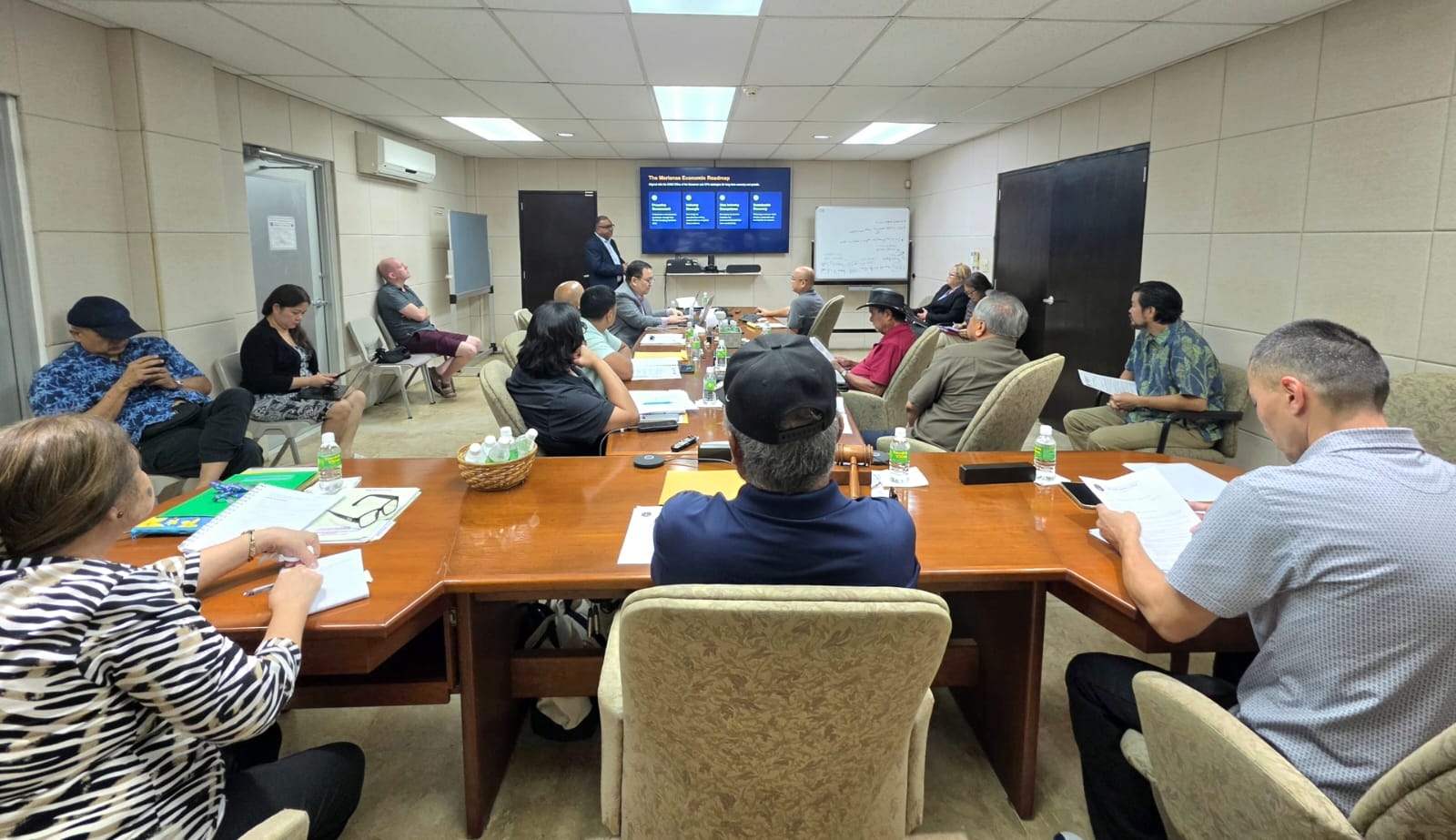
Speaking during the Rotary Club of Saipan meeting last Sept. 8 at Crowne Plaza Resort Saipan, King-Hinds said CUC has been working to secure resources as the utility addresses its infrastructure needs.
“CUC, you know, has been getting a lot of criticism, but those folks have been working incredibly hard in terms of finding resources,” King-Hinds said. “They’re making some gains, they’re making some headways, and they will be getting a significant amount of money.”
King-Hinds cited about $15 million for power generation and another $7 million for poles, while qualifying the figures as she spoke.
“I think $15 million to go towards power generation and I think $7 million, if I’m getting my information correctly, towards more poles,” she said.
King-Hinds stressed that the expected funding would not be enough to address all of CUC’s needs.
She said discussions are also underway with the Department of War to explore other sources of assistance for the Commonwealth’s infrastructure.
“There’s conversations that are happening right now with the Department of War to figure out other areas of opportunities to address the infrastructure problem because there is a nexus between national security needs and, you know, their use of civilian infrastructure,” King-Hinds said.
She said utilities are one area where the CNMI’s civilian infrastructure and federal national security requirements intersect.
King-Hinds said her office is pursuing that avenue through a route that would not require a congressional appropriation, which she described as important given the difficulty of moving major legislation through Congress.
“The task right now is to figure out a way where we don’t need appropriation, and so that’s the work that is being done now as we speak,” she said.
King-Hinds’ comments on CUC came during a question-and-answer session following a presentation largely focused on constituent services provided by her congressional office.
Another major concern raised during the meeting was the looming Dec. 31, 2029 end of the CNMI-Only Transitional Worker, or CW-1, program.
King-Hinds acknowledged that changing federal immigration law in the current political environment will be difficult.
“Anything related to immigration is a tough sell in this environment, but just because it’s hard doesn’t mean we’re not going to give it our million percent,” she said.
She warned that the end of the CW program could affect more than employers struggling to find workers, pointing to the potential loss of families and consumers from the Commonwealth.
“The cascading impact of the out migration of people if that program ends will have a compounding impact across the Commonwealth,” King-Hinds said.
During her presentation, King-Hinds also gave Rotary members a snapshot of the work being done by her district office.
She said that since Jan. 3, 2025, her office has handled at least 612 formal constituent cases and resolved 377 of them. More than 370 new cases have been received this year, while 71 cases were carried over from 2025.
Immigration accounts for about 48% of the office’s casework, followed by Social Security at about 20%. Federal Emergency Management Agency-related matters account for another 20% this year amid increased demand for disaster assistance.
King-Hinds said congressional casework also allows her office to spot recurring problems that may ultimately require changes at the federal level.
“You tell us what isn’t working. We listen, we look for patterns, and then we take those problems to Washington and then ask, what can we change?” she said.
Share this article: