Delegate Kimberlyn King-Hinds says the CNMI’s lack of an unemployment insurance system and heightened federal concerns over fraud are among the reasons the Commonwealth’s long-awaited Disaster Unemployment Assistance program has yet to roll out.
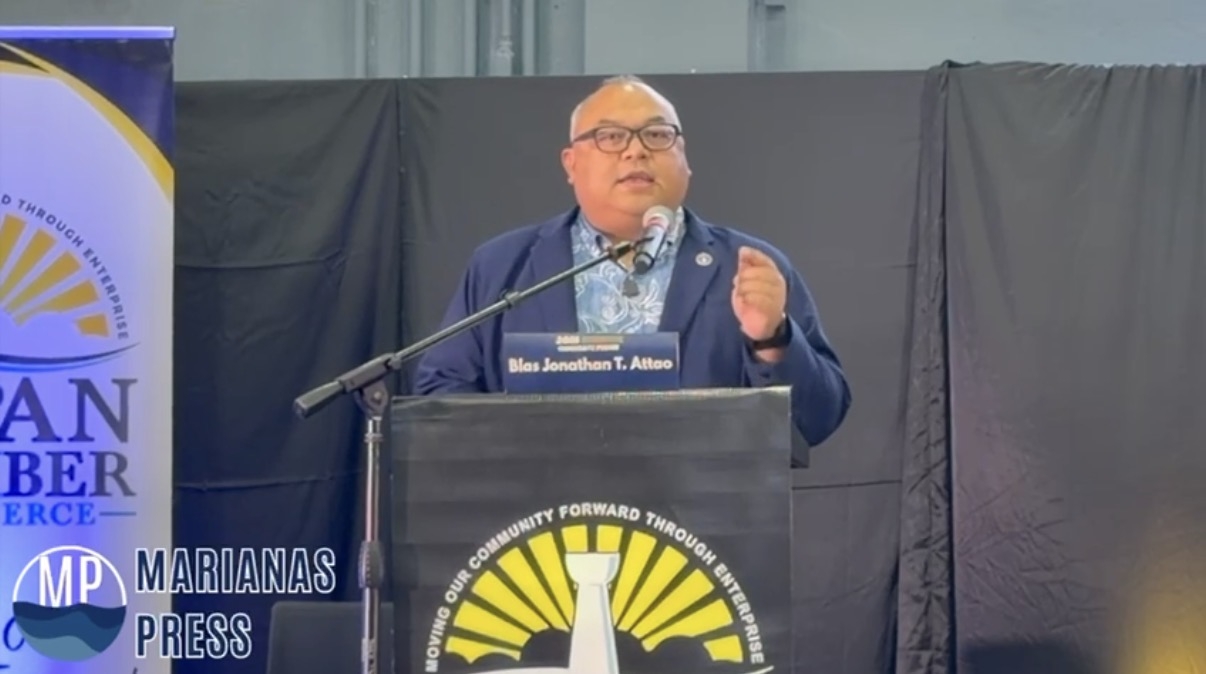
Speaking during the Society for Human Resource Management Northern Mariana Islands Chapter general membership meeting Wednesday, Oct. 1, at Pacific Islands Club Saipan, King-Hinds said the CNMI is essentially having to build a DUA administrative system from scratch.
“And so, you know, there's been a lot of complaints about the delay in the rollout of DUA, but it is for those specific concerns that you've raised, right, that it has not been as fast as it could be,” King-Hinds said. “Because they're having to create a whole new program.”
DUA provides temporary financial assistance to people whose employment or self-employment was lost or interrupted as a direct result of a federally declared disaster and who are not eligible for regular unemployment insurance.
The program is funded by the Federal Emergency Management Agency, administered through the U.S. Department of Labor, and implemented locally. Benefits can generally be provided for up to 26 weeks.
FEMA approved $10,162,706 in DUA funding for the CNMI on Aug. 29 following Super Typhoon Sinlaku. The funding was approved under Section 410 of the Robert T. Stafford Disaster Relief and Emergency Assistance Act.
The money, however, has yet to translate into benefits for affected workers.
King-Hinds said one of the complications is that unlike jurisdictions with established unemployment insurance systems, the CNMI does not have the existing infrastructure to simply switch on a disaster unemployment program.
She said her office has been working with the CNMI Department of Labor to better understand how such a system should operate, what it would cost, and how it could be sustained.
King-Hinds said federal officials are also paying closer attention to accountability after problems with pandemic-era unemployment assistance.
“Because what happened during the pandemic, you know, we pushed out that program and there were not a lot of guardrails,” she said.
King-Hinds said fraud involving pandemic assistance subsequently resulted in people being investigated and prosecuted.
“And what people are finding out right now is that there was a lot of fraud that's committed during the pandemic disaster assistance, unemployment assistance,” she said.
King-Hinds said the goal should be to create a system specifically tailored to the CNMI instead of simply copying unemployment programs used elsewhere in the country.
She said the Commonwealth's economic situation is different from that of California or other mainland jurisdictions and requires a system designed around local conditions.
The issue also goes beyond Sinlaku.
King-Hinds said the CNMI will continue to face typhoons and other disasters, while workers can also lose their jobs because of business closures and economic decline.
“This is about people who actually lose jobs because of economic decline or for whatever reason,” she said.
King-Hinds said developing that infrastructure is work the Commonwealth is “building from scratch.”
The CNMI originally requested approximately $10.1 million in DUA benefits on June 8. The U.S. Department of Labor endorsed the request June 10 and forwarded it to FEMA for review.
Before FEMA approval, CNMI Labor Secretary Leila Fleming Staffler told Marianas Press that implementation would take about two months after approval because the department needed to procure resources and hire and train personnel.
Staffler had also previously said the absence of a permanent unemployment insurance program meant the CNMI faced additional startup coordination, systems development, and administrative approvals that jurisdictions with existing unemployment systems do not.
According to information previously provided to MP by FEMA, the CNMI Department of Labor is expected to use a configurable software platform to administer DUA. Claims are expected to be handled through staff-assisted intake, with trained Labor employees interviewing applicants and entering their information into the system.
MP reached out to the CNMI Department of Labor on Wednesday for an update on when applications will open, eligibility requirements, benefit amounts, and when approved applicants could begin receiving assistance, but received no response as of press time.
When FEMA announced the $10.16 million approval in August, King-Hinds said the assistance was intended for people who lost work and income because of Sinlaku.
For King-Hinds, however, the current DUA rollout could also provide the blueprint for something the CNMI has long lacked: an unemployment assistance infrastructure capable of responding the next time disaster—or the economy—puts people out of work.
Share this article: