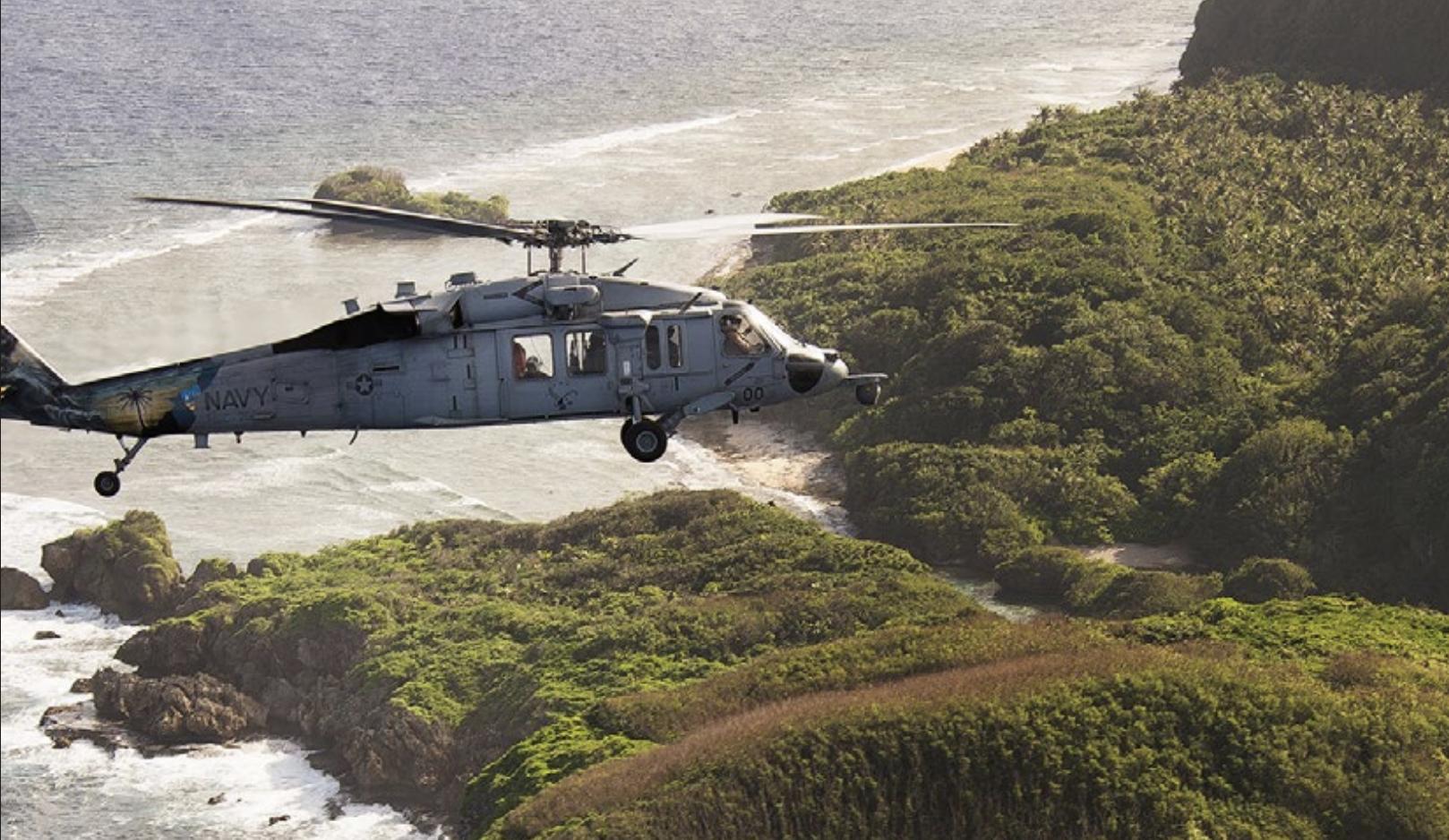
The Department of the Navy—including the U.S. Navy and the U.S. Marine Corps—along with the U.S. Air Force, U.S. Army, and U.S. Coast Guard, has prepared a supplemental environmental impact statement to continue military readiness activities at sea within the Mariana Islands Training and Testing Study Area, including on Farallon de Medinilla
The Draft Supplemental Environmental Impact Statement/Overseas Environmental Impact Statement supplements the 2015 Mariana Islands Training and Testing EIS/OEIS and the 2020 Supplemental EIS/OEIS.
It assesses potential environmental effects associated with the proposed continuation of training, research, development, testing, and evaluation, as well as range modernization and sustainment activities within the study area.
Public hearings are scheduled for March 18 in Dededo, Guam, and March 19 on Saipan, with the public comment period running through May 1, 2026.
According to the project fact sheet, the proposed action would allow the action proponents—Navy, Marine Corps. Air Force, Army, and Coast Guard—to continue organizing, training, and equipping service members to meet national defense missions in the Western Pacific. Activities would occur at sea within the Mariana Islands Range Complex, additional high seas areas north and west of the complex, nearshore waters of Guam and the CNMI, and on FDM.
The study area remains unchanged from the 2020 analysis. Land-based activities in Guam, Saipan, Tinian, and Rota previously analyzed in 2015 are not being reanalyzed. However, the updated review includes activities proposed to occur on and around FDM.
Military readiness activities covered under the proposal include joint and combined-force training exercises, testing of new technologies, and range modernization and sustainment. Testing encompasses research, development, and evaluation of weapons systems, aircraft, vessels, unmanned aerial and surface vehicles, submarines, and other technologies before operational use. Range modernization activities may involve placement and maintenance of subsurface targets, training minefields, and temporary instrumentation to support exercises.
The draft SEIS/OEIS evaluates three alternatives.
Under the No Action Alternative, proposed military readiness activities would not occur within the study area, and strike warfare training on FDM would cease, although the island would remain under lease as a Navy range. This alternative would serve as a baseline for comparison but would not meet stated readiness requirements.
Alternative 1, identified as the preferred alternative, would allow continued military readiness activities into the reasonably foreseeable future, reflecting a representative year of activity to account for deployment fluctuations. It includes testing of unmanned systems and integration of modern technology.
Alternative 2 assumes the same activities as Alternative 1 but at the maximum projected level annually over a seven-year period.
The analysis evaluates potential impacts on sediments and water quality, air resources, marine habitats, marine mammals, sea turtles, seabirds, marine vegetation, marine invertebrates, fish, terrestrial species and habitats, cultural resources, socioeconomic resources, and public health and safety.
Stressors analyzed include acoustics from sonar and other sound-producing activities, explosives, physical disturbance, vessel strike, entanglement, ingestion of expended materials, and secondary effects such as habitat or prey availability.
With respect to marine mammals, most predicted impacts are behavioral and temporary in nature, such as brief changes in communication, foraging, or movement patterns. A small percentage of effects could include temporary hearing loss or auditory injury. Mortality is not predicted. The Navy’s acoustic effects modeling indicates that the vast majority of anticipated effects would be non-injurious.
For sea turtles, the model predicts a limited number of auditory and non-auditory injuries annually from explosive use, with no mortalities anticipated. Seabirds may experience short-term behavioral responses, but population-level effects are not expected.
On FDM, explosives and noise would continue to affect terrestrial habitats within designated impact zones. However, the continued presence of seabirds, megapodes, and fruit bats suggests that current targeting restrictions and mitigation measures allow for ongoing habitat use. The action proponents have proposed reducing the amount of explosive munitions used on the island.
The draft document also addresses submerged cultural resources, including shipwrecks, stating that standard operating procedures and avoidance measures are implemented to prevent impacts. Seafloor devices would be placed to avoid known historic properties.
Socioeconomic analysis concludes that impacts on commercial shipping, fishing, and tourism would be temporary and short in duration due to limited and short-term inaccessibility of co-use areas.
Mitigation measures include trained lookouts for marine species, activity-based mitigation zones, seasonal or geographic restrictions on sonar and explosives, cultural awareness training for range users, and use of a geographic information system tool to ensure compliance with environmental protections.
The Navy is seeking reissuance of authorization under the Marine Mammal Protection Act to support at-sea readiness activities beyond July 2027. The action proponents will also consult with Guam and CNMI agencies under the Coastal Zone Management Act, as well as federal agencies under the Endangered Species Act and National Historic Preservation Act.
Public meetings will be held from 5pm to 8pm, with a presentation and oral comment session at 6pm, on March 18 at the Dededo Senior Center in Guam and March 19 at the Crowne Plaza Resort in Garapan, Saipan.
The notice of intent to prepare the supplemental EIS/OEIS was issued on June 7, 2025, followed by a scoping and Section 106 comment period that ran from June 7 to July 22, 2025.
The notice of availability of the draft SEIS/OEIS was published on March 2, 2026, initiating the public review and Section 106 comment period from March 2 through May 1, 2026.
The final SEIS/OEIS is scheduled for release in February 2027, with a record of decision expected in summer 2027.
The draft SEIS/OEIS is available online, and written comments must be submitted or postmarked by 11:59pm ChST on May 1, 2026.
Share this article: