NMC CREES brings food safety training to Rota
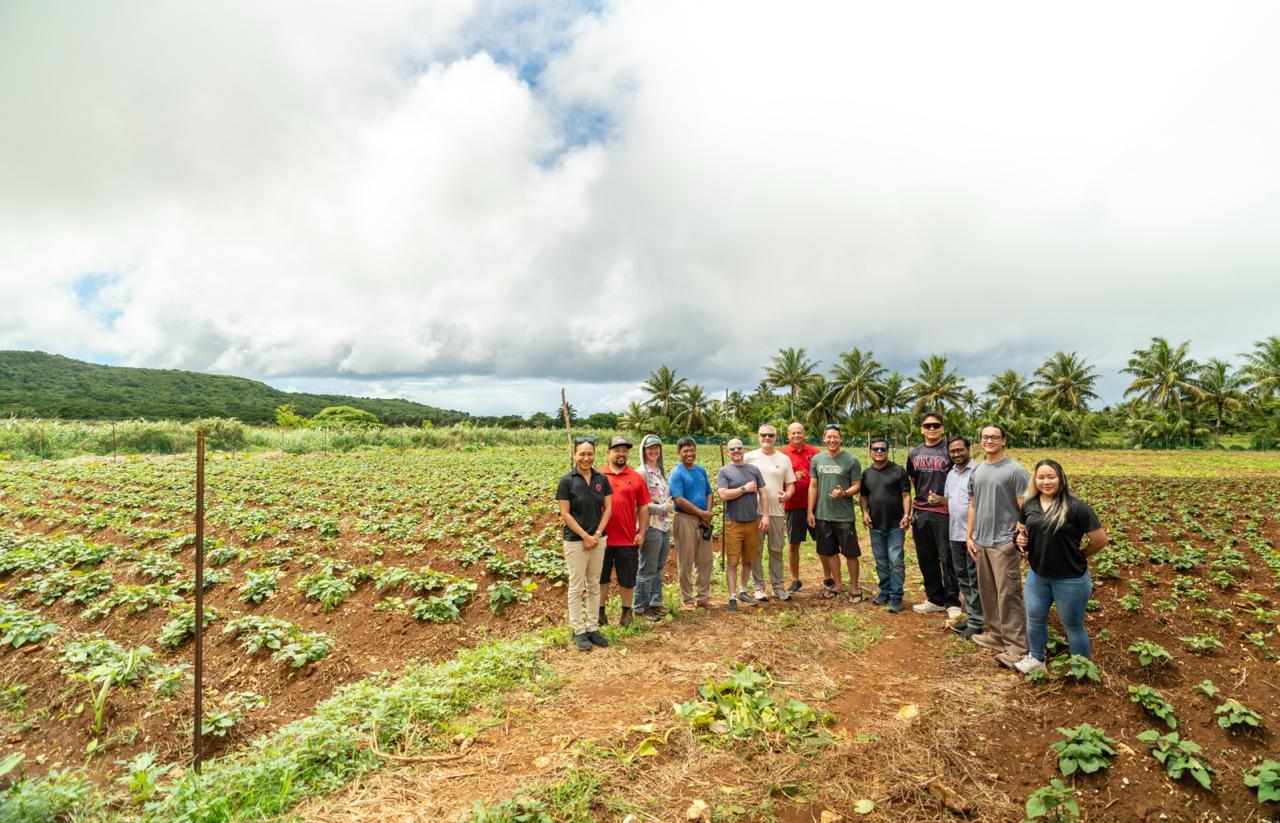
Local farmers and business owners availed of the Pacific Collaborative Food Safety Training held on Rota this past Friday, at Puesto Grill. A collaborative effort led by Dr. David Stone of Oregon State University brought forth farm-to-table topics focused on food production safety.
Through a partnership with the Northern Marianas College Cooperative Research, Extension, and Education Services (NMC CREES), the coalition of four presenters from Oregon State University, University of Hawaii at Manoa, and the University of Idaho shared an enriching and informative food safety presentation to local farmers, business owners, and various community partners. Dr. Stone shared with MP that it is through a 3-year grant funding from the USDA National Institute of Food and Agriculture Department that his program has been able to educate farmers and producers throughout the Commonwealth of the Northern Mariana Islands, The Federated States of Micronesia, Palau, Hawaii, American Samoa and Guam.
Dr. Stone highlights the rich Rota soil that necessitates programs and training like these, in order to ensure the island’s bountiful agricultural products are safe for consumption. Dr. Stone added that he is seeking a renewal of grant funding in order to continue the coalition’s collaboration and networking across the islands.
According to Emilie Kirk of UH Manoa, Rota was the coalition’s second island-stop in the Marianas, after a brief presentation in Guam, as they continued on to host a training on Saipan the following day. Kirk adds that they base their presentation on FDA regulations, specifically the Food Safety Modernization Act, focusing on “Agricultural Water, which is water we use at the farms for irrigation, as well as post harvest and cleaning and sanitizing water.” Additionally, they covered safe sanitizing processes, basic chemical and pesticide safety, compost and animal based fertilizers and how to manage and use them safely, as well as the basics of food safety for small scale processors.
The Pacific Collaborative Food Safety Training Program comes at no cost to participants, as Kirk adds, “Everything we offer is free, because of the collaborative, so we work with local universities and colleges in the area, so it would be up to them to determine what is most needed.” Adding that interested participants could also avail of the training via zoom, with a month long, 10 session training.
Kirk describes the effort as, “A group of universities and colleges across western states and the US affiliated Pacific, supporting food safety training for farmers and food producers across the islands.”
Share this article: