Oral cancer survivor Atalig urges chewers not to ignore warning signs
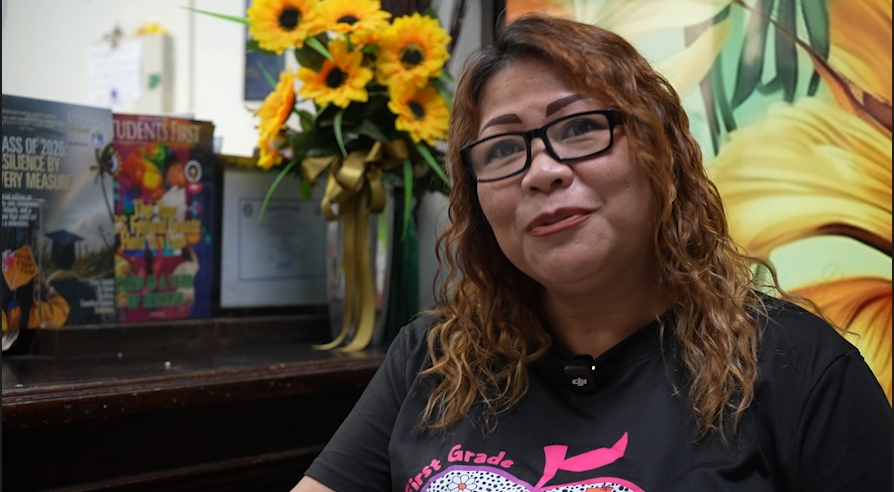
Claudine Atalig knew the warning signs of oral cancer. She had even participated in research about the dangers of betel nut chewing. But when she noticed changes inside her mouth, she initially ignored them until a persistent sore led to a Stage 4 cancer diagnosis in 2021.
Five years later, the Saipan resident continues to live with the consequences of a disease that required nearly six months of treatment in Los Angeles, California, extensive reconstructive surgery, and medical care costing almost $300,000.
In an interview with Marianas Press, Atalig recalled noticing that the inside of her mouth had become darker. One day, while brushing her teeth after lunch, she accidentally injured an area inside her mouth.
The resulting sore remained for nearly two weeks. When she noticed bruising and white spots, she suspected something was wrong but initially resisted acknowledging the possibility of cancer.
Atalig eventually visited her dentist, who referred her for further examination. A biopsy confirmed oral cancer, and Commonwealth Healthcare Corp. oncologist Dr. Peter Brett informed her of the diagnosis.
Rather than breaking down, she asked what needed to be done. Privately, however, she feared what the disease would mean for her family.
"When he said stage four, I, I kind of lost hope for treatment because I know what I'm getting my family into financially and emotionally," she said.
Atalig's experience is the focus of the second installment of a Marianas Press series examining oral cancer in the Commonwealth, where oral cavity and pharyngeal cancer ranked second among reported cancer categories from 2007 to 2022.
Her story is particularly striking because she had previously participated in a University of Guam betel nut research project involving Commonwealth Cancer Association executive director Lynn F. Tenorio.
She said the project helped her understand the health consequences of a habit she had developed as a teenager. Initially, however, she resented being told to stop.
"Offended that, you know, it's, it's a habit I like to do. And why am I going to stop because you're doing this study?" she recalled.
Atalig, who is of Carolinian and Chamorro descent, said betel nut chewing was prohibited in her household while she was growing up.
Her parents discouraged their children from chewing betel nut or smoking, although some older family members occasionally chewed.
Curiosity eventually got the better of her.
She began chewing at 16 or 17, during her senior year of high school. Although she initially disliked the taste, she continued experimenting with betel nut and its additives until chewing became a habit.
She associated the practice with friends, family gatherings, and her Carolinian heritage.
Over time, she began chewing several times a day, particularly at work or while socializing. Even her parents' disapproval failed to stop her.
Atalig acknowledged that she still occasionally chews betel nut, although far less frequently than before.
Following her cancer diagnosis, she traveled to Los Angeles, California, where she underwent surgery, chemotherapy, radiation, physical therapy, and speech therapy through Keck Medicine of USC.
She remained in Los Angeles for nearly six months in 2021 while undergoing treatment.
The surgery involved reconstructive procedures using tissue taken from her arm to repair part of her mouth.
Atalig said some oral cancer survivors bear a visible reminder of such procedures: a scar on the wrist or forearm where surgeons removed tissue for reconstruction.
She showed Marianas Press the scar on her wrist, explaining that surgeons had taken tissue from her arm and used it inside her mouth.
She said extensive surgery can also leave noticeable changes around the mouth and face, including swelling and altered facial features.
"I have a slight speech impediment now because of the oral cancer," she said.
Atalig also has difficulty opening her mouth fully and must adjust what she eats.
Her diet now consists largely of softer foods, including soup, tinola, and arroz caldo. Her husband helps prepare meals she can manage.
She said she once weighed as much as 212 pounds but now weighs about 147 pounds following her cancer treatment.
The financial burden was equally daunting.
"When I had looked at my bill, everything that I went through, all the therapies, the surgeries, it almost cost like $300,000," she said.
Atalig clarified that the entire amount was not paid out of pocket because she had health insurance through Calvo's and Aetna.
Her employer, PHR Pharmacy, and her family also helped her, including through fundraising before she traveled for treatment.
Despite surviving cancer, Atalig said the effects remain part of her daily life.
She continues to experience numbness, tingling, burning sensations, and occasional spasms that interfere with her ability to concentrate.
Work can be particularly difficult on days when the discomfort becomes overwhelming.
Atalig credited her husband and family for helping her through the illness and its aftermath.
"My family is my pillar. They're the main reason why I'm still here," she said.
She acknowledged that maintaining a positive appearance can also be exhausting.
"One time I told my husband that, you know, keeping a strong front is tiring. It drains me," she said.
After returning to Saipan, Atalig received assistance from the Commonwealth Cancer Association, particularly when she still required a feeding tube and specialized nutritional formula.
She said the organization helped provide supplies and food that she could blend while gradually learning to eat again.
As her condition improved, Atalig decided to forgo further assistance so the organization could help other cancer patients with greater financial needs.
She has since become interested in educating young people about the dangers of betel nut chewing.
Atalig said she offered to share photographs showing her appearance before and after treatment and expressed willingness to speak with students about her experience.
She believes prevention must begin with younger generations because changing the habits of longtime chewers can be difficult.
Having watched other cancer patients lose their battles, Atalig said she now sees a purpose in sharing her story.
"I think there's a purpose that I'm still here. And this is one of them, is educating our community, our younger generation," she said.
Her message is especially urgent for people who notice unusual changes inside their mouths but hesitate to seek medical attention.
"What I would tell our people now, people who are chewing, even our younger generations, is don't let oral cancer become your family's battle," she said.
"Love your family the most over your habits."
Atalig urged residents to seek examination when they notice suspicious changes rather than waiting for symptoms to worsen.
She also offered a warning drawn directly from her experience.
"So don't be another Claudine," she said.
For children curious about chewing betel nut, her advice was even simpler.
"My advice to the kids is just don't do it," she said.
Atalig said oral cancer can permanently change a person's appearance, speech, eating habits, and quality of life. Its effects also extend to relatives who must shoulder the emotional and financial consequences.
"The only thing I can really express is that once it, you know, you have cancer, it becomes everybody's battle, not just yours," she said.
This reporting has been supported by the National Press Club Journalism Institute Public Health Reporting Fellowship, funded by the Common Health Coalition.
Share this article: