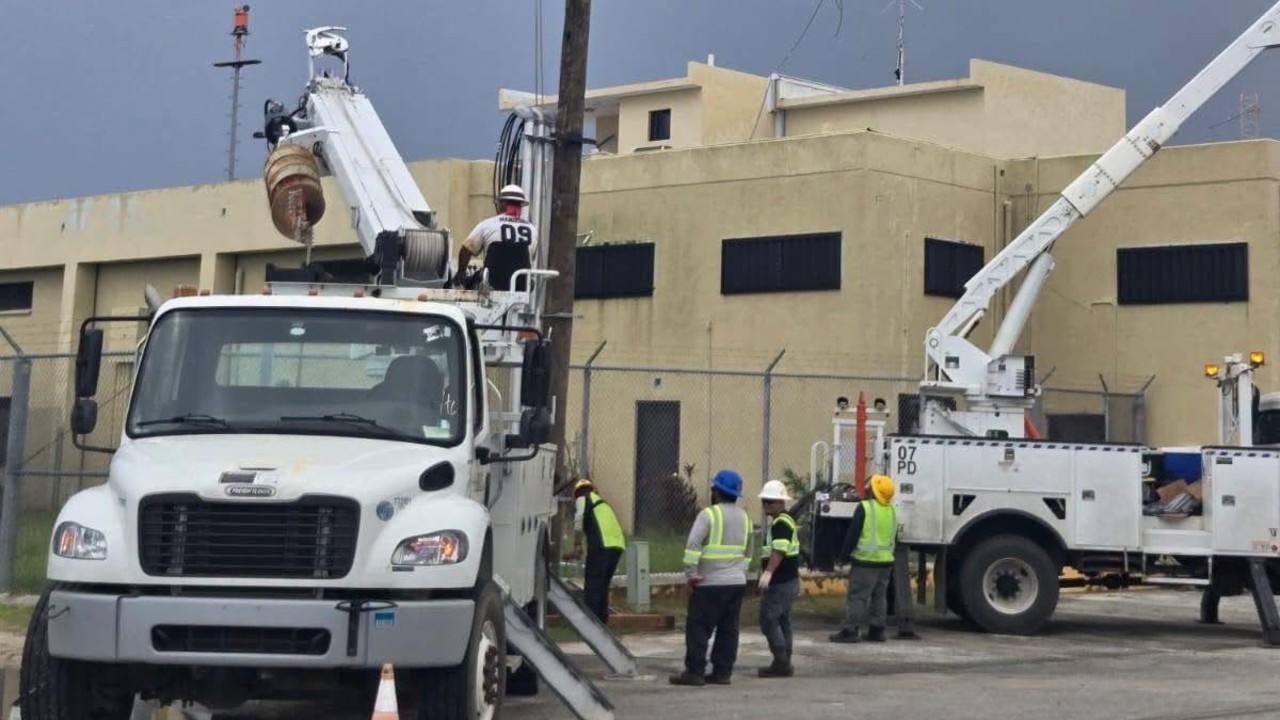
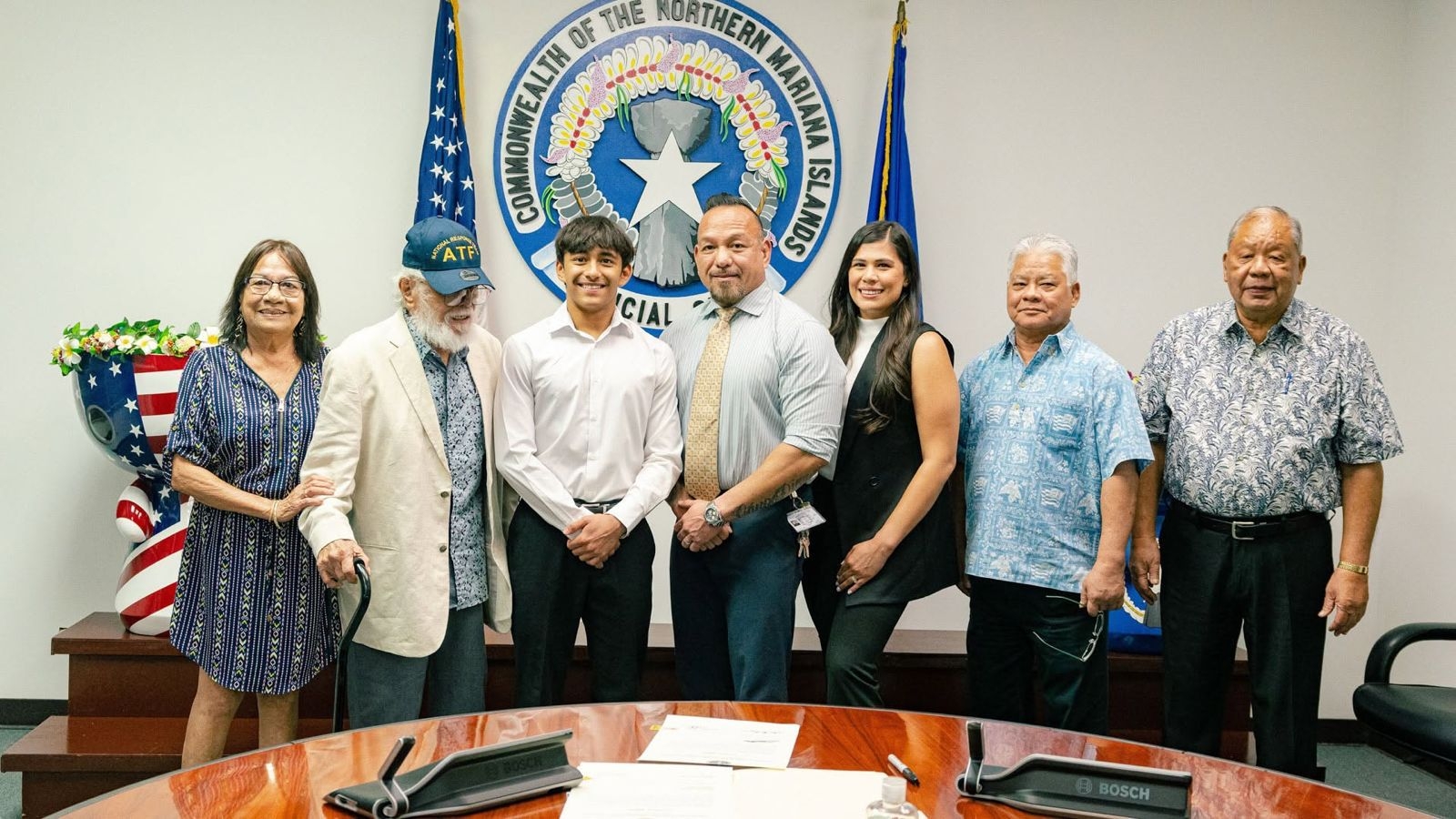
Philippine Airlines is looking ahead to the expansion of the CNMI’s Economic Vitality and Security Travel Authorization Program even as it marked the return of its Manila-Saipan route with a ribbon-cutting ceremony in the early morning of March 30 at the Francisco C. Ada-Saipan International Airport.
PAL Express vice president for ground operations Matthew Tamaray said the Philippine flag carrier sees potential growth tied to easier entry for Filipino travelers.
“We had an engaging discussion with our partners here on Saipan about extending CNMI Economic Vitality and Security Travel Authorization Program for Filipinos,” Tamaray said, noting that travelers from the Philippines are increasingly choosing destinations with visa-free or streamlined access.
“Filipino travelers are expanding their reach… to ASEAN… Taiwan, Korea, and Japan where visa processing is streamlined.”
Tamaray described the relaunch of the route as more than just an added flight.
“This isn’t just a new entry in our flight schedule—it is a restoration of a vital lifeline between our two nations,” he said.
He added that PAL aims to “make the wide Pacific feel a little smaller and our nations a little closer,” while committing to tourism, cargo movement, and access to healthcare services in Manila.
Gov. David M. Apatang welcomed the return of the flag carrier, stressing its importance to the CNMI economy.
“Philippine Airlines has been here before, and we want to welcome Philippine Airlines back to the Commonwealth,” Apatang said.
“We need your help… to help with our economy here also in the Commonwealth,” he added, pointing to what he expects to be strong passenger loads.
Delegate Kimberlyn King-Hinds, who had just arrived from Washington, D.C., underscored the broader push in the U.S. capital to remove federal barriers affecting CNMI air service.
In a nutshell, King-Hinds said more planes landing means more customers for the CNMI.
“That is the work that we’re doing in Washington, D.C., is to be able to remove some of these structural barriers… that is limiting our ability to expand markets.”
She emphasized that the route is not just about tourism.
“The Philippines is not just customers. It represents connecting families, people who call the CNMI home, who also call the Philippines home.”
Commonwealth Ports Authority executive director Esther Ada echoed the significance of the restored service.
“Today marks more than the return of an airline. It represents new opportunities for the CNMI,” Ada said.
“The restored service brings greater access to the Philippines and stronger connections to the world… making it easier for families to reunite, cultures to stay connected, and communities to grow stronger.”
Philippine Consulate General in Agana, Guam consul Joaquin Ricardo Aragon highlighted the broader diplomatic and historical context of the route’s return.
“Philippine Airlines had been here before… but now, it’s back,” he said.
Aragon noted that the relaunch comes at a symbolic time.
“2026 marks the 85th anniversary of Philippine Airlines… [and] the 80th anniversary of Philippines and U.S. diplomatic relations,” he said, calling the development “very timely.”
Amid global uncertainties, Aragon said the renewed connection offers something positive.
“We are living in somewhat challenging times now… and this is something to look forward to. It’s not all doom and gloom.”
He added that the direct service will especially benefit the Filipino community in the CNMI.
“It’s a great help to many people here… especially the Filipino community. They now have a direct flight to get back home—and to come back also.”
Following the ceremony, passengers welcomed the direct route, citing convenience and shorter travel time.
Raniel Santos, a teacher, said the flight eliminates the need for stopovers.
“No need to stop over at Guam anymore… it’s a lot faster, a lot more convenient… it’s a big blessing,” he said.
Norlyn Cabrera said the direct connection makes travel “easier now and the flight is shorter,” while Sildrey Veloria noted he can now visit family “more quickly than stop over to Korea or Guam.”
For Jershwin Angeles of the Northern Mariana Islands Football Association, the timing of the route’s return allowed his team to train abroad.
“We took this opportunity… to travel to the Philippines,” he said, adding that about 40 players will spend 10 days in a training camp.
PAL’s inaugural PR2571 flight from Manila was welcomed with a traditional water cannon salute, marking the airline’s official return to Saipan after years of absence.
Share this article: