Shark depredation emerges as top concern in Marianas fishing forum
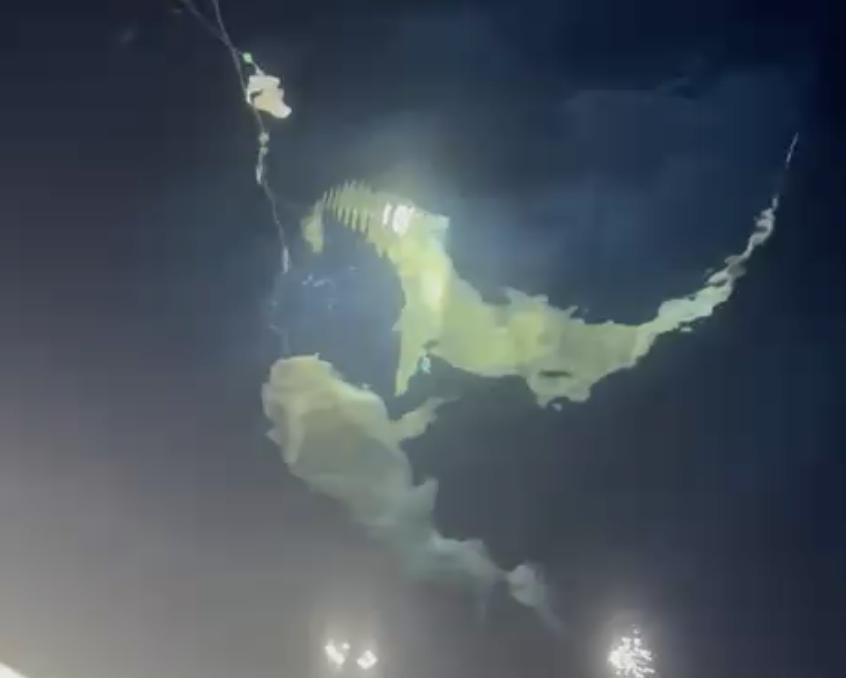
Shark depredation reached crisis levels across the Marianas in 2025, disrupting fishing operations, destroying gear, and undermining already strained livelihoods, fishermen and fisheries officials said during a regional observations forum held online last Jan. 28.
“As soon as we hooked up, the shark would automatically get our fish,” said Audrey Toves, an advisory panel member and charter captain from Guam. “We didn’t even hit the bottom yet.”
The forum, hosted by the Pacific Islands Fisheries Group in coordination with the Western Pacific Regional Fishery Management Council, brought together fishermen, scientists, and agency representatives from Guam and the Commonwealth to document firsthand observations from the 2025 fishing year. The effort aims to capture traditional and empirical knowledge to supplement official data used in fisheries management.
Clay Tam of the Pacific Islands Fisheries Group said shark depredation rates observed during surveys and fishing trips were alarmingly high.
“The site depredation rate for sharks is 80%,” Tam said.
Toves said shark interactions were so severe in some areas that survey work could not be completed.
“Some areas, some islands, we just didn’t even complete our grids because the shark depredation was high,” she said. “We were losing a lot of gear.”
She said crews lost “maybe an average of like 10 rigs,” making continued fishing financially unsustainable.
Pete Itibus, a Saipan-based fisherman, said sharks are not only taking fish but entire rigs.
“They don’t only eat the fish. They even take away your sinker,” he said. “They take your rig, they take your sinker.”
Pete said sharks appear to follow boats when fishermen try to relocate.
“If they’re active, the minute you start the engine and move, they’ll be there,” he said. “It would take less than five minutes for them to reach you.”
Guam fisherman Dominic Saniel, an advisory panel member, said shark behavior has noticeably changed.
“They are very, very smart,” Saniel said.
Toves said sharks are no longer just targeting hooked fish.
“They went from hitting the fish that’s hooked up to hitting the lures,” she said. “They’re hitting surface, midwater column, right below the surface.”
Andrew Kang, a fisheries biologist with the Guam Department of Agriculture, said sharks are now intercepting fish almost immediately after hook-up.
“Sometimes now they just start taking it from the bottom,” Kang said. “Like they’ve been waiting there for us.”
Richard Farrell, who fishes out of Tinian, said the losses are affecting food supply and community events.
“One guy could hit a 20- or 30-lb yellowfin, but he only got half of it,” he said.
Saniel said some fishermen have experimented with shutting down engines to reduce shark encounters.
“We shut off the engine, and we hardly got shark,” he said. “The boat 50 to 100 yards away with the engine on was getting shark left and right.”
Jason Miller, a Guam advisory panel member, said sharks appear to respond to boat noise.
“They’re listening,” Miller said. “As soon as I pull up to the buoy, the sharks come right up from the deep.”
Beyond shark depredation, speakers said rising costs and declining fish prices are compounding the problem.
“The fuel costs are going up, but the fish prices aren’t changing,” Kang said. “Fish prices are going down.”
Kang said many fishermen are returning from long days at sea with little to show for it.
“They spend all day, and the coolers have nothing to show for it,” he said.
The observations collected during the forum will be compiled into a report for inclusion in the annual Stock Assessment and Fishery Evaluation report, providing long-term documentation of conditions affecting Marianas fisheries.
Share this article: