Study outlines inter-island ferry system linking CNMI, Guam
A federally funded feasibility study has outlined a potential inter-island ferry system connecting Saipan, Tinian, Rota, and Guam, pairing marine transport with expanded bus service to improve mobility, economic activity, and regional connectivity across the CNMI.
The study, prepared by engineering firm WSP USA Inc. for the Commonwealth Office of Transit Authority, was presented to the Legislature last Jan. 29 and recommends a purpose-built roll-on/roll-off ferry system supported by coordinated land transit improvements.
WSP project manager Brady Nadell said strengthening the bus network is critical to making a ferry system viable.
“Transit system enhancements improve connectivity—especially connections to the ferry system, schools, and health facilities—and improve the rider experience,” he said.
The study identified several near-term improvements to the CNMI’s bus system, including route expansion beyond a single corridor, real-time GPS tracking, bus shelters, improved signage, and flexible scheduling during community events. Enhancements such as signal prioritization at intersections and diversified payment options, including credit cards, were also recommended.
Nadell said reliable arrival information is key to increasing ridership.
“Showing riders when buses are actually arriving makes a big difference in how people use the system,” he said.
Based on sea-state analysis and public surveys, WSP recommended a large, purpose-built monohull ferry approximately 185 to 200 feet long, capable of operating safely in CNMI waters about 95% of the year. The vessel would be designed to reduce motion-related discomfort and accommodate both passengers and vehicles.
“The vessel needs to be purpose-built for CNMI sea conditions,” Nadell said. “You can’t simply buy an off-the-shelf boat and expect it to work here.”
Each ferry would be capable of carrying up to about 150 passengers and 15 to 18 vehicles and could include onboard amenities such as lounges and food service areas.
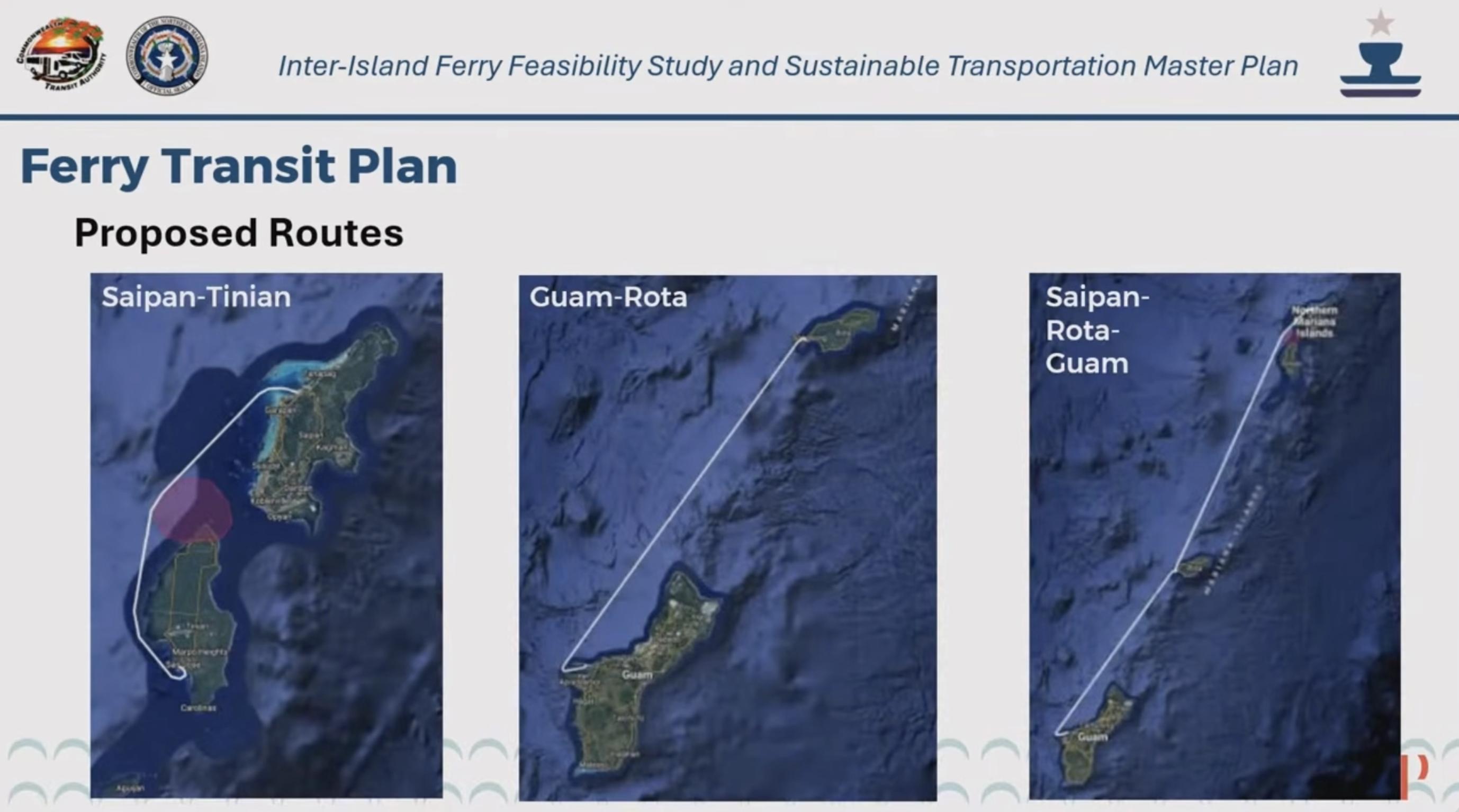
The proposed service pattern includes frequent Saipan-Tinian trips, regular Rota-Guam service, and a less frequent long-distance route linking Saipan and Guam with intermediate stops.
The study recommends locating ferry terminals at existing port facilities, including the Port of Saipan, Tinian Harbor, Rota West Harbor, and the Port of Guam. On Saipan, Abel Dock was identified as the preferred site to avoid conflicts with cruise and military vessels.
Terminal facilities would require vehicle staging areas, passenger waiting areas, ticketing space, bus connections, and adequate parking, which the study identified as a planning challenge.
Capital costs are projected to be significant, with each ferry vessel estimated at about $27 million. Three vessels would be required to support regular service and maintenance rotation. First-year operating costs were estimated at about $7.6 million, with projected fare revenue of about $5.7 million.
“No ferry system in the United States operates without some level of subsidy,” Nadell said.
The study projects that subsidy needs would decline over time as ridership grows. Survey respondents indicated support for fares priced at roughly half the cost of comparable air travel, with additional revenue generated from vehicle and commercial cargo transport.
Beyond transportation benefits, the study cites broader economic impacts, including job creation, increased inter-island commerce, improved access to health care and education, and enhanced opportunities for tourism. Some visitors surveyed indicated they would extend their stays if ferry travel between islands were available.
The study also outlines governance and funding considerations, including whether the Commonwealth Office of Transit Authority should become an autonomous agency and whether a public–private partnership model would be appropriate, with the government owning the vessels and infrastructure while a private operator manages daily operations.
Federal funding sources identified include Federal Transit Administration ferry programs and U.S. Department of Transportation marine highway grants, though congressional action may be required to expand eligibility for certain programs.
“This study is a starting point,” Nadell said. “The hard work now is identifying funding, partnerships, and a clear path to implementation.”
Special assistant for Public Transportation Alfreda C. Maratita told lawmakers that interagency coordination, engagement with Guam, and continued public outreach will be essential as the CNMI considers next steps toward establishing an inter-island ferry system.
Share this article: