Tenorio Calls for Judicial Intervention as PSS Reaches the Brink of Financial Collapse
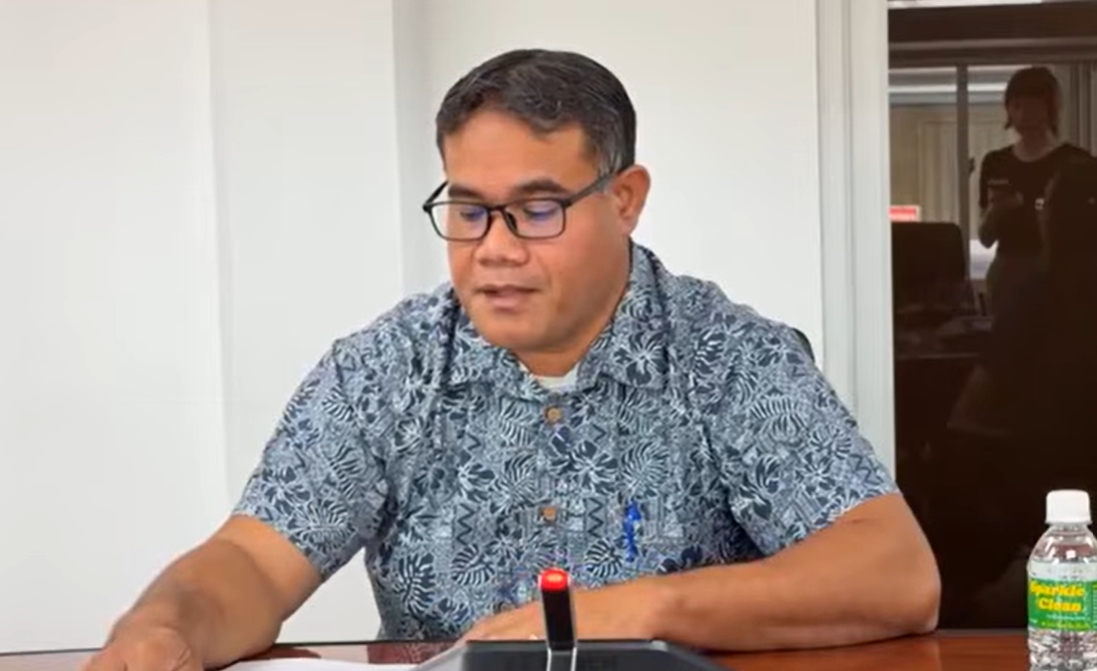
Being six years on the Board of Education, Chair Maisie B. Tenorio has watched the same debilitating budget cycle repeat year after year, and through it all, her position has never wavered: the chronic, systemic shortchanging of public education will only end when a judge steps in.
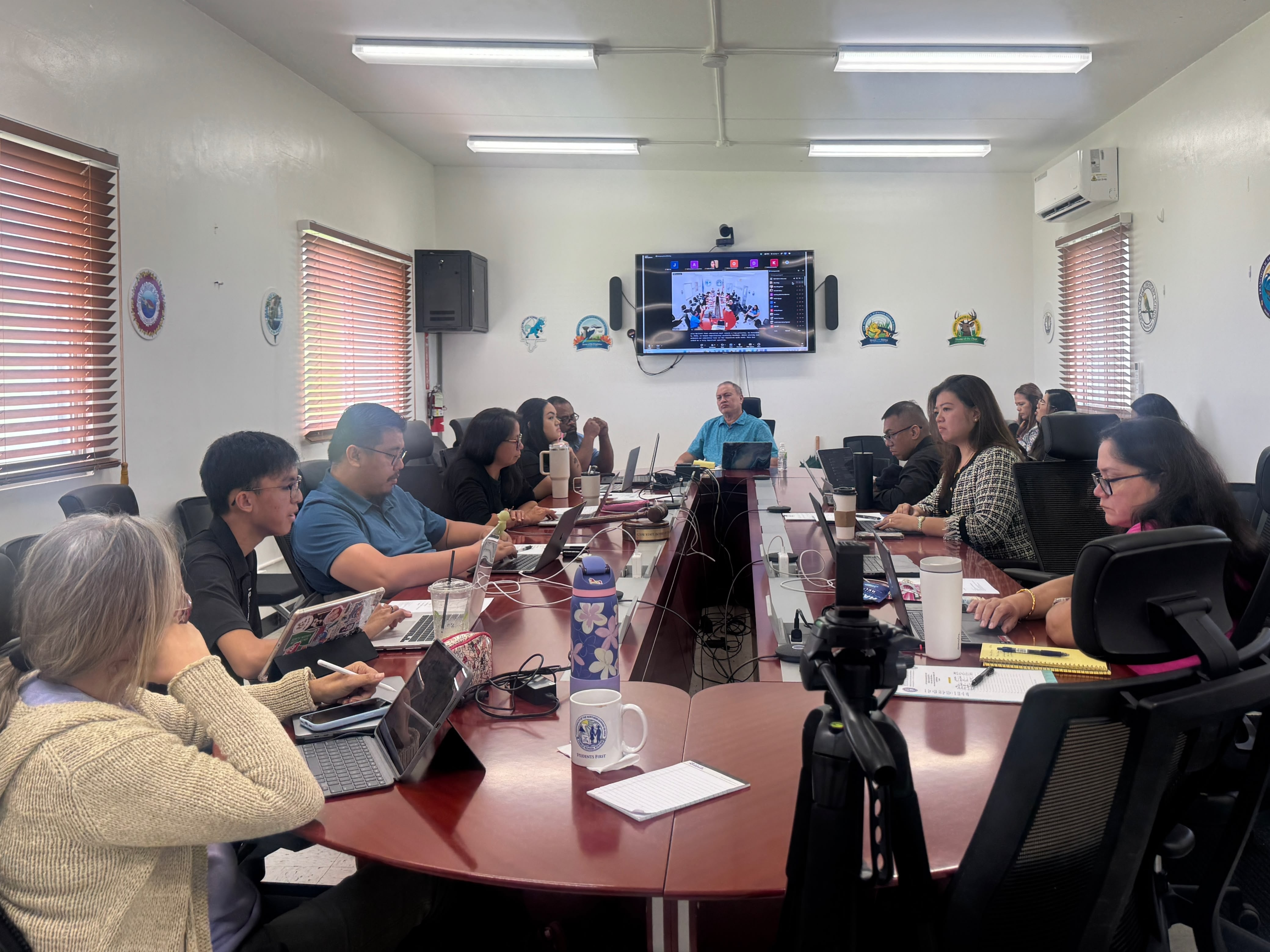
During the Board of Education meeting on October 9, as district leadership confronted a catastrophic thirty-year funding low that threatens to exhaust district payroll reserves by mid-November, Tenorio declared that decades of polite negotiations have run their course. Pointing to six years of unheeded warnings and mounting fiscal distress, Tenorio called on the board to stop waiting and formally direct the education commissioner to file a lawsuit against the Commonwealth government in the CNMI Superior Court.
At the core of Tenorio’s push for judicial intervention is Article XV, Section 1(e) of the CNMI Constitution, which explicitly guarantees public elementary and secondary education a minimum of 25 percent of general Commonwealth revenues. Under the newly enacted Public Law 24-40, lawmakers allocated the Public School System approximately $25 million by calculating that constitutional share only after stripping debt service and special earmarks from a $152 million revenue base, reducing the pool available for appropriation to roughly $100 million. Tenorio forcefully dismantled that calculation, insisting that funds available for appropriation do not equal general revenue. Noting that the school system has historically received as little as 11 to 20 percent of its rightful share, Tenorio argued that judicial intervention is the only remaining mechanism to establish a definitive, binding formula. Backing her position, the board voted unanimously to adopt a formal Fiscal State of Emergency declaration and scheduled an emergency meeting for Tuesday, October 13, at 1:00 PM to authorize immediate legal proceedings.
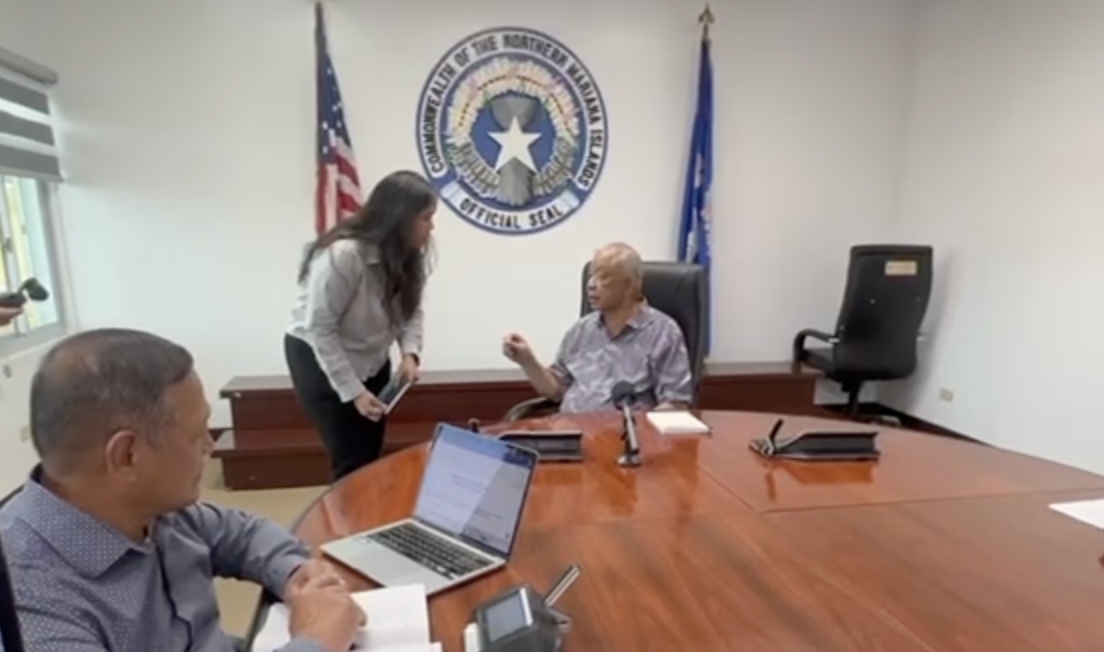
The board’s pivot toward legal warfare was reinforced by a sobering, high-stakes presentation from Interim Commissioner of Education Jacqueline Che, who laid out the grim operational realities imposed by Public Law 24-40. Che emphasized that while the enacted budget locks district funding at $25 million, that baseline places the school system in its most precarious financial position in three decades. To prepare for the fallout, Che formed three dedicated working task forces—focusing on staff optimization, facilities and utilities, and student learning continuity—to evaluate every operational cost across Saipan, Tinian, and Rota. While Che stressed that no individual employee has been placed on a termination list and no specific campus has been selected for shutdown, she made clear that surviving on $25 million requires severe, unprecedented sacrifices.
Che warned that the school system is already operating on borrowed time. Under its current four-day instructional schedule at 64 bi-weekly employee hours, PSS requires roughly $1.1 million per pay period to meet payroll. Under the $25 million baseline, however, incoming bi-weekly government allotments amount to just $962,000, creating an immediate operational shortfall of roughly $400,000 every single pay period. While the district has managed to float payroll by tapping finite local cash reserves accumulated from federal program reimbursements, leadership confirmed that cushion will be entirely gone after the November 13 pay date. Beyond mid-November, Che warned, PSS will run cashless and will be physically incapable of paying its workforce without aggressive spending cuts.
To illustrate the stark path ahead if funding remains unchanged, Che walked the board through two contingency scenarios. Under the first scenario, PSS would avoid furloughs by cutting operations down to an alternating two- to three-day school week and confining consolidations strictly to central administration. However, this approach slashes employee hours down to just 40 hours per bi-weekly pay period—effectively halving staff wages relative to a standard 80-hour baseline and leaving thousands of children outside classrooms for the majority of the week.
The second scenario preserves a four-day instructional week from Tuesday through Friday at 64 hours but exacts a devastating human toll by triggering approximately 200 employee furloughs across school campuses and central office divisions. Alongside those mass job losses, PSS would be forced to execute sweeping campus consolidations, shrinking the district's operational footprint from twenty active school campuses down to thirteen. On Saipan, active sites would drop from sixteen to eleven through the closure of two elementary schools, two middle schools, and one high school, while Tinian and Rota would each see their two-school structures collapsed into a single merged campus.
Che forcefully addressed the misconception that locking school gates yields immediate windfall savings, cautioning that closing campuses creates immediate offsetting expenses in extended bus routes, fuel consumption, and building renovations to cram displaced students into host facilities. Furthermore, Che sounded the alarm over ballooning class sizes, warning that consolidating campuses could push class sizes up to 40 students per room in primary grades, placing an overwhelming burden on remaining teachers. To prevent arbitrary decisions, Che outlined an objective evaluation scorecard to review school utilization rates, storm-hardening conditions, transportation accessibility, staffing flexibility, and the protection of essential programs like special education and advanced placement. Any proposed consolidation plan would target a January 2027 window and require formal board adoption.
Che also framed the fiscal crisis within an accelerating demographic decline. Over the past decade, district enrollment has contracted by 23 percent, falling from 9,600 students to roughly 7,400. That departure has quickened sharply, shedding 461 students in school year 2025–2026 and an additional 633 students in school year 2026–2027, with elementary enrollment alone collapsing by more than 32 percent. Che and board members warned that starving public schools will only deepen cumulative learning loss from back-to-back typhoons, compromise academic accreditation, and accelerate an exodus of families and skilled educators from the Commonwealth.
With Che’s projections setting an unforgiving mid-November cash cliff, Tenorio’s six-year push for legal accountability has reached its defining moment. Refusing to let the district bleed out through political stall tactics, the Board of Education is preparing to carry Che’s numbers straight into court, determined to let the CNMI Superior Court decide whether the Commonwealth can legally shortchange its students.
Share this article: