U.S. District Court for the NMI Chief Judge Ramona V. Manglona urged a 64-year-old Filipino accountant to reflect on the consequences of her actions and be honest with her adult children about the ordeal she went through in the CNMI, expressing hope that the experience would serve as a lasting lesson.
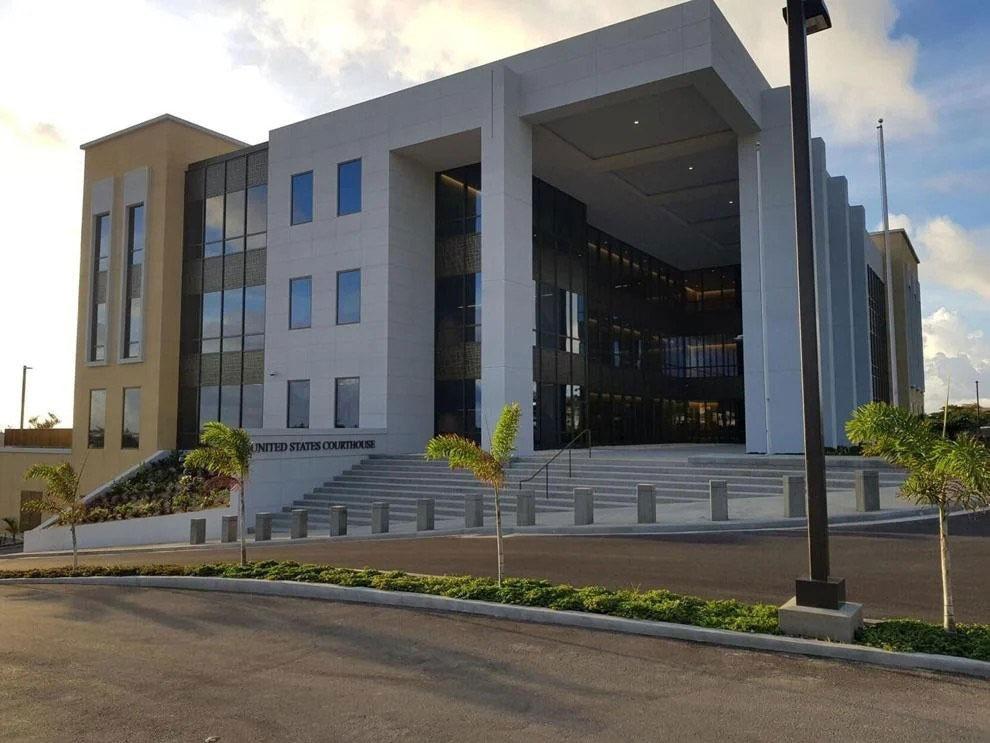
At an expedited sentencing hearing last March 2 in the U.S. District Court for the NMI, Lorna R. Maramba was sentenced to four days’ time served after pleading guilty to a single Class A misdemeanor count of possession of a false identification document with intent to defraud the United States.
When given the opportunity to address the court, Maramba gingerly clutched the microphone and said, “No more, your honor, and I’d like to come home.”
Lawyer Richard Miller appeared for the defendant, while assistant U.S. attorney Garth Backe appeared for the government. Although an interpreter was initially not present, Maramba said she was willing to proceed, and the court found she understood and spoke English sufficiently for the hearing. Interpreter Chris Hilario later arrived in the courtroom.
The probation office’s pre-sentence report calculated a total offense level of eight and a criminal history category of I, resulting in a guideline range of zero to six months. Both the government and the defense agreed with the recommendation of time served.
Miller urged the court not to impose a one-year term of supervised release, noting that Maramba is scheduled to depart for the Philippines as early as today, March 3, is not in good health, and faces a 10-year bar from returning to the United States.
He argued that supervised release would be unnecessary given that her chance of returning to the CNMI or the U.S. is close to zero and would only create additional paperwork.
Backe said the government was bound by the plea agreement to recommend time served and did not object to the court declining to impose supervised release.
Manglona said she was convinced Maramba would be timely deported, distinguishing the case from prior instances where the court imposed supervised release due to uncertainty over removal. In this case, the defendant has already been ordered removed by an immigration judge and has a ticket to return to the Philippines.
The court also noted that while what Maramba did was a crime, the fraudulent “green card” she obtained was obviously deficient—listing a male with a different date of birth—and that someone else had taken her money and defrauded her. Manglona said these circumstances indicated she was unlikely to reoffend.
The judge declined to impose the recommended one year of supervised release, citing the guideline provision that ordinarily discourages supervision for a deportable alien likely to be removed after imprisonment.
Manglona imposed the mandatory $25 special assessment fee, due immediately, but waived any fine, finding that Maramba could not pay, as she would only have access to around $2,000 in her bank account before departing for the Philippines, and would need her remaining funds to restart her life in the Philippines.
Maramba waived her right to appeal as part of her plea agreement, except on grounds of ineffective assistance of counsel. The court advised her that any notice of appeal must be filed within 14 days.
She was arrested last Jan. 21 at the Francisco C. Ada/Saipan International Airport, where authorities alleged she attempted to board a flight to Honolulu, Hawaii, using a fraudulent I-551 permanent resident card, commonly known as a green card.
Although her criminal case is now closed, Maramba remains in U.S. Immigration and Customs Enforcement custody pending her removal.
Miller said “no, thanks” when asked for comment about the Maramba case’s conclusion as he was leaving the district court.
Share this article: